Why Does Water Back Up Into the Shower When You Flush the Toilet?
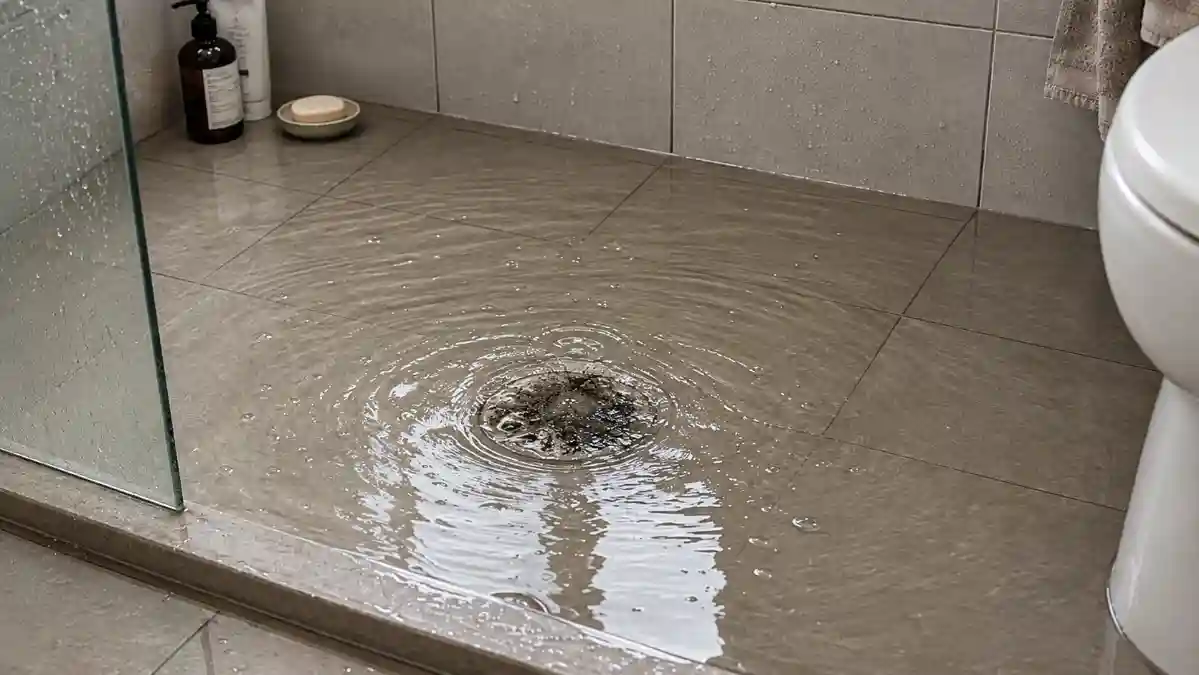
You flush the toilet, hear a gurgle, and notice water rising around the shower drain. The shower may be where you see the problem, but that doesn’t mean the shower drain is where the blockage starts. Wastewater from both fixtures may share a pipe, and a restriction farther downstream can force water toward a lower drain opening.
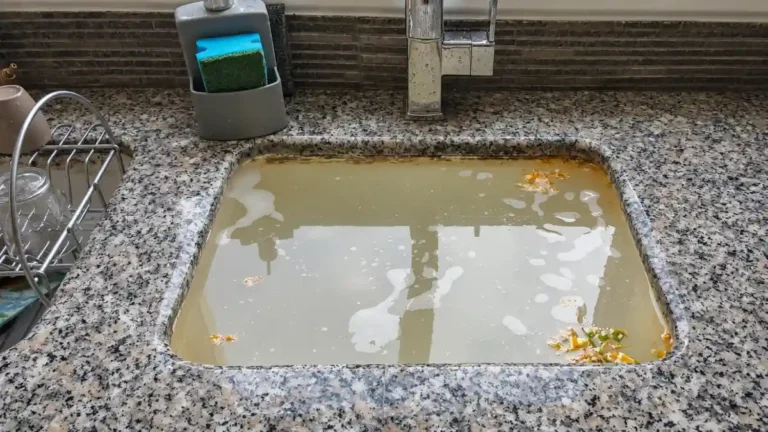
If water is rising right now, stop using the toilet and other plumbing fixtures. Don’t run the shower, sink, dishwasher or washing machine to see whether the problem clears. If the water is dirty or has a sewage odor, keep children and pets away from it.
How can flushing a toilet send water into the shower?
Every bathroom has its own fixture connections, but many toilets, tubs and showers eventually feed into a shared drain line. The toilet sends a relatively large volume of wastewater into that pipe at once. If the pipe cannot carry it away quickly enough, water can rise at another connected opening—sometimes the shower or tub, which sits closer to the floor.
Think of it as a traffic backup inside the drainage system. The shower isn’t necessarily creating the obstruction. It may simply be the easiest place for backed-up water to show itself.
The location depends on the plumbing layout. A single bathroom branch, a shared branch serving several fixtures, and the building drain leading toward the sewer or septic system can produce different combinations of symptoms. You cannot identify the exact blocked section from one flush alone.
Three patterns worth paying attention to
Water backs up into one shower only when one toilet flushes
A restriction in the shared bathroom drain is one possibility. The response may be stronger when the toilet sends more water through the line. Note whether the shower drains normally when you use it by itself. That is evidence to share with the plumber, not a reason to keep testing once wastewater appears.
Several fixtures drain slowly or gurgle
If a second toilet, bathtub, laundry standpipe or floor drain is acting up too, the problem may lie farther along a pipe shared by multiple fixtures. Gurgling by itself is not proof of a sewer clog—it can have other drainage or venting causes—but combined with actual wastewater backup it deserves prompt attention.
The shower backs up even when the toilet isn’t used
That raises different questions. Does it happen when the washing machine drains? When someone empties the bathtub? During heavy water use elsewhere in the house? The fixture that triggers the backup may help identify which pipes connect upstream of the restriction.
What should you do right away?
- Stop sending water into the drains. Ask everyone in the home not to flush, shower, run faucets unnecessarily or start laundry until the backup is assessed.
- Keep people away from potentially contaminated water. Even water that looks fairly clear may contain wastewater. Avoid contact with skin, household items and electrical equipment.
- Don’t pour drain chemicals into the shower or toilet. They are unlikely to fix an unidentified shared-line restriction and can leave hazardous liquid where a technician must work.
- Don’t open a pressurized cleanout yourself. Removing a cap on a backed-up drain can release wastewater suddenly.
- Record what happened from a safe distance. Note which toilet was flushed, where water appeared, whether other fixtures are affected, and whether there was a prior backup. Photos can help, but don’t enter sewage to take them.
If wastewater has spread across a floor or soaked porous materials, a plumbing assessment alone may not be enough. EPA guidance warns against direct contact with backed-up sewage because of harmful pathogens. Appropriate cleanup and sanitation may require additional help.
Active sewage backup is a safety issue. Avoid exposure, keep the affected area out of use, and arrange prompt assistance. If you see sewage overflowing from a public manhole or suspect a public sewer incident, contact the actual wastewater provider for the property. Not every Queen Creek address uses the same wastewater system.
What can block the shared drain?
Once it is safe to evaluate the line, the possible causes depend on the affected section. Common examples include:
- Wipes and sanitary products. Materials sold as “flushable” may not break down the way toilet paper does and can collect in a line.
- Grease and debris. Deposits from kitchen wastewater can accumulate in shared drainage farther downstream.
- Roots entering an opening. Roots may grow into damaged joints or cracks and catch passing debris.
- Pipe displacement, sagging or damage. A misaligned joint, low spot or deteriorated pipe can affect flow, but that requires evidence—not a guess based on a shower backup.
- Septic-system trouble. A house served by an onsite system has another possible source of slow drainage or backup. Municipal sewer assumptions don’t apply to every property.
The Town of Queen Creek identifies grease and roots as major causes of backups in the sewer system it operates. That municipal guidance is useful local context; it does not establish the cause of an individual home’s problem.
Does the house need drain cleaning or sewer line repair?
Those are different decisions. The first job is to identify and relieve the restriction safely. Cleaning can restore flow when the issue is removable material. Repair may be appropriate when inspection confirms a defect such as a broken, displaced or otherwise damaged pipe.
| Finding during assessment | What it could mean |
|---|---|
| Obstruction clears and normal flow returns | Drain cleaning may address the immediate restriction; ask about the likely cause |
| Same backup keeps returning | Reevaluate the location and source of the restriction; further inspection may be reasonable |
| Camera or other evidence shows pipe damage | Review targeted repair options based on the actual defect and location |
| Backup also involves a public manhole or neighboring properties | The wastewater utility may need to investigate its portion of the system |
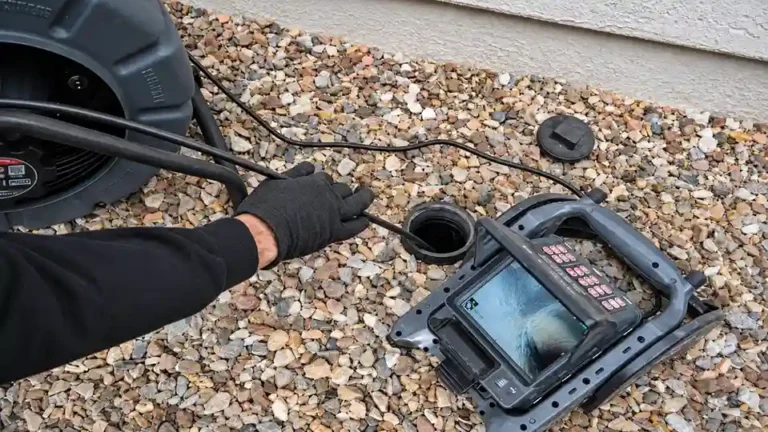
The presence of a camera or hydro-jetting equipment doesn’t make either service mandatory. A technician should explain why a method fits the symptoms and accessible pipe, including what additional work would involve.
What about the sewer line outside your home?
For properties connected to the Town’s sewer system, the Town explains that property owners have responsibilities for their service line, while the Town handles certain public-right-of-way repairs. Exact ownership and response procedures depend on the connected utility and the section involved. Check your wastewater provider rather than assuming all of ZIP 85142 follows one set of arrangements.
If inspection shows a damaged underground line rather than a removable blockage, Creekline’s sewer line repair guide explains that separate scope. It isn’t the default answer to a single backup.
When the shower is backing up after a flush
If wastewater is returning through a lower drain or several fixtures are affected, stop using the drains and seek a prompt assessment. Creekline Plumbing’s drain cleaning service in Queen Creek covers evaluation of residential drain restrictions and the options for clearing them where appropriate.
Frequently asked questions
Does a toilet-to-shower backup always mean the main sewer line is clogged?
No. A bathroom branch or another shared section may be restricted. The affected fixtures and inspection findings help narrow where the problem is.
Will plunging the toilet fix water coming up in the shower?
It may help some localized toilet clogs, but it is not a reliable response to a suspected shared-line backup. When wastewater is already appearing in another fixture, stop adding water and seek assessment rather than repeatedly flushing or plunging.
Can I keep using other bathrooms while one shower is backing up?
Not until you understand which fixtures share the restricted drain. Water from another bathroom may feed the same line and make the backup worse.
What if my home has a septic system?
Septic tank or drainfield issues can also affect drainage. Inform the professional which type of wastewater system serves the property; a septic-system evaluation differs from cleaning a municipal sewer-connected branch.
Official references: Town of Queen Creek — Overflows, Spills, Backups; Town of Queen Creek — What to Flush; EPA — Resolving Septic System Malfunctions.