Water Heater Repair
Queen Creek, AZ
No hot water, changing temperatures, or an unfamiliar noise from your tank water heater can disrupt the household. These symptoms do not always mean the tank needs replacing.
Water heater repair addresses problems with your existing tank water heater, including faulty heating components, worn parts, and leaking connections. Checking the unit helps identify the cause and determine the repairs needed.
No hot water, a leaking tank, or a shower that turns cold?
A water heater that stops working can interrupt the whole house. Maybe the kitchen faucet runs cold, the shower loses heat halfway through, or you notice water collecting around the heater. The right repair depends on the actual fault—not just the symptom.
For homeowners looking for water heater repair in Queen Creek, AZ, Creekline Plumbing focuses on problems with existing residential gas and electric storage-tank heaters. A heating problem, a dripping valve, and a damaged tank call for different decisions. The goal is to identify the failed component and explain what can reasonably be repaired.
No hot water
The problem may involve the electrical supply, an electric element, thermostat, gas ignition, or controls.
Hot water runs out
Slow recovery, high demand, a failed lower element, or a mixing problem can shorten showers. Learn more about why hot water runs out so fast.
Water at the base
Trace the moisture to a connection, valve, discharge pipe, condensation, or the tank itself. See how to distinguish condensation from a water-heater leak.
Rumbling or rusty-looking water
Sediment, corrosion, or source-water conditions warrant a closer look—not an automatic tank replacement. Read why water heaters make popping or rumbling noises.
Only one shower or faucet affected? Compare hot water at another fixture. A faulty shower cartridge or thermostatic mixing valve can mimic a heater problem even when the tank is producing hot water.
Gas and electric water heater repairs start with different checks
The same cold shower can have two very different causes. The heater’s energy source and model determine which parts are relevant and how the work can be performed safely.
Electric water heater repair
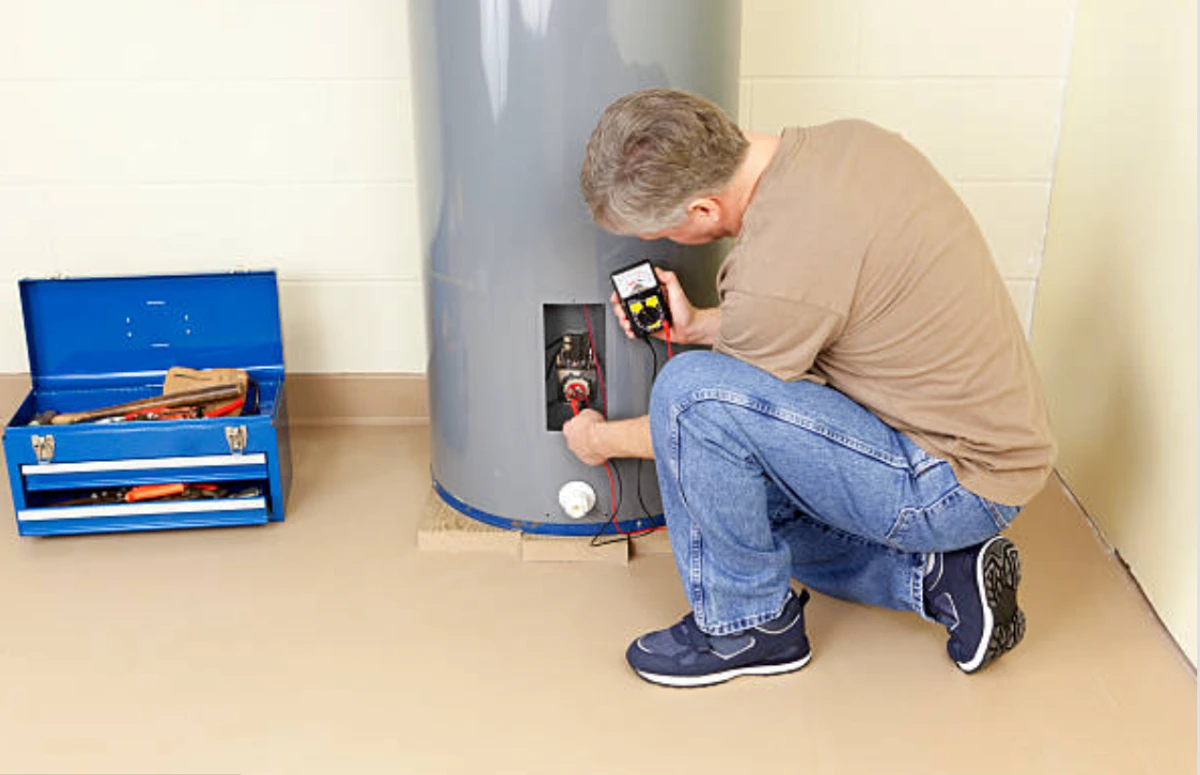
Electric storage tanks commonly use heating elements and thermostats to heat the water. Loss of power, a tripped high-temperature limit, an open heating element, or a faulty temperature control may interrupt heating or slow recovery.
Testing should distinguish a supply-power issue from a failed part. A qualified technician can assess the elements, thermostats, wiring connections, and safety controls using model-appropriate procedures. Water-heater covers expose high-voltage components; do not remove them or attempt live electrical testing yourself.
Gas water heater repair
Gas storage tanks depend on ignition and burner operation. Depending on the model, faults can involve a pilot, thermocouple or flame-sensing system, electronic igniter, gas control valve, air intake, or venting. A pilot that will not stay lit does not necessarily mean the tank is worn out.
Gas water heater repair in Queen Creek may involve tracing an ignition failure, confirming safe burner operation, and identifying why heating stopped. Combustion and venting problems need professional attention—not repeated attempts to relight a faulty heater. Damage to the home’s gas supply piping is a separate issue from burner or ignition faults; see gas line repair.
Smell gas? Leave the building and call the gas utility or emergency services from a safe location. Do not use switches, operate appliances, or investigate the heater while a gas leak is suspected.
Repairable water heater components—and what their failure looks like
For a storage-tank heater with a serviceable tank, replacing the right part may restore hot water. The component must be compatible with the unit, and the cause of the failure still matters.
Heating elements and thermostats
An electric element or thermostat fault can cause no hot water, low output, or uneven recovery. Testing identifies which component has failed before replacement.
Pilot, ignition, and gas controls
A failed ignition system, flame-sensing component, or gas control may keep a gas-fired heater from heating. Safe combustion and venting checks belong in the diagnosis.
Supply connections and shutoff valves
Leaks at hot- and cold-water fittings, flex connectors, or nearby shutoffs may be repaired without replacing an otherwise sound storage tank.
Drain valve and element gaskets
Water near the drain outlet or an electric element opening can come from a serviceable valve or seal. The leak source needs to be confirmed first.
Temperature-and-pressure relief valve
A dripping T&P discharge requires checks for high pressure, thermal expansion, temperature, and valve condition. Replacing the valve alone may not address the cause.
Anode rod, dip tube, and sediment
Where the model permits service, anode condition, a damaged dip tube, or accumulated deposits may be relevant to corrosion, hot-water delivery, or unusual operating sounds.
Water around the heater: trace the leak before replacing the tank
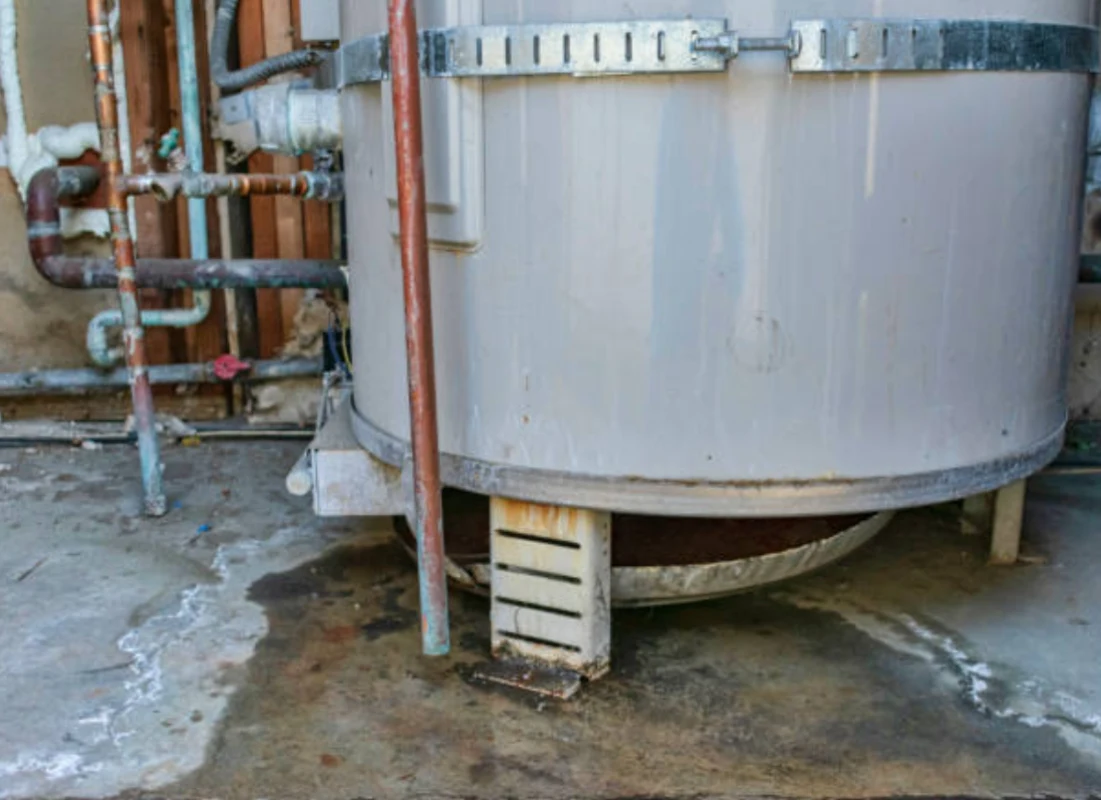
A puddle in the pan is not a diagnosis. Water can travel down a pipe or the jacket of the heater before reaching the floor. Some leaks are repairable; a confirmed leak from the tank body is a different situation.
- Inlet or outlet fittings A connection above the tank can drip and leave the base looking wet.
- Drain valve or electric element seal The valve outlet or element opening can be the starting point.
- T&P relief discharge Intermittent water may signal thermal expansion or high system pressure; never cap the discharge pipe.
- Condensation or actual tank corrosion Moisture after heavy use can differ from continuous leakage through a failing tank seam.
A confirmed leaking storage tank generally needs replacement. This repair page explains that decision but leaves equipment selection and installation to the separate Water Heater Replacement & Installation service.
Why a water heater stops delivering enough hot water
A cold faucet and a shower that turns cool after several minutes are not the same complaint. These clues help narrow which part of the hot-water system should be investigated.
| What you notice | What the inspection should distinguish |
|---|---|
| Every fixture has cold water | Loss of electric heating, failed controls, gas ignition, or a problem with the energy supply—not automatically a damaged tank. |
| Hot water starts warm, then runs out fast | Electric lower-element failure, recovery time, household demand, a dip-tube issue, or a hot-water plumbing leak. |
| Only the shower turns cold | A shower cartridge, anti-scald setting, or mixing valve may be responsible while other fixtures still get hot water. |
| Water temperature swings or runs too hot | Thermostat/control problems, mixing equipment, and the risk of scalding should be evaluated promptly. |
| Heater runs frequently or makes rumbling noises | Hot-water loss, sediment, operating conditions, or a heating fault can contribute. Noise alone is not a diagnosis. |
Useful information before the visit: Is the heater gas or electric? What is the make/model if easily visible? Are all fixtures affected? Does the hot water run out after a predictable time, and is water visibly leaking? This helps narrow the next inspection without asking you to open a panel.
Queen Creek water hardness and storage-tank performance
The Town of Queen Creek’s water FAQ reports hardness of 6–17 grains per gallon for its water system. Calcium and magnesium deposits can accumulate inside storage tanks and may contribute to noise or changes in heating performance. They are one possible factor—not proof that sediment caused a particular repair problem.
The Town’s Home Water Leak Check also discusses draining a water heater to reduce calcium buildup. Whether draining or flushing is appropriate for an existing unit should follow its manufacturer’s instructions and actual condition; a neglected or damaged heater should not be treated as a routine DIY flushing project.
Not every 85142 home has the same water supply. The Town identifies multiple water providers in and around Queen Creek. The Town’s reported hardness range is useful local context, but it is not a measured value for every address. Previous maintenance, water treatment, and the heater’s actual inspection findings matter more than an assumed mineral level.
Repair the existing heater—or plan a replacement?
A failed thermostat or leaking connector can be a manageable repair. A tank that is leaking through its body, has extensive corrosion, or has repeated major faults deserves a different discussion. There is no single age cutoff that decides every water heater’s future.
Repair may make sense when…
The storage tank is sound, the failed part is identifiable and serviceable, compatible parts are available, and the repair cost is reasonable relative to the unit’s condition and expected use.
Replacement deserves consideration when…
The tank body is leaking, corrosion is advanced, parts are unavailable, failures keep recurring, or the proposed repair cannot reasonably address the underlying problem.
Important service boundary: This page is for water heater repair of conventional gas and electric tank models. New tank sizing and installation belong to Water Heater Replacement & Installation; tankless service belongs to Tankless Water Heater Services.
What changes the cost of water heater repair in Queen Creek?
Replacing a leaking fitting is different from diagnosing intermittent ignition or testing electric elements. Repair pricing should reflect the actual heater, the fault found, component availability, and access—not a one-price-fits-all promise.
- Fuel type and model Gas and electric tanks use different controls and service components.
- Diagnosis and testing Intermittent faults may require different checks than an obvious leaking connection.
- Parts and labor The correct replacement component and installation effort vary by model.
- Safe access and isolation Draining, shutoffs, or access around the unit can change the work.
- Condition of the tank Corrosion and other failures may change whether repair remains sensible.
- Completion checks Verify what is included to confirm the original problem has been addressed.
Estimates are available. Confirm whether diagnostic testing is included or billed separately, which parts and completion checks are covered, and how additional work would be approved. An estimate does not include every test or repair; confirm the scope and any charges.
What a focused water heater repair visit should accomplish
Water heater service should move from a clear symptom to a clear repair scope. An explanation of the fault matters as much as the part being changed.
Identify the actual complaint
Note where hot water is missing, when the problem began, unusual sounds, visible moisture, and any prior service.
Check the affected system
Assess the tank, model-specific heating components, and relevant valves or connections; evaluate gas or electrical safety.
Explain the repair scope
Discuss the confirmed fault, compatible parts, estimated work, and whether the condition of the tank changes the recommendation.
Check heating and leakage
After an authorized repair, review the original symptom and check the serviced components and visible connections as appropriate.
When a water heater problem needs urgent attention
A heater that has stopped warming water but is not leaking may be scheduled differently from one releasing water across a floor. Seek urgent help for uncontrolled leakage, a relief-valve discharge that presents a hazard, water near electrical equipment, or dangerously hot water. Do not cap a T&P valve or touch energized equipment in a wet area.
If you smell gas, leave the building and contact the gas utility or emergency services from a safe location. For active plumbing leaks, Emergency Plumber explains immediate priorities. Emergency plumbing calls are accepted 24/7; an available appointment or on-site arrival time is confirmed during the call rather than guaranteed by this page.
Water heater repair questions from Queen Creek homeowners
Can you repair an electric water heater with no hot water?
Many electric storage-tank faults involve repairable components such as heating elements or thermostats. The electrical supply, safety controls, and the specific model should be checked before deciding which part to replace.
Can a gas water heater be repaired if the pilot keeps going out?
Depending on the model, ignition or flame-sensing components, gas controls, air intake, or venting may be involved. Professional diagnosis is needed. Do not repeatedly relight an appliance that is malfunctioning or if gas odor is present.
Is water around the heater always a leaking tank?
No. Top fittings, the drain valve, the temperature-and-pressure relief discharge, element seals, and condensation can all produce visible moisture. A confirmed leak through the tank body usually calls for replacement.
Why does the shower go cold while other taps stay hot?
A shower mixing valve, cartridge, or anti-scald control may be limiting the hot water at that fixture. Compare the symptom at other faucets before assuming the water heater itself needs repair.
Can the relief valve be plugged to stop dripping?
No. Never block a temperature-and-pressure relief valve or its discharge line. Dripping requires evaluation of pressure, thermal expansion, temperature, and valve operation.
Does a rumbling or popping tank need to be replaced?
Not necessarily. Sediment can contribute to noise, but operating conditions and other faults matter. The heater’s condition and manufacturer guidance determine whether maintenance or repair is appropriate.
Can a damaged dip tube make hot water run out quickly?
It can in some conventional tank designs. A dip-tube problem is only one possibility alongside element failure, demand, controls, and hot-water mixing. The model and symptoms guide testing.
Should an older water heater always be replaced?
No single age determines the answer. The tank’s integrity, repair history, parts availability, warranty terms, and the proposed repair cost help decide whether continued service is sensible.
Does Queen Creek hard water explain every water heater problem?
No. The Town reports a 6–17 gpg hardness range for its system, but different providers and home conditions exist. Minerals can matter, yet each heating or leakage complaint requires its own evidence.
Can I call after hours for urgent water heater repair?
No arrival time is guaranteed here. Creekline Plumbing accepts emergency plumbing calls 24/7, and current technician availability and the appropriate response for your water-heater problem are confirmed when you call.
Is flushing part of every water heater repair?
No. A flush is not a universal fix for no heat, gas ignition failure, or a leaking fitting. Manufacturer instructions, maintenance history, and the present condition of the storage tank should guide that decision.
What happens if the tank itself is leaking?
When testing confirms a leak through the tank body rather than a repairable fitting or valve, replacement is generally the appropriate option. The new heater’s sizing and installation are covered by the separate replacement service.
The right service if repair is not the next step
Find out what is keeping your water heater from working
Whether the hot water stopped overnight, the tank is leaking near a connection, or heating has become unreliable, explain the symptoms and whether the heater runs on gas or electricity. Call Creekline Plumbing about water heater repair in Queen Creek, AZ 85142.
Call (480) 741-9220