Tankless Water Heater Services
Queen Creek, AZ
Does your tankless water heater shut off during a shower, show an error code, or struggle to keep water hot? The cause is not always a failed unit.
Tankless water heater service covers troubleshooting, repair, installation, and replacement. Checking the unit helps identify hot water problems and determine if the system needs repair or replacement.
No hot water, an error code, or ready to go tankless?
A wall-mounted tankless heater can stop mid-shower, heat water unevenly, or show an unfamiliar fault code. In another home, the existing unit works but no longer meets the family’s demand. And sometimes the project starts with a traditional tank that’s being replaced by a tankless system.
Those situations call for different work. Tankless water heater service in Queen Creek, AZ includes diagnosing an existing on-demand unit, replacing a failing tankless heater, and planning a new gas or electric tankless installation. The choice starts with the equipment, the symptom, and the home’s actual hot-water use—not an automatic recommendation to buy a new heater.
Tankless water heater repair in Queen Creek, AZ
A tankless heater needs sufficient water flow, the correct energy supply, functioning controls, and a clear path for exhaust where applicable. A warning code or uneven temperature points toward a system to check; it rarely identifies the failed part on its own.
| What you notice | Possible areas to investigate | Useful next check |
|---|---|---|
| No hot water or a shutdown code | Ignition or gas delivery on a gas unit; electrical supply, heating circuitry, sensors, or protective controls on the applicable model. | Record the exact code, model number, and whether the display has power. Avoid repeated resets. |
| Water goes hot, then cold | Minimum activation flow, an obstructed inlet screen, fixture mixing, temperature controls, scale, or equipment capacity during simultaneous use. | Note whether it occurs at one fixture, at low flow, or when several fixtures run. |
| Hot-water flow feels weak | A restricted fixture aerator, inlet filter, mineral accumulation, or supply-side flow limitation. | Compare hot and cold flow at more than one tap before assuming the heat exchanger is blocked. |
| Rumbling or unusual operation | Heat-exchanger deposits, operating conditions, fan/combustion issues, or another model-specific fault. | Describe the sound and when it occurs; have the equipment and service history reviewed. |
| Water beneath or near the unit | Water connections, service valves, condensate drainage on applicable condensing models, or a leak inside the heater. | Observe the starting point if safe; keep water away from nearby electrical equipment. |
Repair is not the same as resetting a code. A qualified technician needs to interpret the manufacturer’s fault information and verify the underlying condition before replacing a sensor, valve, board, or other component.
Diagnose the component, not just the symptom
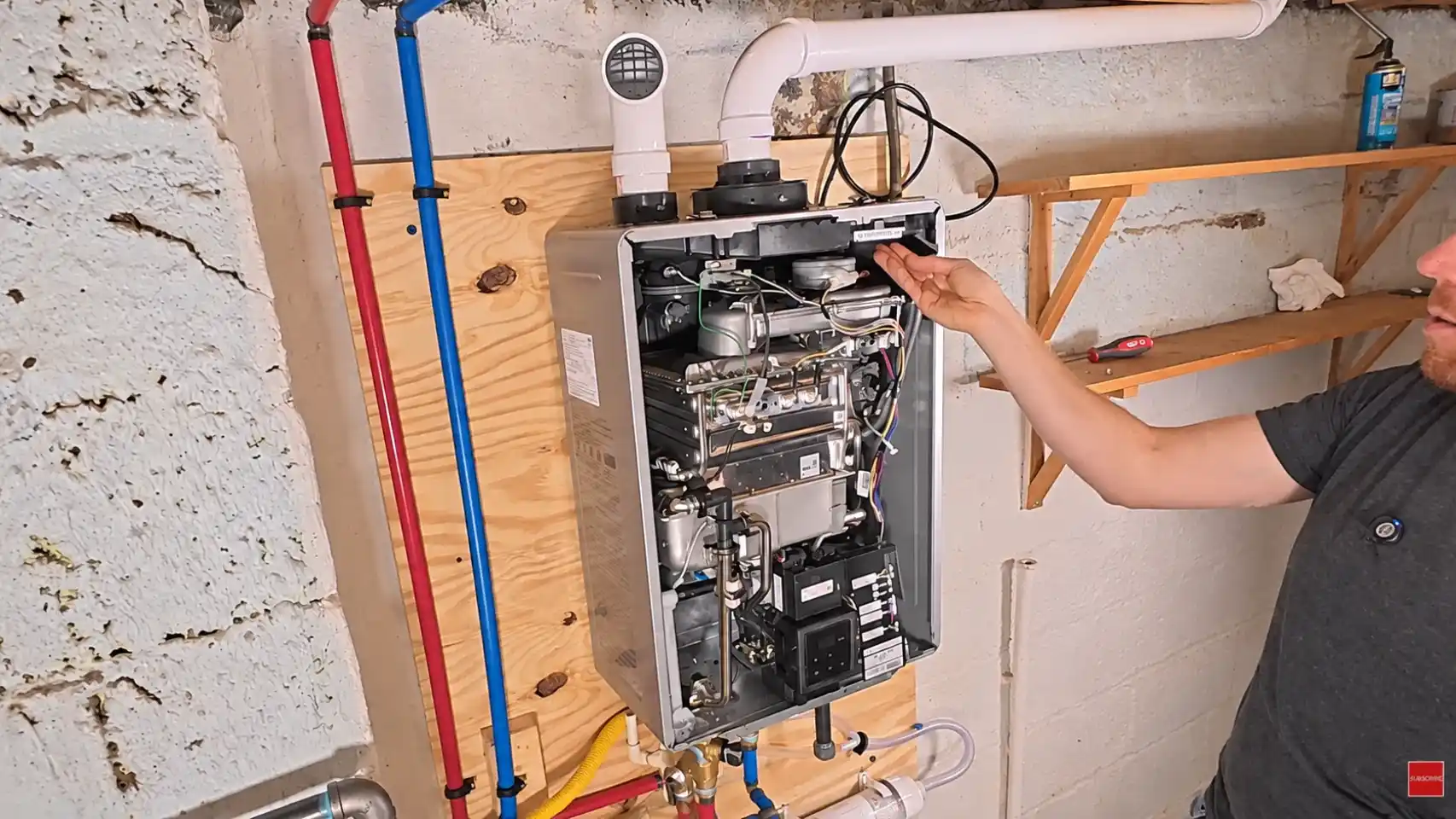
Gas-fired units can involve ignition electrodes, flame-sensing parts, gas controls, combustion fans, air intake, exhaust venting, and heat-exchanger operation. Electric tankless heaters use a different electrical and heating arrangement. Faults must be traced using the particular model’s specifications.
Water-side problems deserve equal attention. A clogged inlet filter or scale inside the heat exchanger can restrict flow or interfere with consistent heating. Connections, isolation valves, temperature sensors, and flow-sensing components may also need inspection. Not every problem requires descaling, and descaling cannot fix a damaged control or unsafe vent.
- Repairable components: The availability of model-compatible parts and the condition of the heater determine whether a focused repair is sensible.
- Water leaks: Accessible fittings and service connections are different from an internal heat-exchanger failure.
- Safety-related faults: Combustion, venting, gas, and energized electrical repairs need professional assessment—not homeowner bypasses of protective controls.
Tankless water heater replacement in Queen Creek, AZ
A recurring code is frustrating, but replacing the heater without understanding the fault can leave the original problem unresolved. The better comparison is the condition of the existing unit against the scope and suitability of a new installation.
Repair the current unit when
The issue is isolated, the heat exchanger and overall equipment condition support continued service, compatible parts are available, and the repair meaningfully addresses the cause.
Ask what will be tested after the repair and whether any other known problems remain.
Review replacement when
A heat exchanger or another major component has failed, recurring problems are affecting several systems, parts are unavailable, or the existing unit cannot deliver the hot-water capacity the household needs.
A replacement model must still be matched to fuel supply, flow demand, temperature rise, venting, electrical needs, and its installation location.
For tankless water heater replacement in Queen Creek, AZ, compare the proposed new unit’s installation requirements with the old equipment. A different model or manufacturer is not automatically a like-for-like swap, even when both units fit on the same wall.
Tankless water heater installation in Queen Creek, AZ
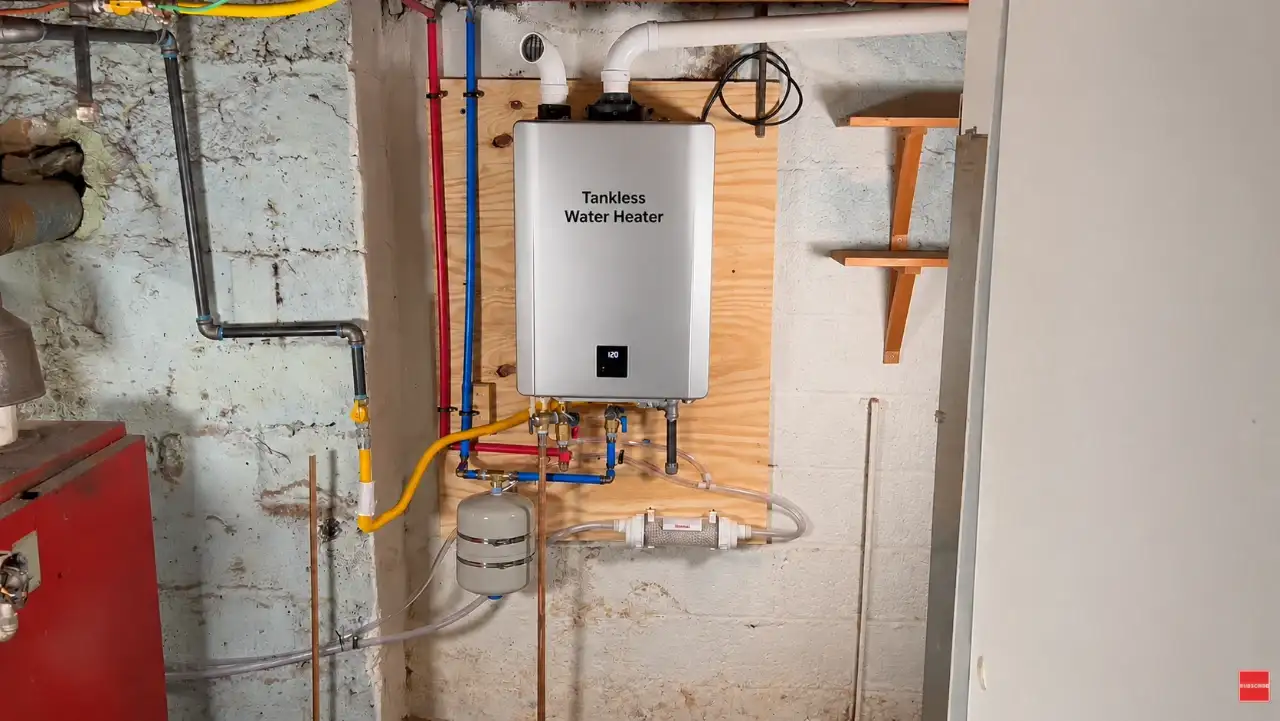
A first-time tank-to-tankless conversion is a plumbing and equipment project, not simply removing the old tank and mounting a smaller box. A suitable system needs the right capacity, utility connections, location, venting, and safe service access.
Gas tankless installation
Confirm the selected heater’s gas-input requirements, supply capacity, approved vent material and routing, combustion-air arrangement, and any condensate provisions. Existing tank-heater venting or gas connections must not be assumed suitable. If the existing gas piping needs a new branch or reroute, see our gas line services.
Electric tankless installation
Check the model’s electrical demand against the available panel capacity, circuits, wiring, and installation location. Whole-home electric tankless equipment can have substantial electrical requirements, so feasibility comes before ordering a unit.
Replacing a tank with tankless
Plan for removing the existing tank, relocating water connections if necessary, mounting the new unit, adding accessible isolation/service valves, and arranging any required work by other trades.
Buying the unit yourself? Get the full model number and installation specifications reviewed first. An advertised flow rate or familiar brand name does not confirm the heater will fit the home’s demand and available utilities.
Sizing a tankless heater: simultaneous flow and temperature rise
A tankless heater does not store a full tank of hot water. It heats incoming water as it passes through, which makes gallons per minute (GPM) and the required temperature rise central to choosing a model. A unit may handle one shower comfortably but struggle when a second shower and kitchen faucet run at the same time.
How to compare models
Estimate the hot-water flow needed during the busiest realistic combination of fixtures. Then compare that demand with the manufacturer’s published GPM output at the temperature rise required for the home’s incoming water.
The maximum advertised GPM at a low temperature rise is not necessarily the flow the same unit will produce in your home.
What changes the result?
- Two showers at once: Both fixtures add to the hot-water flow the heater must deliver.
- Incoming-water temperature: Colder water requires more heating to reach the setpoint, which can reduce available flow.
- Gas vs. electric equipment: Output and supply requirements depend on the selected unit, not just the word “tankless.”
- Pipe distance: Tankless heat is on demand, but it does not make hot water arrive instantly at a remote faucet.
For tankless sizing, the U.S. Department of Energy’s Building Science Education guidance identifies simultaneous flow and temperature rise as the relevant factors. The manufacturer’s model-specific performance chart is what should guide the final choice.
The installation details that affect performance and future service
New tankless equipment should be installed according to the model’s listing and instructions. The work may involve cold-water isolation, hot-water delivery, service valves for maintenance, appropriate gas or electrical connections, safe mounting, condensate handling on condensing models, and a correctly designed exhaust and air-intake system for gas equipment.
Installations also need space for service, access to the controls, and a plan for protecting exposed connections where applicable. Manufacturer-required startup checks are part of commissioning the new unit—not an optional step after the installer leaves.
Tankless vs. a storage tank: what actually changes?
Tankless heaters avoid keeping a large reservoir heated between uses, and their compact size can free up floor space. They still have output limits, maintenance requirements, and an installation cost that depends heavily on the existing home’s utilities. A storage tank can remain a practical option when it already meets household demand and a tankless conversion would require extensive changes.
Tankless also does not mean immediate hot water at every tap. Cooled water already sitting in a long hot-water branch has to leave the pipe first. A brief hot-cold-hot change after turning a tap off and on again—sometimes called a cold-water sandwich—is a different complaint from a heater that stays cold. Flow cycling, plumbing crossover, and the model’s controls may need review. If the wait at a far bathroom is the complaint, discuss distribution distance and whether a compatible recirculation design makes sense.
Replacement decision: Compare the installed project—not just the sticker price or estimated energy savings. If the goal is to install another conventional tank instead, see Water Heater Replacement & Installation.
Queen Creek water hardness and tankless heat-exchanger care
The Town of Queen Creek reports 6–17 grains per gallon (gpg) of hardness in its water system. Calcium and magnesium can leave scale in tankless heat exchangers, potentially restricting flow or changing heating performance over time. That Town range is not a measurement of every address in ZIP 85142; the actual water provider and the home’s measured hardness matter.
Maintenance follows the equipment manufacturer and the site’s water conditions. A service visit may involve checking the cold-water inlet screen, descaling or flushing when indicated, examining service-valve access, and reviewing venting or condensate provisions on applicable gas models. A hard-water-related error does not prove descaling is the only repair needed.
Refer to the Town water-quality FAQ and the manufacturer’s instructions. Rinnai’s official tankless FAQ also explains why low flow and inlet-screen restrictions can affect activation.
A useful maintenance history
- Model and fuel type of the tankless heater.
- Any visible error code and when it appears.
- Measured hardness, water source, and treatment equipment if known.
- Last descaling, inlet-screen cleaning, or other service performed.
- Whether the problem occurs at one fixture or several.
No blanket flush interval: Service frequency should follow the model’s requirements and water conditions; a one-size-fits-all schedule can be misleading.
Tankless permits and installation responsibilities in Queen Creek
The Town of Queen Creek lists water heater installations among permit-required work. For a tankless conversion or replacement, confirm what applies to the actual property, including fuel-gas, venting, electrical, plumbing, and inspection requirements. A Queen Creek mailing address by itself does not establish the jurisdiction of every property in 85142.
The proposal should identify who obtains any necessary permit, arranges inspections, manages work by other trades, and checks the installed heater before sign-off. See the Town’s required-permits guidance and Building Safety information.
What affects tankless repair, replacement, and installation cost?
Repairing a flow sensor, replacing a failed tankless heater, and converting a storage-tank home to tankless are not interchangeable projects. A useful estimate spells out the equipment, known fault or intended use, utility changes, access, and scope of work instead of attaching one price to every tankless job.
For repair or replacement
Ask which fault was confirmed, the availability of compatible parts, the age and condition of the heat exchanger, any warranty terms to verify, and whether the existing venting and connections meet the proposed replacement model’s requirements.
For first-time installation
Check capacity, gas or electric service changes, water-line routing, mounting, venting, condensate drainage where applicable, old-equipment removal, permits, startup, and any separately priced drywall or finish work.
Estimates are available. Confirm whether diagnosis, specialist electrical or gas work, permitting, and restoration are included or charged separately before authorizing service.
From the first call to the final operation check
Whether the problem is an error code or a planned conversion, the work should follow the scope—not a preset recommendation to replace the equipment.
- Identify the actual jobDescribe existing equipment, the main symptom or installation goal, and the model number if available.
- Assess the conditionsReview the unit, hot-water flow, installation site, and relevant gas, venting, electrical, or water-side requirements.
- Review the proposed scopeExplain the repair, replacement model, or conversion plan; clarify costs, permits, access, and exclusions.
- Test and hand overVerify relevant heating operation and connections, complete applicable startup or inspection steps, and explain maintenance needs.
When a tankless water heater problem cannot safely wait
If water is actively spreading toward electrical equipment, keep clear of the area and request urgent plumbing help. If you smell gas or suspect a gas leak, leave the building, avoid operating switches or controls, and contact emergency services or the gas utility from a safe location. Do not open a combustion chamber or bypass protective controls.
For uncontrolled water damage, use Emergency Plumbing. Emergency calls are accepted 24/7; appointment availability and arrival timing must be confirmed when you call.
Tankless water heater questions homeowners ask
Can a tankless heater be repaired instead of replaced?
Often, yes. A repair can be sensible when the fault is identifiable, compatible parts are available, and the rest of the unit is in suitable condition. A major heat-exchanger failure or repeated costly problems can change that decision.
Why does my tankless shower suddenly turn cold?
Flow below the unit’s activation threshold, a restricted inlet screen, fixture mixing, mineral deposits, or a capacity limit during simultaneous use can all contribute. Note whether the problem happens at one faucet or throughout the home.
Is an error code proof that I need a new heater?
No. Error meanings vary by model, and a code reports a detected condition rather than automatically identifying the failed part. Record the code and have the relevant system checked.
Do gas and electric tankless heaters need different installation work?
Yes. Gas units have fuel-supply and combustion/venting requirements; electric tankless models depend on their electrical supply and circuit capacity. The exact specifications depend on the unit and intended hot-water load.
How many showers can one tankless water heater support?
That depends on combined flow and temperature rise at the model’s rated output. Count the likely simultaneous showers and other hot-water fixtures, then review the proposed unit’s performance chart.
Will a tankless system deliver instant hot water to a distant bathroom?
Not necessarily. The heater starts heating on demand, but cooled water in the pipe must still be displaced. Distribution distance and a compatible recirculation arrangement affect waiting time.
Can my existing gas tank heater be switched to tankless?
Often it is possible, but it is not automatically a direct swap. The gas service, venting, heater capacity, water connections, location, and permit requirements must be evaluated before equipment is selected.
How often should tankless equipment be descaled in Queen Creek?
Use the model’s maintenance instructions and the home’s actual water hardness and usage. Town hardness data describes the Town system, not every property, and it does not establish one correct schedule for all units.
Is a dripping tankless water heater a repair or replacement problem?
It depends on the source. A service valve or accessible water connection may be repairable, while an internal heat-exchanger leak can be a much larger issue. Do not assume a puddle identifies the damaged component.
Will a tankless installation need a permit?
The Town of Queen Creek lists water-heater installation as permit-required work. Confirm the issuing jurisdiction for your address, what work is being performed, and who handles permits and inspections.
What should I know before approving a replacement quote?
Confirm the exact new model, rated output at the required temperature rise, gas/electrical and venting changes, new connections, old-unit removal, startup checks, applicable permits, and any finish-restoration exclusions.
When the problem belongs to a storage-tank service instead
Tankless repair, tankless replacement, and tank-to-tankless conversions belong on this page. Conventional storage-tank equipment has different repair components and replacement planning.
- Storage-tank water heater repairHeating elements, tank controls, and existing gas/electric storage-heater faults.
- Storage-tank replacement & installationNew gas/electric tank selection, first-hour rating, and conventional tank installation.
- Water softener serviceSeparate treatment options when measured water hardness and equipment needs justify them.
Repairing a tankless unit or planning a new one in Queen Creek?
Share the model and error code if you have them, or describe the hot-water demand you want a new system to handle. Creekline Plumbing can discuss tankless repair, replacement, and installation needs for residential properties in Queen Creek, AZ 85142.
Call (480) 741-9220