Drain Line Repair
Queen Creek, AZ
Water collecting under your kitchen sink when it drains, or recurring leaks around bathroom drain pipes, can signal damaged piping. Drain cleaning cannot fix cracked pipes or leaking joints.
Drain line repair fixes cracked waste pipes, loose joints, and leaking drain connections. Finding the damaged section helps determine if a small section needs repair or a longer pipe needs replacement.
Water leaking under the sink every time it drains?
The cabinet stays dry until the dishwasher empties. A drip appears under the bathroom sink only after someone washes up. Or a ceiling stain returns whenever the shower runs. That timing is a useful clue: water may be escaping from a drain connection rather than a pressurized supply line.
A cracked trap arm, loose slip joint, or damaged branch drain can release wastewater each time a fixture empties. Clearing a blockage will not seal that joint or reconnect broken piping. Drain line repair addresses the damaged connection or waste-pipe section while the surrounding drain, waste, and vent (DWV) piping is checked for related defects.
Is the leak limited to one fixture, or do several drains back up together? Those patterns point to different parts of the system. A wet cabinet may involve an exposed P-trap; a backup across multiple fixtures may begin farther down shared drainage piping. Here is how to separate the clues before choosing a repair.
- Water only appears when the fixture drainsCheck the trap, slip-joint connections, and exposed branch line before assuming a supply-pipe leak.
- The same joint keeps leakingA worn seal, misaligned fitting, damaged trap arm, or cracked pipe may require component repair or replacement.
- Damage is hidden behind a wall or floorAccess planning follows the location of the suspected defect, not a guess about which surface to open.
When cleaning does not fix a leaking drain
Grease, hair, food residue, and other buildup can restrict flow even when the pipe remains intact. Drain cleaning addresses these obstructions with methods such as cabling or hydro jetting when the line is suitable.
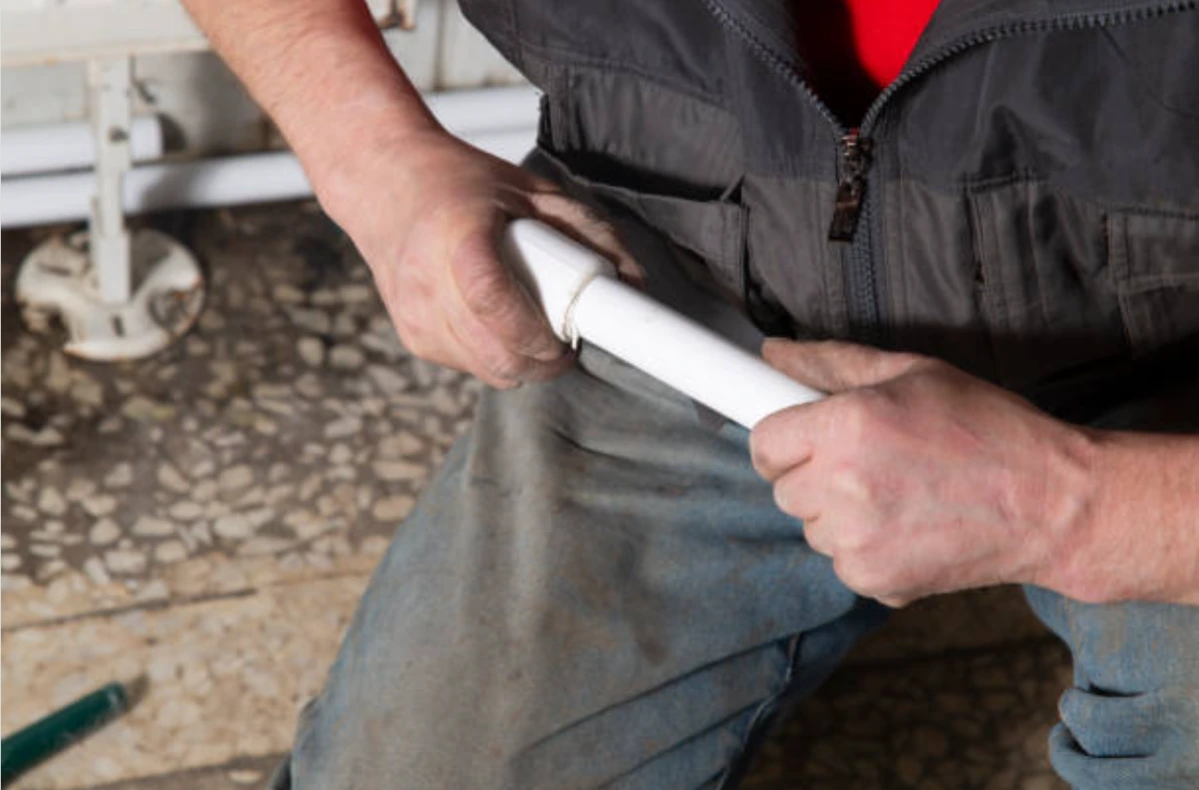
Snaking or high-pressure cleaning may restore flow through a suitable, obstructed pipe. Neither method reconnects a separated joint, fixes a cracked trap arm, or replaces a broken waste section. A persistent leak points toward investigating the pipe itself—not repeatedly clearing the same line.
If the cabinet remains wet after the line was cleared, the location of that leak matters more than the earlier clog. Drain repair in Queen Creek may involve replacing a worn trap assembly, repairing a loose connection, or opening a limited area to reach a broken branch behind a wall.
Pinpointing the failed household drain
Water from a kitchen sink, shower, and washing machine eventually joins larger drainage piping, but each connection can fail in a different way. Identifying the affected section first keeps a small branch-drain repair from turning into an unnecessary main-line project.
Fixture drains and traps
Under-sink P-traps, tubular waste assemblies, trap arms, and nearby fittings may leak through a worn washer, slip nut, or cracked connection.
Household branch drains
Kitchen, bath, shower, and laundry branches run through walls, floors, or below a slab before connecting to a larger building drain. Access and pipe condition drive the repair.
Main sewer lateral
A damaged line carrying combined wastewater away from the property belongs under sewer line repair and replacement, not a routine branch repair.
Repair methods for cracked pipes and leaking joints
One home has water dripping from an exposed P-trap; another has a cracked bathroom branch behind drywall. Residential drain repair services in Queen Creek address both types of damage, but the location, material, extent of failure, and condition of neighboring connections determine which repair makes sense.
An under-sink slip-joint washer or trap connection is usually accessed very differently from a cracked branch drain inside a wall. Repairs may involve replacing a defective tubular assembly, coupling, or damaged PVC/ABS pipe section, then checking that the connection is secure and wastewater drains without leaking. Concealed work may require a planned opening and separate surface restoration.
Trap and joint repair
A dripping slip-joint nut, P-trap, gasket, or accessible waste fitting can often be addressed without opening a wall. The connection and neighboring pipe must still be checked for cracks, distortion, or poor alignment.
Broken drain pipe replacement
A cracked or separated section may be cut out and replaced with compatible drain piping and fittings. A targeted replacement is appropriate when the defect is localized and adjacent sections are serviceable.
Misaligned or poorly draining branches
A branch with displaced fittings or an improper low spot may retain wastewater and accumulate debris. Correcting pipe support, alignment, or slope is a different job from simply removing buildup.
Concealed branch access and repair
When the leak is behind tile, drywall, or beneath flooring, the damaged portion must be located before access is planned. Cabinet work, wall openings, or localized floor removal may be needed depending on the route.
Spot repair or longer branch-drain replacement
One failed fitting rarely calls for replacing every household drain. If the surrounding pipe is sound, a localized joint repair or short section replacement may resolve the leak. When inspection finds multiple cracked joints, severe deterioration, or a sagging run that cannot drain correctly, replacing a longer section may be more practical than another small patch.
How much of the pipe is actually damaged? The proposed scope should identify the affected fixture, route, pipe material, and exact section to be removed or repaired. Connections, pipe supports, proper drainage, and wall or floor access all belong in that discussion before work is authorized.
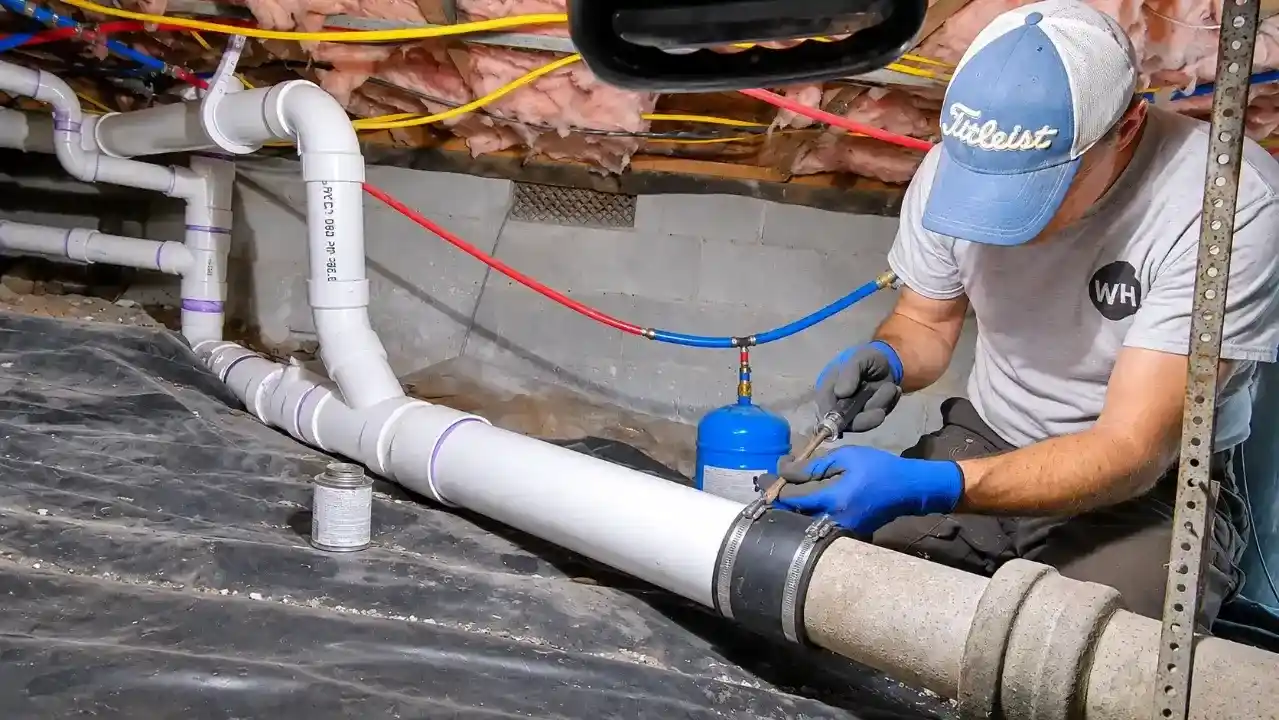
Where an older line connects to newer PVC or ABS piping, appropriate transition fittings and proper support matter. Material compatibility and the applicable plumbing requirements determine the repair details—not appearances alone.
- Confirmed defect and repair location
- Spot repair versus longer replacement
- Compatible fittings and secure support
- Access and surface restoration scope
- Appropriate drainage checks afterward
- Separate sewer-lateral work, if identified
The drain-pipe repair process
Whether a kitchen waste connection is exposed or a bathroom branch disappears below the floor, the work follows the identified defect and the approved scope.
Trace the symptom
Review where and when wastewater appears, which fixtures are involved, and any previous cleaning or repair work.
Inspect the drain
Check accessible fittings and investigate concealed piping when evidence points beyond the visible connections.
Fix the damaged section
Replace the failed fitting or pipe portion, correct alignment where necessary, and secure the connections.
Verify drainage
Check the repaired area and drainage operation by methods appropriate to the completed work; review remaining restoration.
Repair costs depend on access and pipe condition
A damaged trap directly beneath the sink is not the same project as a broken bathroom branch hidden below tile. The length of damaged piping, access route, pipe material, required openings, and restoration responsibilities all affect the proposed work.
A practical scope separates plumbing repair from additional drywall, cabinet, tile, or concrete work when those items are not included. If a concealed opening reveals more damage, any expanded work should be discussed before it proceeds.
Estimates are available. A proper estimate identifies the repair being proposed and clarifies which inspections, access work, and restoration items are included or separate.
- Location: exposed cabinet fitting or concealed wall/floor pipe
- Extent: single leaking joint or longer damaged branch
- Material: compatible fittings, transitions, and pipe support
- Access: cabinet, drywall, tile, or concrete disturbance
- Restoration: what is included in the plumbing scope
- Checks: testing and any required inspection after the work
Drain-line repair questions answered
Can a leaking drain pipe be repaired without replacing the whole line?
Often, yes. A localized joint, fitting, or pipe defect may be repaired by replacing only the affected portion if the adjacent line remains serviceable. Extensive deterioration or multiple failures can justify a longer replacement.
Why does the cabinet leak only when the sink or dishwasher drains?
The leak may be in the trap, drain connection, or branch waste line. When water moves through that fitting, a failed seal or cracked component can release it. This pattern is different from a continuously pressurized supply-line leak, though the source still must be confirmed.
Does a drain camera inspection always have to be performed?
No. An exposed trap or obvious failed joint can often be assessed directly. Cameras may be useful for recurring problems or concealed piping if the line is accessible and large enough to inspect effectively.
Will snaking or hydro jetting repair a broken drain line?
No. Those are cleaning methods for suitable, obstructed lines. They do not seal cracks, restore missing pipe sections, or reconnect separated joints. A documented physical defect calls for pipe repair rather than repeated cleaning.
What if the branch drain is inside a wall or beneath the floor?
Inspection and access planning establish where an opening may be necessary. The repair could involve removing a limited section of drywall, cabinet material, flooring, or concrete, depending on the pipe route and confirmed defect.
Are drain line repair and sewer line repair the same service?
Not exactly. Branch drains carry wastewater from individual household fixtures toward larger drainage piping. The sewer lateral carries combined wastewater away from the property. A main-line failure may call for sewer line repair and replacement instead.
Can an improper slope make a drain keep clogging?
A poorly aligned or sagging horizontal branch can retain water and debris. When inspection confirms that condition, a repair may involve correcting the affected section’s alignment or support, not just clearing the line.
Should the sink or shower remain in use while its drain leaks?
Avoid using the affected fixture until the leak is addressed. If wastewater is backing up into living space, keep people and pets clear of contaminated water and request emergency plumbing service.
Drain lines, sewer laterals, and supply pipes are different
Pipe repair in Queen Creek can involve two very different systems: pressurized water-supply lines that deliver clean water, and drain lines that carry wastewater away. A clogged but intact pipe is another situation entirely. The service should follow the damaged component rather than the symptom alone.
For the homeowner, the most useful distinction is when the leak appears: water escaping only as a sink, tub, or washer drains often points toward the drain-waste system; leakage while a line remains pressurized points toward a supply connection. Neither observation is a diagnosis on its own. For pressurized piping, see water line and pipe repair.
Stop wastewater leaks at the damaged pipe
Water escaping from a P-trap, waste arm, or concealed branch can damage cabinets, drywall, and flooring each time the fixture drains. Creekline Plumbing handles residential drain line repair in Queen Creek, AZ 85142. Share which fixture triggers the leak, where water appears, and any previous inspection findings. The repair can then be evaluated around the damaged branch or connection—not an assumed whole-house pipe problem.