
Water Softener Installation & Service
Queen Creek, AZ
White crust around faucets, spots on glassware, or a softener that no longer seems effective can make hard water a daily frustration. The cause should be checked before choosing equipment.
Water softener installation and service depend on measured hardness, household water use, and existing equipment. Those details help determine whether adjustment, repair, or a new system is the better approach.
Hard-water spots coming back—or a softener that stopped doing its job?
White scale on the faucet, cloudy shower glass, and spots on dishes can point to dissolved hardness minerals. But the same buildup returning after a softener was installed raises a different question: Is the system treating the water, or is untreated water reaching that fixture? A clear diagnosis matters more than replacing equipment on a hunch.
- Installing a first softener: Check the actual incoming hardness, where the main supply enters, and which indoor lines should be treated before choosing a system.
- Hard water with a softener already installed: Compare samples before and after the unit at appropriate test points. Review the bypass position and regeneration history before assuming the resin has failed.
- Salt disappearing unusually fast: The hardness setting, household water use, regeneration frequency, or brine system may explain the change. A fresh bag of salt is not a diagnosis.
- Particles, odd taste, or an odor: First identify what the water concern actually is. Water filtration has a different job from removing calcium and magnesium hardness.
The practical starting point is simple: identify whether the problem is untreated hard water, a softener performance issue, or a separate water-quality concern. Each leads to a different service decision.
How hard is the water in Queen Creek?
The Town of Queen Creek lists 6–17 grains per gallon (gpg) of hardness for its own water system. Those numbers describe mineral content from calcium and magnesium, not a test of every home in ZIP 85142. The reading for a particular house may differ because its supplier, plumbing arrangement, or existing treatment system is different.
For a new installation, test the incoming water before specifying capacity. For a softener that seems ineffective, compare an untreated sample with water downstream of the unit, using points that are actually on the intended treatment route. A kitchen tap on a deliberately unsoftened branch can give a misleading result even when the softener is operating normally.
Source: Town of Queen Creek — Water FAQs.
What should a water softener installation include?
A conventional ion-exchange water softener has a resin tank, a control valve, and a brine tank. The resin exchanges calcium and magnesium for sodium or potassium ions; a regeneration cycle restores the resin using water and the appropriate regenerant. This equipment addresses hardness reduction. It is not interchangeable with a sediment cartridge, carbon filter, or drinking-water reverse-osmosis unit.
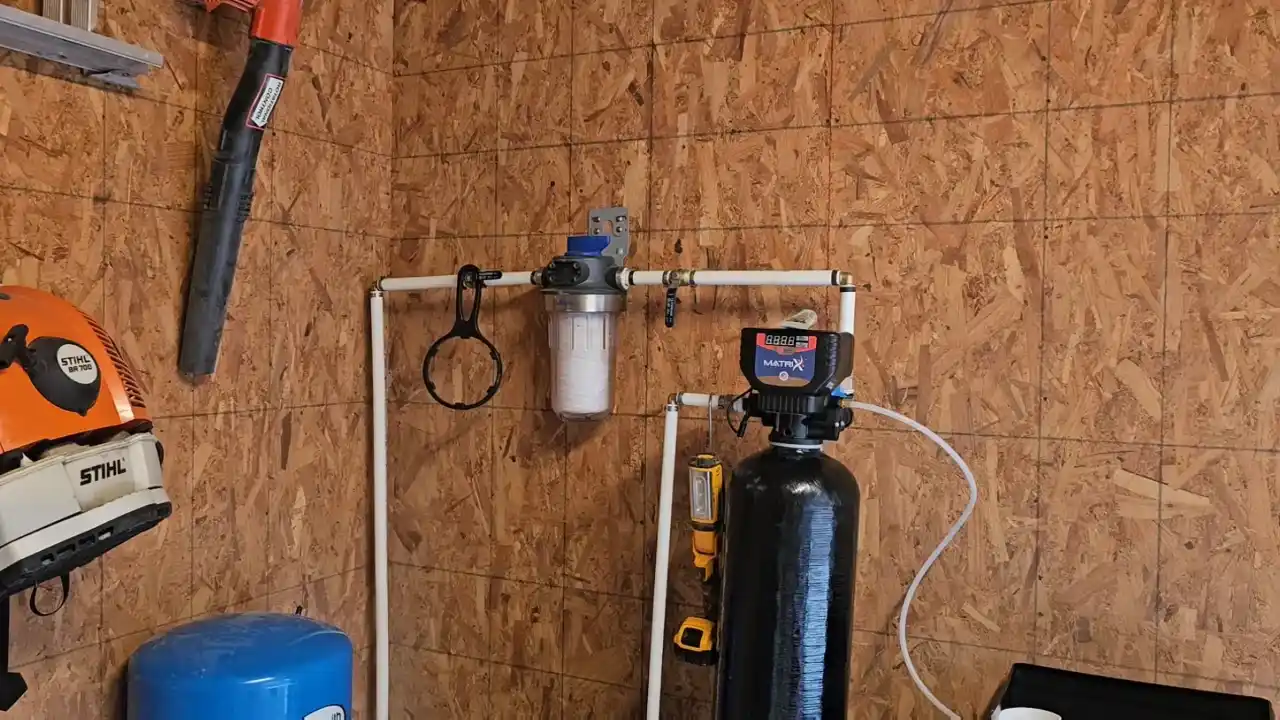
A water softener installation in Queen Creek starts with the supply connection and the lines to be treated. The unit should have an accessible bypass, appropriate shutoffs, space for salt refills and service, and a compatible regeneration discharge route. Drain connections must follow manufacturer instructions and applicable local requirements, including appropriate protection against backflow where required. The chosen control may also require a nearby electrical outlet.
Some homes already have a softener loop in the garage or utility area. That makes planning easier only when the loop serves the intended fixtures and its valves, drain access, and connection locations are usable. Where no suitable loop exists, the project may include new supply piping and a different installation location. Outdoor hose bibs, irrigation, and pool-fill lines should be considered separately rather than automatically softened.
Why the plumbing layout matters: Choosing the right water-treatment equipment is only part of the job. A correctly sized softener can still miss the intended fixtures if it is connected to the wrong branch, restrict peak flow if its service rating is too low, or create problems if there is no suitable regeneration drain. Equipment selection and plumbing connections need to work together.
Which water lines should the softener treat?
Softening the indoor supply does not automatically mean sending every gallon outdoors through the resin. Landscape irrigation and hose bibs can consume treatment capacity without serving the homeowner’s main hard-water goal. Which branches are softened depends on the point of entry, any existing loop, and the household’s preferences.
An accessible bypass makes it possible to isolate the equipment for service. It also matters during troubleshooting: a unit left in bypass may display normal settings while indoor taps still receive hard water. Drainage, the brine tank, and control head should stay reachable after installation.
If a drinking-water tap will remain unsoftened, or if the home also uses reverse osmosis or whole-house filtration, the sequence and branching of the plumbing should be planned up front. Those treatment goals are distinct; the correct water route is not necessarily the same for each.
Confirm the planned connection
Treated lines: Are the intended indoor fixtures connected while irrigation and other outdoor demand are considered separately?
Bypass: Is the valve accessible, clearly identified, and set to the correct operating position?
Drain and power: Can regeneration discharge be routed appropriately, with power provided if the controller needs it?
Service access: Is there room to refill salt, read controls, and inspect connections without moving the unit?
What size water softener fits your home?
A water softener has two jobs: remove the household’s mineral load between regeneration cycles and deliver enough water during normal simultaneous use. The largest advertised grain rating is not automatically the most efficient or most comfortable option.
Measure the incoming water
Record incoming hardness in gpg using an appropriate test, and confirm the household water provider or source. Do not use the Town’s system-wide range as the home’s exact measurement.
Estimate daily demand
Estimate the number of residents, water used between regeneration cycles, and the indoor lines to be softened. Changes in household use can change the right capacity.
Check simultaneous use
Check the manufacturer’s rated service flow and pressure-drop information against simultaneous showers, laundry, and other expected indoor use.
Review salt and water use
Compare demand-initiated regeneration, salt efficiency, and regeneration water use along with capacity. A larger unit is not automatically more economical.
What a grain rating actually means: The combination of tested hardness and gallons of water softened determines a rough hardness load. Usable capacity changes with regeneration settings and salt dose, so compare rated performance under stated conditions—not two capacity numbers stripped of context.
For residential ion-exchange systems, NSF/ANSI 44 covers certified softener performance, capacity, pressure drop, and related requirements. Check the specific model’s certification and published figures rather than assuming all equipment is certified. The EPA’s water-efficiency guidance also emphasizes salt and regeneration water use. WaterSense does not currently label water softeners.
Why is your existing water softener no longer softening the water?
A brine tank full of salt does not show whether the unit is exchanging hardness minerals. Before water softener repair is recommended, compare untreated and treated hardness, confirm the intended fixtures are on the softened line, and review bypass position and regeneration operation. The difference helps distinguish a real treatment failure from a plumbing-route problem.
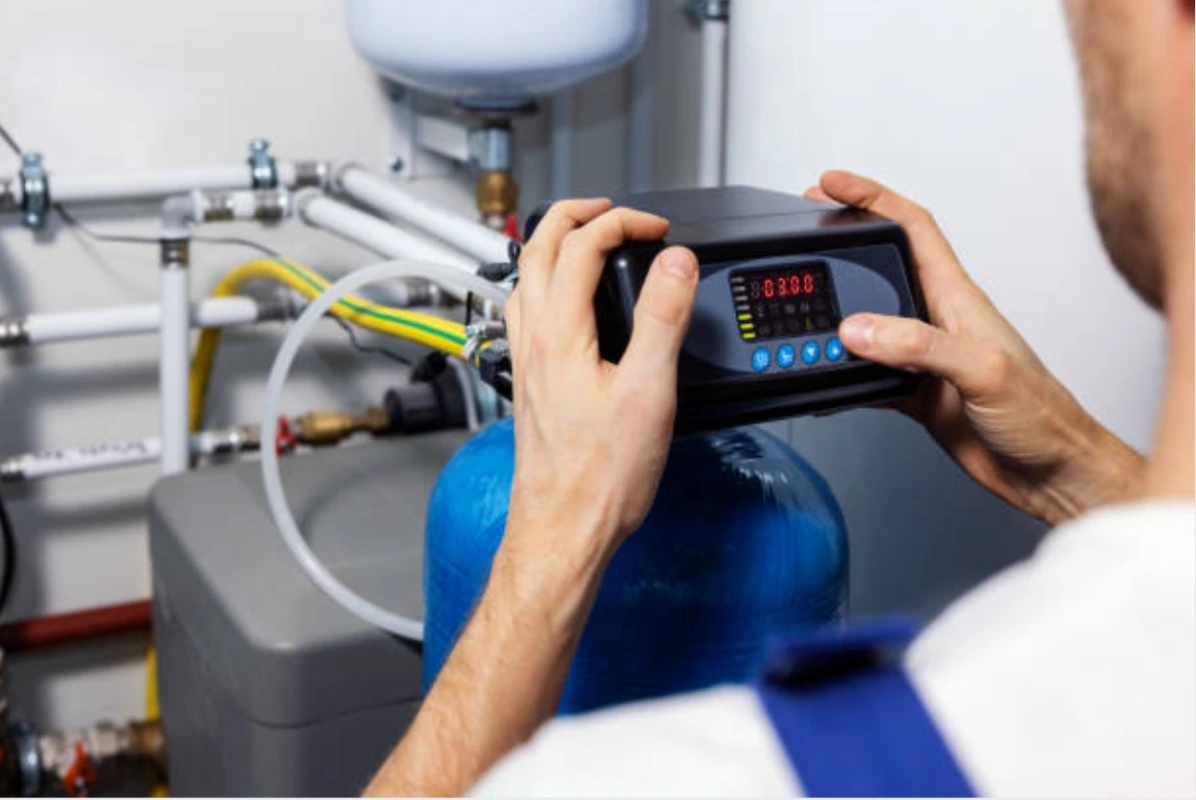
- Bypass or an untreated branch: The control may be running while the valve sends water around the resin, or the problem tap may not be connected to the softened supply.
- Brine and regeneration faults: A salt bridge, poor brine draw, a clogged injector, incorrect programming, or restricted discharge can interrupt the exchange cycle. The correct repair depends on the model.
- Control valve, seals, or resin: Worn valve parts, a failed motor, leakage, or exhausted or fouled media may prevent consistent performance. Replacing a complete unit is not the automatic first step.
- Changed water demand: More occupants, different hardness, or additional softened fixtures may exceed the capacity the original settings were designed to handle.
Water running continuously to the drain? Flow outside an expected regeneration cycle deserves investigation; it may indicate a valve or control problem. Record the model, any display code, and when the issue began. Leave pressurized valves and electrical components to someone qualified to service them.
Should a water softener be repaired or replaced?
A softener that has lost performance is not automatically worn out. The important questions are what failed, whether a targeted repair will restore dependable softening, and whether the existing capacity still suits the household.
When service or repair may make sense
Programming corrections, a bypass adjustment, serviceable brine components, seals, or compatible valve parts may put the system back to work. Compare tested hardness before and after service instead of treating a disappearing salt level as proof of success.
When replacement deserves consideration
Water softener replacement deserves consideration when a tank or control is badly damaged, problems keep returning, compatible parts cannot be found, or the original equipment cannot handle current household demand. A replacement still requires measured hardness and a fresh review of flow, drain routing, and connections.
Before choosing replacement: Look for a specific diagnosis, the practical repair option, and a clear explanation of what a new system would improve. That avoids paying for a new tank when the underlying issue is a bypass or plumbing connection.
Water softener, salt-free conditioner, or water filtration?
Water treatment services in Queen Creek, AZ can address different household concerns, but a softener, a salt-free conditioner, and a filter do not do the same job. A conventional salt-based water softener reduces calcium and magnesium hardness through ion exchange. Most salt-free conditioners manage scale differently without removing those minerals in the same way. If reducing measured hardness is the goal, compare product-specific performance rather than relying on a “salt-free softening” label.
Whole-house water filtration is a separate service for sediment, taste, odor, or a specifically identified water-quality concern, depending on the filter media and its tested claims. A drinking-water reverse-osmosis system serves another purpose, often at a dedicated tap. Neither a softener nor a generic filter should be presented as a solution to every water problem.
White mineral deposits and a confirmed hardness reading point toward softener installation or service. If the main concern is chlorine taste or particles, a different treatment assessment may be appropriate; if both problems exist, the equipment and plumbing routes may need to be planned together. Sodium- or potassium-regenerated softeners also change the mineral composition of treated water. Households with medically restricted diets can discuss their drinking-water arrangement with a healthcare professional.
Water safety and water hardness are different questions. Hard-water scale is not, by itself, evidence that the home’s drinking water is unsafe. The Town publishes its separate annual drinking-water quality reports for regulated substances.
What ongoing maintenance does a water softener need?
A softener works best when its regeneration schedule reflects real use. Excessive cycling wastes salt and water; too little regeneration can allow hardness through. The homeowner’s routine is partly about checking the unit and partly about noticing when its performance changes.
- Check the salt and brine tank: Follow the manufacturer’s refill guidance and look for salt bridging, unexpected water levels, or residue that may require approved cleaning.
- Review regeneration settings: Hardness, household use, available capacity, and demand-based controls determine how much regeneration water and salt the system uses.
- Watch for a performance change: Returning scale or an unexpected increase in salt use calls for a hardness and operating check, not just more salt.
- Check drain and connections: Look for drips at supply fittings, hoses, and the drain. A continuous flow to drain when not regenerating deserves investigation. Keep the bypass and controls accessible.
The EPA explains that ion-exchange units consume salt and water during regeneration. Its home-maintenance guidance recommends ongoing checks and periodic professional service. There is no universal salt-refill or regeneration schedule for every Queen Creek home.
What affects water softener installation and replacement cost in Queen Creek?
Water softener installation cost in Queen Creek is driven by the unit and the actual plumbing scope. A usable existing loop, drain, and service space can make the job substantially different from a first installation that requires supply-line changes. A replacement may also include removing an old system and correcting outdated connections.
- Selected softener type, verified grain capacity, flow rating, and included components.
- Condition of an existing softener loop, new piping, shutoffs, or bypass valve work.
- Access to a suitable regeneration drain and any required protection.
- Available installation space, access, and electrical needs.
- Which household water lines are included in the treatment plan.
- Old-unit removal and disposal, programming, startup checks, and what is excluded from the agreed scope.
Compare the scope, not only the unit price: Review the exact equipment model, rated performance, new plumbing, regeneration drain, bypass, removal of existing equipment, and any excluded work. A universal installed price would be misleading without seeing those conditions.
What happens during a water softener installation?
Check the water and location
Review the water source, measured hardness, intended indoor fixtures, and the existing supply loop, drainage, power, and service space.
Agree on equipment and scope
Match the softener’s capacity and service flow to household demand. Confirm the treated-line routing, bypass, drain, old-unit removal, and installation scope.
Install and configure
Install the approved equipment and connections, then configure hardness and regeneration settings according to its model-specific instructions.
Check operation and explain upkeep
Inspect connections for leaks, confirm the intended softened-water route and output as appropriate, and explain bypass operation, salt refills, and future maintenance.
Water softener questions homeowners ask
Does every Queen Creek home need a water softener?
No. The Town reports 6–17 gpg for its water system, but household supplies and treatment setups vary. Choose water softening based on a measurement at your home, mineral-scale concerns, and what you want the equipment to accomplish.
Will a salt-based water softener remove chlorine taste or sediment?
Not as its primary function. Ion-exchange softening reduces calcium and magnesium hardness. Taste, odor, sediment, and specific contaminants require a treatment system designed and tested for those concerns.
Does a salt-free conditioner remove hardness minerals?
Most salt-free conditioners do not remove calcium and magnesium the way an ion-exchange softener does. Product claims vary, so compare measured performance for the result you want.
Can outdoor irrigation and hose bibs stay on unsoftened water?
Yes, depending on the home’s plumbing layout. The connection point should be planned so the intended indoor fixtures are softened without automatically routing every outdoor line through the system.
Does a new salt-based softener need a drain connection?
Conventional regenerating ion-exchange softeners discharge water during regeneration. The equipment needs an appropriate drain arrangement that follows manufacturer instructions and applicable requirements.
Why is my water softener not working even though the salt tank is full?
Possible causes include a bypass left open, incorrect controller settings, salt bridging, poor brine draw, a drain restriction, or faulty valve or resin components. Check the operating status and compare untreated versus treated hardness before deciding whether repair or replacement is needed.
How often should I add salt or regenerate the system?
There is no universal schedule. It depends on the model, measured hardness, household demand, salt settings, and regeneration controls. Follow the manufacturer’s instructions and review the settings if performance changes.
Can an older water softener be repaired instead of replaced?
Often, yes, if the fault involves a serviceable part or setting and the rest of the unit remains sound. Replacement is more reasonable when repairs are impractical, parts are unavailable, or the equipment no longer meets demand.
What should I have ready when calling about water softener installation or repair?
Share whether you already have a softener, its make and model, any error messages, your water provider if known, and the symptoms you notice. A photo of the unit, nearby pipes, and any existing softener loop can help clarify the next step.
How can I tell whether my water softener is actually removing hardness?
Use a suitable hardness test at an untreated sample point and again downstream of the softener while it is in service. Compare the results and confirm that the fixture being tested is connected to the softened line. Scale on a faucet alone cannot identify whether the resin, valve, or plumbing route is at fault.
Is softened water the same as filtered drinking water?
No. A salt-based ion-exchange softener reduces calcium and magnesium, replacing them with sodium or potassium ions. It does not perform the same work as a certified contaminant-specific drinking-water filter. Households with dietary sodium concerns should discuss the drinking-water arrangement with a qualified professional.
Should water keep running from a softener into the drain?
Discharge during a scheduled regeneration cycle can be normal. Unexplained continuous flow outside regeneration can indicate a stuck valve, a control problem, or another fault. Check the system display and contact a qualified service professional instead of assuming the water use is expected.
Will a water softener lower water pressure?
Every treatment device has a rated service flow and pressure drop. An undersized unit, a restricted control valve, or an installation problem can affect flow when several fixtures run at once. Compare the manufacturer’s specifications with the household’s peak demand before selecting the equipment.
When the problem calls for a different service
Installing a softener—or dealing with hard water again?
A new softener, a system that stopped treating properly, or an equipment replacement each starts with a different check. Share what is happening, whether you already have a unit, and any hardness reading on hand. Creekline Plumbing serves residential properties in Queen Creek, AZ 85142.