Drain Cleaning
Queen Creek, AZ
Is your kitchen sink draining slowly, shower holding standing water, or toilet backing up? A single affected fixture suggests a nearby clog. Slow drainage across several fixtures can signal a blockage farther down the line.
Drain cleaning targets grease, hair, soap buildup, and other obstructions in drainage pipes. Affected fixtures help identify where to inspect and clear the blockage.
Slow drains, standing water, or recurring backups?
A kitchen sink that empties slowly is a different problem from wastewater rising through a shower or floor drain. One affected fixture may have a nearby clog; several drains backing up together can point to a restriction farther down shared piping. Where and when the water returns helps narrow down what to inspect before choosing a cleaning method. Here are the clues worth noting:
- One slow sink: Buildup may be close to the drain opening, inside an accessible trap, or farther along that fixture’s branch line.
- Standing water in a shower or tub: Hair and soap residue are common contributors, although the restriction’s location still needs to be checked.
- A kitchen sink backs up during dishwasher or disposal use: Those fixtures may discharge through connected piping. Note which appliance is running when water returns.
- Several fixtures drain poorly: A shared branch or downstream building drain may be restricted. Multiple affected fixtures do not automatically mean the sewer pipe is broken.
- A lower fixture backs up when another is used: Water returning through a shower, floor drain, or other low opening can suggest a restriction in piping shared by those fixtures.
- Gurgling or recurring slow drainage: These are clues about drainage or venting, not reliable diagnoses by themselves.
If several connected drains are backing up, limit use of fixtures and appliances that add water to that line until the situation is assessed. Avoid contact with sewage-contaminated water; a significant indoor backup may also require separate cleanup.
Why kitchen, shower, and main drains clog
Grease and food residue can coat kitchen drain lines. Hair and soap collect in bathroom drains, lint can accumulate in laundry lines, and wipes or hygiene products may lodge farther downstream. Tree roots can enter through openings in damaged piping and contribute to recurring blockages. The material, location, and condition of the pipe all matter when choosing how to clear the line.
Queen Creek’s municipal guidance identifies grease and roots as contributors to sewer backups and overflows. Those are useful local examples, but the obstruction in a particular home still has to be located before the cleaning method is chosen. See the Town’s sewer backup guidance.
Cleaning services for fixture and shared-drain blockages
A greasy kitchen branch, a hair-clogged shower drain, and a backup affecting several fixtures call for different access points and tools. The symptoms and available cleanouts help determine where the plumber should begin.
Whether one sink holds standing water or several fixtures back up together, the service starts with the affected drain path. That distinction helps choose an accessible trap or branch connection, a suitable cleanout, or a main-line inspection without treating every clog as a sewer-pipe replacement job.
Kitchen sink and branch-drain cleaning
Kitchen sink lines may collect cooking grease, food particles, soap residue, and other buildup. A garbage disposal grinds some food waste; it does not make grease safe for drainage piping. Depending on where the restriction is found, the work may involve an accessible trap, a connected branch, or an appropriate cleanout.
When a dishwasher or disposal causes the sink to fill, explain exactly when that happens. The pattern may help distinguish a sink-branch problem from a restriction in piping that serves additional fixtures.
Bathroom sink, shower, and bathtub drains
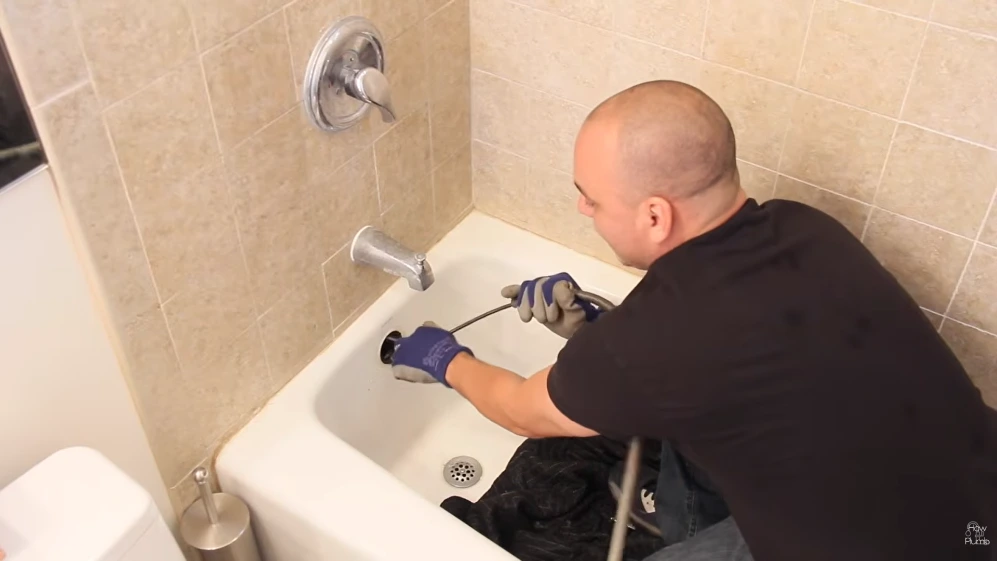
Hair, soap residue, and personal-care material can restrict a bathroom drain near the opening or farther into its branch. A localized problem may be approached through an accessible fixture connection; an issue shared with other fixtures calls for a wider assessment.
If a shower fills when a nearby toilet is flushed, that is different from a shower that simply drains slowly after use. The connection between fixtures matters more than assuming both require the same cleaning procedure.
Laundry, utility sink, and floor drains
A washing machine releases water relatively quickly. If the laundry standpipe or utility sink overflows during a cycle, the restriction may involve the discharge path or a connected drain. Accessible floor drains, where present, may also collect debris or reveal a backup from another fixture.
Mention which appliance was running and whether the water appeared in the standpipe, utility sink, or floor drain. That detail can prevent treating the visible overflow point as the only possible source of trouble.
Shared and main-drain blockage clearing
If several fixtures react together, the problem may be downstream of individual traps and branches. Cleaning may need to start at a suitable building-drain or cleanout access rather than a sink opening. The exact approach depends on pipe layout, accessibility, and the obstruction encountered.
Clearing an obstruction in a main drain is still drain cleaning. A cracked or leaking household branch drain calls for drain line repair; a damaged sewer lateral may call for sewer line repair. Those are separate repairs, not automatic additions to a cleaning visit.
Recurring-clog assessment
A drain that blocks again shortly after being cleared deserves more than an automatic repeat of the last procedure. Useful questions include how long the previous result lasted, whether the same fixture is affected, whether a nearby drain reacts, and what was observed during the earlier work.
Repeat restrictions can result from fresh debris, remaining deposits, a downstream obstruction, or an issue with the piping. A recurring clog is not proof that the entire line needs replacement. The history determines whether another cleaning attempt, targeted inspection, or a separate repair evaluation makes sense.
Urgent drain cleaning for wastewater backups
Wastewater rising through a floor drain, shower, or other low fixture can signal a serious downstream restriction. Stop running connected fixtures and appliances if they make the backup worse; avoid contact with sewage.
For an urgent clogged-drain problem, the immediate task is to identify an accessible blockage and whether safe clearing is appropriate. When wastewater is entering living spaces, explain that on the call and review the emergency plumbing guidance. An emergency backup does not automatically mean a sewer line needs replacing.
Snaking, hydro jetting, and inspection: choosing the right method
Drain snaking, rooter-style cabling, hydro jetting, and sewer camera inspection solve different problems. The correct method depends on the material blocking the line, its location, pipe size and condition, and safe access. No single machine is the right answer for every clogged drain.
Drain snaking, cabling, and auger cleaning
Drain snaking, mechanical cabling, and drain augers can loosen or retrieve localized obstructions, including hair, trapped debris, and some root-related restrictions. Often called rooter service, the approach uses tools selected for the drain size, access point, and obstruction. A bathroom sink branch may require different equipment from a building drain. Opening a passage restores flow, but it does not always explain why a clog formed or whether it will return.
Hydro jetting for grease and heavy drain buildup
Hydro jetting uses a specialized hose and high-pressure water nozzle to wash grease, sludge, and stubborn buildup from suitable drain and sewer piping. For a recurring kitchen or main-drain restriction, it may clean a longer section more thoroughly than simply opening a narrow passage through deposits. Not every clog needs hydro jetting. Pipe condition, diameter, access through a cleanout, and the material causing the obstruction must support its use. Fragile or damaged piping may require a different method or a repair assessment. Hydro jetting removes buildup; it cannot seal cracks, reconnect joints, or correct a collapsed line.
What clearing a clog solves—and what it cannot repair
Drain cleaning can remove or dislodge material that is limiting wastewater flow. A successful result means the affected drain carries water again after the work is checked. It does not automatically correct a cracked pipe, a displaced joint, a sagging section, or an opening that allows roots to re-enter.
This distinction matters when a drain repeatedly fails. Clearing the current obstruction, identifying a possible defect, and repairing that defect are three different scopes of work. If inspection identifies a cracked or leaking branch drain, review drain line repair. For a damaged sewer lateral, see sewer line repair. Ask what was found and why the proposed repair addresses that specific defect before authorizing a separate job.
What a drain-cleaning visit involves
1. Describe what you have observed. Identify the fixtures involved, when the trouble started, whether wastewater returns at another drain, and what you have already tried. Mention previous service and any chemical products poured into the line.
2. Narrow the affected drain path. The plumber assesses available fixture and cleanout access and considers whether the restriction appears local, shared, or downstream. The aim is to select a reasonable starting point, not to diagnose every buried pipe from one symptom.
3. Confirm the proposed scope. Ask which drain will be serviced, how access is expected to work, what the proposed work includes, and whether inspection or additional work would be priced separately.
4. Clear the restriction and check drainage. After an appropriate cleaning attempt, the affected fixtures can be checked for improved flow. If the result is incomplete, the next step should be explained rather than described as a guaranteed fix.
5. Review findings and next steps. Find out what was removed or observed, whether the issue appears likely to recur, and whether any separate investigation is recommended. A recommendation for structural repair should have its own explanation and approval.
Drain-cleaning costs and scope
A slow bathroom sink and a shared-drain backup can require different access, equipment, and time. Rather than assuming one price covers every blockage, clarify what is included in the proposed service. Useful factors include:
- Which fixture, branch, or building drain appears to be affected.
- Whether there is safe, usable access to the line or a fixture must be disconnected.
- Whether the obstruction is straightforward or has returned after earlier cleaning.
- Which cleaning method is proposed and why.
- Whether camera inspection or additional diagnosis is included or separate.
- Whether the work reveals a pipe condition outside the original cleaning scope.
Ask what the cleaning work includes, what may be charged separately, and when approval would be needed for additional diagnosis or repair. Clearing a clog and repairing damaged piping are separate scopes of work. Avoid approving excavation or replacement based only on the fact that an initial blockage occurred.
Queen Creek sewer connections and homeowner responsibility
It can affect who is responsible for a problem, but a ZIP 85142 mailing address does not prove that every home has the same wastewater provider or even the same type of system. Municipal sewer connections, other providers, and onsite wastewater systems may have different responsibilities and service needs.
The Town of Queen Creek advises residents that roots can enter through cracks or poorly sealed sewer joints and contribute to recurring backups. Clearing roots may improve drainage, but a damaged joint is a different repair question. Its sewer-backup guidance also explains maintenance responsibility for customers on the Town system; do not assume those boundaries apply to every 85142 address.
For Town sewer customers, Queen Creek explains that owners are responsible for maintaining the private service line connecting their home to the public main, subject to the Town’s published responsibility boundaries. If sewage is overflowing from a public manhole or a public sewer problem is suspected, contact the appropriate wastewater provider. The Town’s sewer and wastewater information can help customers identify the right starting point. A septic tank or drainfield problem is not automatically solved by cleaning an indoor fixture drain.
Keeping grease, wipes, and buildup out of household drains
Not every blockage is preventable, particularly when a pipe is damaged or poorly aligned. A few household practices can still reduce material entering drains:
- Keep grease and cooking oil out of sinks. Allow them to cool and use a suitable disposal or recycling option instead of relying on hot water to carry them away.
- Use strainers where practical. Remove trapped hair and food debris before it travels into a branch drain.
- Flush only appropriate materials. Wipes, paper towels, hygiene products, and other trash belong in the garbage, even when marketed as flushable.
- Avoid repeated chemical drain-openers for recurring clogs. Chemical products can present handling hazards and may not address the underlying reason for repeated blockage. Mention the product name and when it was used during the visit.
- Pay attention to recurrence. Note how soon the drain slowed again and whether another fixture became involved.
These recommendations align with the Town of Queen Creek’s What to Flush guidance, which addresses wipes, grease, and sewer blockages.
Drain-cleaning questions answered
Does every clogged drain need hydro jetting?
No. A first-time sink or shower clog may respond to localized removal or drain snaking. Hydro jetting is a different option for appropriate lines with grease, sludge, or persistent buildup; a camera inspection may help evaluate recurring problems or suspected damage. The recommendation depends on access, pipe condition, and the actual restriction.
Is a camera inspection necessary for a first-time clog?
Not automatically. A camera is most useful when it can answer a specific question, particularly after repeat restrictions or when pipe damage is suspected. Some localized clogs can be assessed and cleared without one.
Why does the shower back up when I flush the toilet?
The fixtures may share a drainage path that is restricted farther downstream. That pattern helps identify what to investigate; it does not, on its own, pinpoint the blockage or prove a broken sewer line. Avoid repeated flushing if it causes a backup.
Should I say if I used a chemical drain cleaner?
Yes. Mention the product and when it was used. Do not mix additional products or attempt another chemical treatment while waiting for service.
Will cleaning permanently stop a recurring clog?
No cleaning method can be promised to prevent every future clog. The result depends on what caused the restriction, how thoroughly it could be removed, and whether the piping has a condition that allows the problem to return.
What is the difference between a clogged toilet and a blocked drain line?
A toilet may have a localized trap obstruction, a flushing-mechanism fault, or a problem farther down the connected drain. If the toilet’s fill valve, flapper, or flushing components are the issue, see toilet repair. If wastewater returns through other fixtures, the shared drainage path may need assessment.
When should I stop using the drains and call urgently?
If wastewater is coming back into the home, more than one fixture is backing up, or using a connected appliance worsens an overflow, limit further use and describe the situation as urgent. Avoid contact with contaminated water. See emergency plumbing service for urgent-response information.
When cleaning is not the repair
Clear the clog and find out what caused it
Slow sink, standing water in the shower, or the same clog coming back? Creekline Plumbing provides residential drain cleaning in Queen Creek, AZ 85142, from fixture-level obstructions to shared-line backups. The fixture involved, the timing of the backup, and any previous cleaning help narrow the blockage and appropriate clearing method.
Call (480) 741-9220 to discuss the blockage and available service. If wastewater is backing up indoors, stop using connected fixtures where safe and describe where wastewater is overflowing during the call.