
Plumbing Repiping
Queen Creek, AZ
Leaks showing up in different parts of your home? Repeated pipe repairs can signal a larger problem with aging or damaged water supply lines, rather than a single faulty connection.
Repiping replaces selected sections or larger portions of your home’s water supply system. Pipe condition, past leaks, and access to existing lines help determine how much piping needs replacement.
The second pipe leak changes the conversation
A copper line behind the bathroom wall was repaired last year. Now a different supply line is leaking near the laundry room. Is it another isolated failure—or is it time to replace more of the home’s plumbing?
That distinction matters more than the home’s age alone. Residential plumbing repiping in Queen Creek, AZ focuses on replacing a defined part—or all—of the interior hot- and cold-water distribution system when the condition and history of the piping justify the work.
Creekline Plumbing’s residential repiping service covers planning for aging or repeatedly failing supply lines, partial repiping, and whole-house water-line replacement. The right scope starts with the failed locations, pipe materials, access, and what still appears serviceable. A single leak does not automatically mean a full repipe.
Partial repiping, whole-house replacement, or one rerouted line?
The three jobs sound similar, but they solve different problems. A clear proposal names the exact pipes being replaced, not just the word “repipe.”
Partial repiping
Replaces an agreed group of supply branches, perhaps the lines serving one side of the home, while suitable remaining piping stays in service. The boundaries of that partial replacement should be documented.
Whole-house repiping
Replaces the defined interior hot- and cold-water distribution network. The scope should identify fixture branches, valves, transition fittings, and equipment connections being included.
Single-line rerouting
Bypasses one damaged concealed or under-slab supply run through another approved path. It solves the selected line problem but does not count as a whole-home repipe.
What is not automatically included: The private meter-to-home water service, irrigation or pool lines, drain and sewer piping, fixtures, drywall, painting, tile and cabinet restoration. Ask for any additions in the written scope.
When is another repair sensible—and when does repiping make more sense?
The answer follows evidence from the existing pipes and previous failures, not a one-size-fits-all sales rule.
| A localized pipe repair may be enough | A repiping plan deserves consideration |
|---|---|
| One accessible fitting or short pipe section has failed, and nearby material appears sound. | Leaks have occurred in multiple, unrelated hot- or cold-water supply runs. |
| There is no history of similar failures elsewhere in the interior water network. | Repeated repairs and access openings suggest a larger cost and disruption over time. |
| Testing identifies one clear defect, not a system-wide flow restriction or deterioration. | Several sections show corrosion, physical damage, or restrictions that are attributable to supply piping. |
An isolated confirmed under-slab failure may call for slab leak repair or rerouting. If the leak source has not been confirmed, start with leak detection. Neither condition proves a whole-house repipe is necessary.
Which water lines actually get replaced?
A residential repipe concerns the pressurized distribution lines carrying hot and cold water to household fixtures. Before work starts, every included branch and connection should be identified.
- Cold-water branchesPiping supplying bathroom and kitchen faucets, toilets, laundry connections, the water heater inlet, and hose connections where included.
- Hot-water branchesDistribution from the water heater toward sinks, showers, tubs, and other included hot-water fixtures.
- Connections and valvesTransition fittings, fixture shutoffs, and selected equipment connections specified in the repair scope.
- Existing lines left behindWhich runs remain operational, which are disconnected, and how abandoned sections are safely taken out of service.
Choosing piping that fits the home’s route
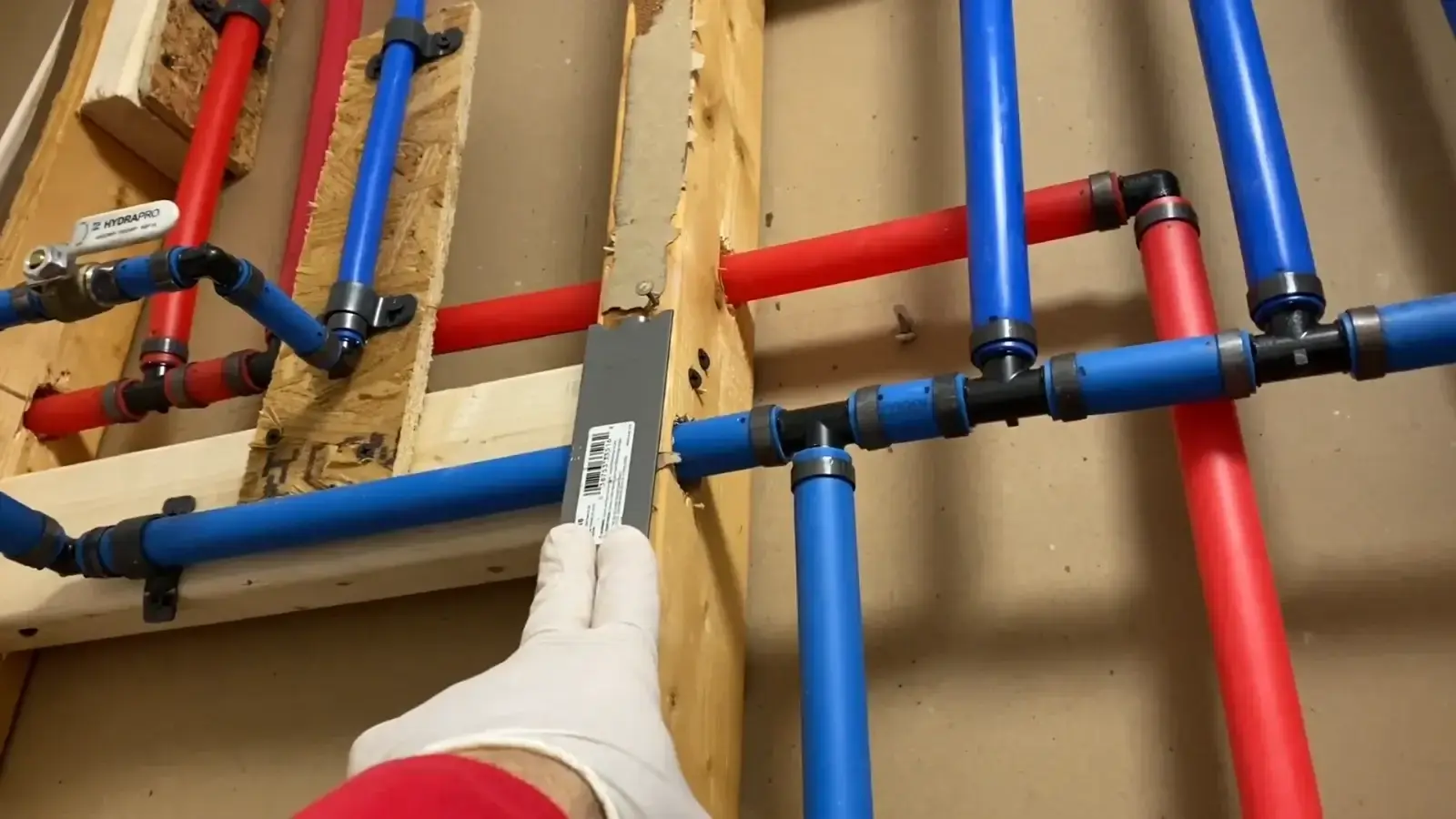
PEX and copper are common supply-line materials. Existing CPVC or other installed materials also affect how new sections are connected. No material should be chosen by a blanket promise about lifespan, cost, or water pressure.
PEX
Flexible cross-linked polyethylene tubing can simplify some routed runs and reduce the number of directional fittings. The design still has to account for proper support, approved connectors, heat and sunlight exposure, and manufacturer instructions.
Copper
Rigid copper piping offers a familiar conventional option, but its installed suitability depends on the route, connections, water conditions, workmanship, and the actual piping system being replaced.
Existing pipe transitions
Where new piping meets copper, CPVC, or another existing supply material, the transitions need compatible listed fittings and an appropriate installation method. The written scope should identify these locations.
How the project affects an occupied home
A repipe can change daily routines even when all the work stays within the existing house. The contractor should explain water shutoffs, access openings, work-area protection and the order in which fixtures return to service.
New lines might travel through wall cavities, ceilings, attic spaces, or other approved routes. Not every home has the same access, insulation, framing or exposure conditions, and no honest plan can promise zero drywall openings.
- Where will the lines run?Identify the route, likely holes or openings, and which structural or finished areas must be protected.
- Will the water be off?Ask which fixtures will be unavailable and when water can be restored; avoid assuming evening access without an agreed plan.
- Who repairs the finishes?Separate pipe installation from drywall texture, paint, tile, flooring and cabinetry restoration in writing.
- Can the job be staged?A partial or room-by-room sequence may work in some homes, but it should not be presented as a finished whole-house project.
What Queen Creek homeowners should verify before repiping
Two local facts can change the scope: whether the pressure problem is inside the home, and which authority handles permits for the particular property.
Low water pressure is not automatically a repiping problem
Town of Queen Creek water guidance says system pressure varies by area and time of day, with a reported range of 50–100 psi. That is the Town’s system context—not a pressure reading for every 85142 home or proof that its pipes are restricted. A plumber should check household pressure, flow, valves, regulators, fixtures and supply piping before attributing the problem to aging pipes.
Town water pressure FAQ
Confirm the project’s permit and inspection path
Queen Creek’s Building Safety Division administers adopted building and plumbing codes for work in the Town’s jurisdiction. A Queen Creek mailing address alone does not establish the permitting authority for the property. Ask the appropriate local authority whether the proposed repiping scope needs a permit and inspections—and who will obtain them.
Town Building Safety guidance · Arizona Registrar of Contractors
Practical check: Before authorizing the job, verify the actual contractor’s Arizona ROC license status and classification. Repiping should be scoped as plumbing work—not described simply as a cosmetic wall repair.
From pipe assessment to a tested water system
A documented process helps homeowners see what is included before walls open—and how the new supply lines will be checked before they are concealed.
- 01
Review past failures
Inspect accessible supply lines, previous repairs, fixture connections and any pressure complaints.
- 02
Mark the scope
Agree on materials, branches, access, routing, valves, water shutoffs and restoration exclusions.
- 03
Install new runs
Open planned access, protect occupied areas, install the selected piping and connect fixtures.
- 04
Test and inspect
Complete applicable piping checks and required inspections before closing concealed work.
- 05
Review completion
Check water delivery and connections; identify old disconnected lines and remaining finish work.
A repipe isn’t complete just because the pipes are in place
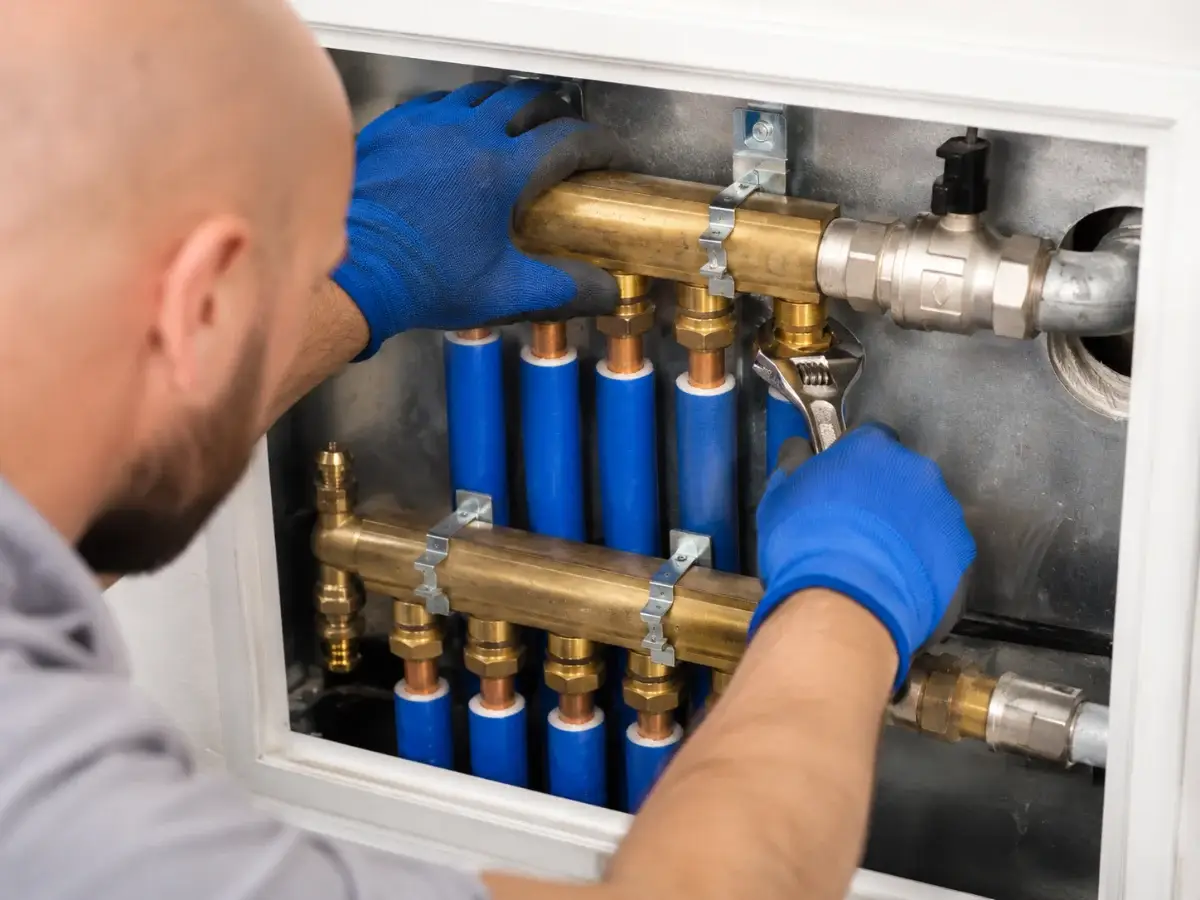
Pressure or leak testing and any applicable inspections should be done before concealed access is closed. Accessible transitions, valves, hot- and cold-water delivery, and fixture operation also deserve review.
Keep the new routing information, work scope and inspection records with the home’s maintenance documents.
What affects whole-house repiping cost in Queen Creek?
The number of bedrooms alone cannot establish a reliable repiping price. A partial branch replacement and a complete interior hot- and cold-water repipe differ in pipe length, materials, labor, access and finish work.
- Supply network and fixture countHow many hot- and cold-water runs, bathrooms, laundry connections and equipment branches are in the agreed scope.
- Pipe material and transitionsProposed PEX or copper system, fittings, valves and compatible tie-ins to pipes that remain.
- Construction and accessWall, ceiling and attic pathways, cabinetry or tile, work-area protection and installation sequencing.
- Testing, permits and finish workRequired inspections, water shutoffs, drywall, painting, flooring and restoration by others.
Compare what each estimate covers. A low number may exclude wall repairs, some fixture connections or testing that another quote includes. Estimates are available; confirm whether diagnostics, permit charges or finish restoration are priced separately. Any unexpected work should be approved before proceeding.
A repiping estimate should answer these questions
Before signing, look beyond the headline price. A clear proposal should make the new supply network understandable to a homeowner who will live with the result.
- Which hot- and cold-water branches are being replaced?
- Does the private meter-to-home service line stay in place?
- What materials, fittings and valves will be installed?
- Where are wall or ceiling openings anticipated?
- How long will water shutoffs and work phases last?
- Who handles permits, inspections and testing?
- Which old pipes will be disconnected or abandoned?
- What drywall, texture, paint, tile and other restoration is included?
- How are change orders and unexpected repairs approved?
Repiping questions homeowners ask before committing
These answers focus on actual replacement decisions rather than treating every leak or low-pressure complaint as a reason for new pipes.
Does one leaking pipe mean I need to repipe the house?
No. A single isolated defect can often be evaluated as a localized pipe repair. Repeated problems in different supply runs, documented deterioration or restricted piping can justify a broader assessment.
What is the difference between partial and whole-house repiping?
Partial repiping replaces specific branches or areas. Whole-house repiping replaces the agreed interior hot- and cold-water distribution network. Each scope should identify included and excluded connections.
Can PEX replace copper pipes throughout the home?
PEX may be appropriate for many residential distribution routes, but material selection depends on code-approved use, location, exposure, manufacturer requirements, and compatible connections. A contractor should explain the specific plan.
Will a repipe fix low water pressure?
Only if restricted or deteriorated supply piping is actually contributing. A partially closed valve, fixture restriction, pressure regulator or external supply condition can cause similar complaints. Check the cause before replacing pipes for pressure alone.
Does whole-house repiping include the water service line from the meter?
Not automatically. The meter-to-home service line is distinct from interior distribution piping and needs its own explicit inclusion if the job is to replace it.
Will the home have running water during the project?
Water must be shut off during parts of repiping. Ask for a project-specific sequence identifying which fixtures will be unavailable, when water can return and whether phased work is feasible.
Does the house need new drywall after a repipe?
Concealed routes usually require some access openings. Whether patching, texture, painting, tile or cabinetry restoration is included depends on the agreed scope; it should be stated before work starts.
How long does a whole-house repiping project take?
Duration depends on the size of the included water network, available routing, wall access, inspections and any separate restoration. A site-specific work and water-shutoff schedule is more meaningful than a blanket number of days.
Does repiping replace sewer and drain pipes too?
No, not as part of a normal hot- and cold-water supply repipe. Drain and sewer lines carry wastewater and require separate inspection and repair scopes.
Do I need a permit for repiping in Queen Creek?
Permit and inspection requirements depend on the job and applicable local jurisdiction. Queen Creek’s Building Safety Division advises contacting the Town to determine whether a permit is required for the proposed work; properties outside Town jurisdiction must confirm with the applicable authority.
When a smaller plumbing service is the better fit
Different symptoms call for different work. A repiping proposal should not replace a diagnosis.
Plan the right repipe for your Queen Creek home
Leaks returning in different rooms? Thinking about a partial repipe or whole-house water-pipe replacement? Share the home’s repair history, affected fixtures and any previous findings so the piping scope and next steps can be discussed.
Call (480) 741-9220