Water Around Your Water Heater: Condensation or a Leak?
A wet floor beneath the water heater can make you think the tank has failed. Sometimes it has. But water near the heater can also come from a supply connection, drain valve, relief-valve discharge, condensation or another nearby pipe. The location of the first visible moisture is the useful starting point.
A puddle does not identify the source by itself. Condensation can occur in some operating conditions, while an active plumbing leak may require urgent repair. If the storage tank itself is leaking, manufacturers generally call for tank replacement rather than a patch. Avoid contact with electrical parts, hot water or gas components while investigating.
First, treat ongoing water discharge as a safety and property concern
If water is spreading, approaching electrical equipment or damaging the surrounding room, keep people clear of the affected area and contact a qualified plumber promptly. Do not stand in water to reach a breaker, disconnect a wet electrical connection, or loosen fittings to “find the leak.” If you smell gas or a carbon monoxide alarm activates, leave the affected area and follow emergency utility guidance.
When it is safe to observe from a dry location, note whether the puddle is fresh, whether a drain pan is filling, and whether water appears to be running down from the top of the heater. A photo taken without touching the unit can be more useful than guessing where it began.
Where could the water be coming from?
| Where moisture appears | Possible sources | Important distinction |
|---|---|---|
| On or near the cold-water inlet and top fittings | Connection leak, condensation on cold piping, nearby supply pipe | Water may travel down the jacket before reaching the floor |
| Near the drain valve low on the tank | Valve or connection leak | May be a replaceable component, not a failed tank |
| At the temperature-and-pressure (T&P) discharge pipe | Relief-valve discharge, high pressure, thermal expansion or valve problem | Never cap or plug a safety discharge pipe |
| Around electric element access areas | Element gasket or connection leak | Keep away from wet electrical components |
| From the tank body or base after other sources are ruled out | Possible storage-tank failure | Confirmed leaking tanks normally require replacement |
| Brief moisture associated with gas heating | Possible condensation under specific conditions | Persistent moisture still needs investigation |
This approach follows the kinds of sources identified in A. O. Smith’s bulletin on puddles near water heaters. It is not a way to diagnose a concealed failure without inspection.
How can condensation resemble a leaking water heater?
Some gas storage water heaters can produce condensate when cold incoming water cools heat-transfer surfaces. During a heating cycle, moisture may form and collect or drip near the burner area. A newly filled cold tank or a period of unusually heavy hot-water use may make that more noticeable.
Condensation should not be assumed whenever there is water around a heater. Persistent puddles, water running from connections, corrosion at the base and moisture that continues after the heater reaches normal operating conditions call for further investigation. A.O. Smith documents both condensation and true leaks as possible sources.
The right decision is to observe the pattern and have the equipment checked when the source is uncertain. Do not turn gas controls or dismantle the heater merely to reproduce a test found online; manufacturer-specific procedures and safe access matter.
A pipe connection, drain valve and failed tank are different repairs
Leaking fittings or pipe connections
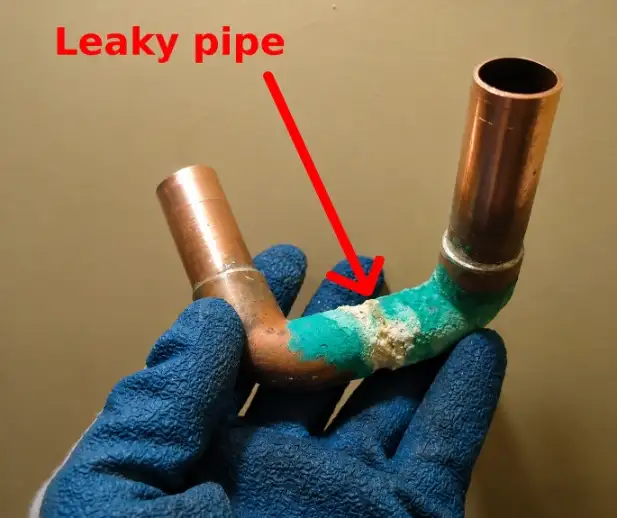
Cold-water inlets, hot-water outlets, flexible connectors and threaded fittings can leak. Moisture may track downward along the outside of the tank, making the lowest wet spot misleading. The repair may involve a connection or pipe, but the source must be verified first.
Drain valve or electric element gasket
A drain valve near the bottom of the tank or an electric element gasket can develop leakage. These components are distinct from the steel tank body. Whether the component can be serviced depends on the heater’s design, condition and safe access.
Temperature-and-pressure relief valve discharge
The T&P valve is a safety device designed to release water under abnormal temperature or pressure conditions. Water at its discharge pipe can have several explanations, including thermal expansion and supply-pressure conditions. Never cap, plug or obstruct the discharge line. A qualified professional should determine why it is releasing water.
Leak through the storage tank itself
When the inner tank has a confirmed leak, tightening an external fitting will not restore the failed tank. Manufacturer guidance typically calls for replacing the water heater. A professional can also review the installation conditions, warranty information and whether connected plumbing needs attention before a new unit is installed.
Safe observations that help a professional locate the source
- Note whether the floor is merely damp or water is continuously accumulating.
- Look without touching: is the top piping wet, a discharge pipe dripping, or the drain valve area damp?
- Check from a safe distance whether the heater is gas or electric and record the model if readable.
- Notice whether moisture follows an unusually long use of hot water or remains present throughout the day.
- Photograph visible water paths from a dry position; do not remove protective panels.
- Stop if there is electrical risk, a gas smell, heavy discharge or damage spreading.
These observations help narrow a service visit. They do not establish a leak’s origin without the appropriate checks.
Repair or replace: what should the decision depend on?
The answer rests on the source. A leaking inlet connection, drain valve or replaceable gasket is a different situation from a failed storage tank. A new water heater should not be sold solely because a drain pan is wet. Equally, a confirmed tank leak is not a situation to ignore because a pipe connection might be easier to repair.
For source identification and repairable component issues, start with Water Heater Repair in Queen Creek, AZ. If the tank has failed and a new unit is required, our Water Heater Replacement & Installation page covers that different service. If the source is actually concealed in a wall or elsewhere in the home’s supply plumbing, leak detection may be more relevant than replacing the heater.
What about condensation and hard water in Queen Creek?
The Town of Queen Creek’s local water provider map confirms that utility service can vary by address. Mineral deposits may affect maintenance and corrosion conditions over time, but water provider or hardness data alone cannot tell you whether today’s puddle is from condensation, a fitting or a failed tank.
Questions homeowners often ask
Can a water heater leak only while heating?
Some moisture patterns change with heating, pressure and water temperature. Condensation is one possible explanation, but a fitting or relief-valve problem may also appear during certain operating conditions. A recurring puddle should be checked.
Is water in the drain pan always a bad tank?
No. It may collect from condensation, plumbing connections, the drain valve, the T&P discharge or the tank. The source—not the presence of a pan—determines the next step.
Can a leaking water-heater tank be repaired?
A confirmed leak through the storage tank is generally a replacement issue under manufacturer guidance. Serviceable connections or valves around the tank are separate from the tank shell.
Should I keep using a heater that is leaking?
Do not continue operating a heater that is actively discharging water, causing damage, or presenting an electrical or gas hazard. Contact qualified service and follow equipment/utility safety instructions.
Not sure where the water is coming from?
If the source is uncertain or the moisture is coming from a valve or fitting, Creekline Plumbing’s Water Heater Repair page for Queen Creek describes assessment of the existing unit before a repair or replacement decision.
Technical sources and further reading
- A. O. Smith — Puddle on the Floor (Technical Bulletin 51)
- A. O. Smith — Condensation (Technical Bulletin 15)
- Town of Queen Creek — Local Water Providers
This guide describes potential causes rather than diagnosing an individual heater remotely.
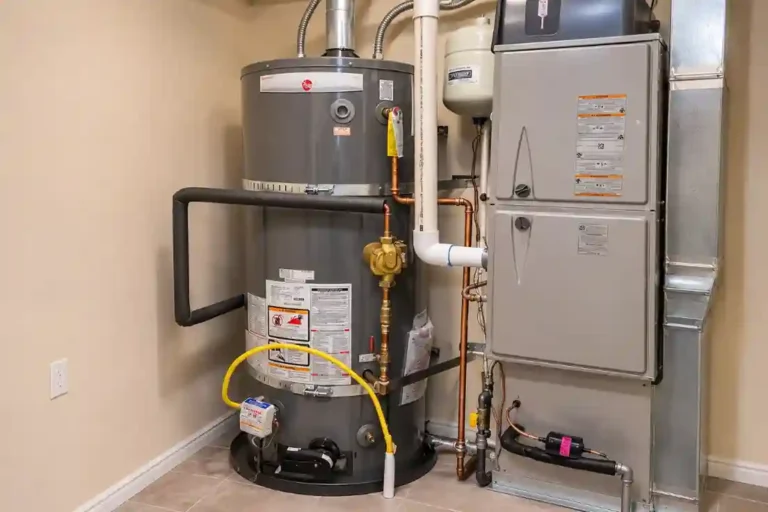
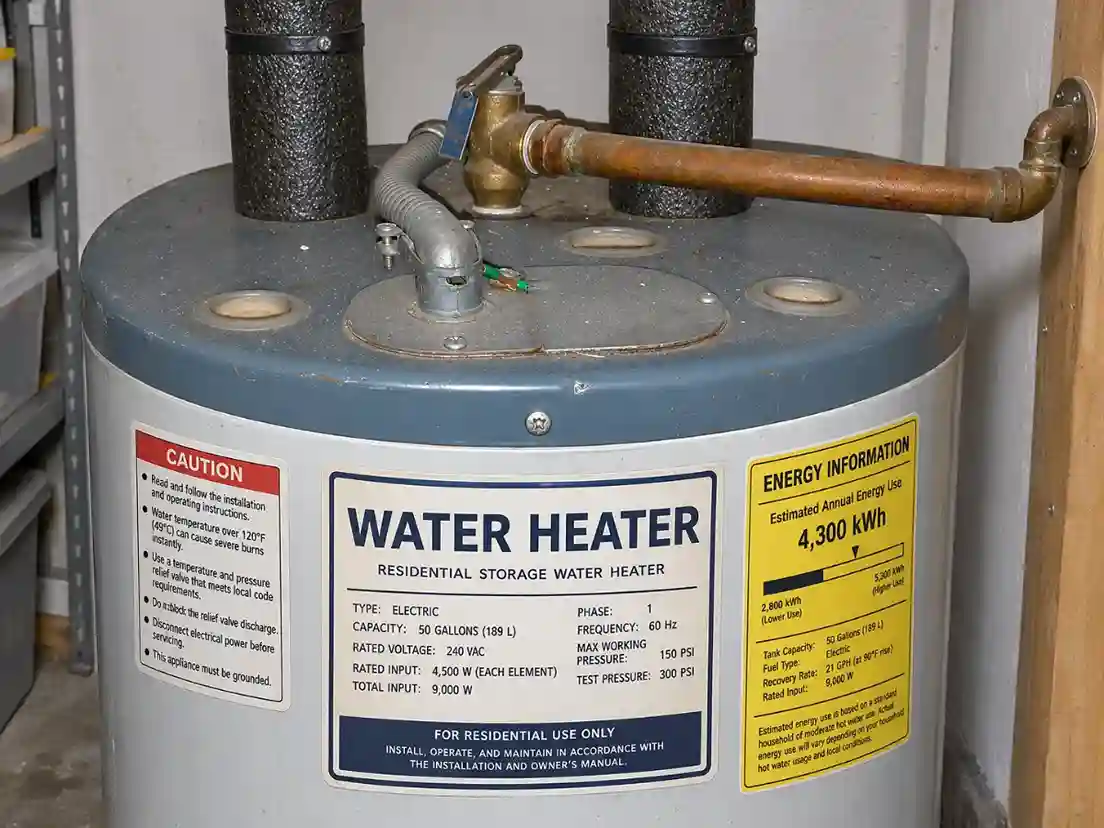
Featured image: edited illustrative image based on source photograph by Infrogmation of New Orleans (CC BY-SA 4.0). The image is illustrative, not a Creekline Plumbing job photograph.