Why Does My Kitchen Sink Back Up When the Dishwasher Drains?
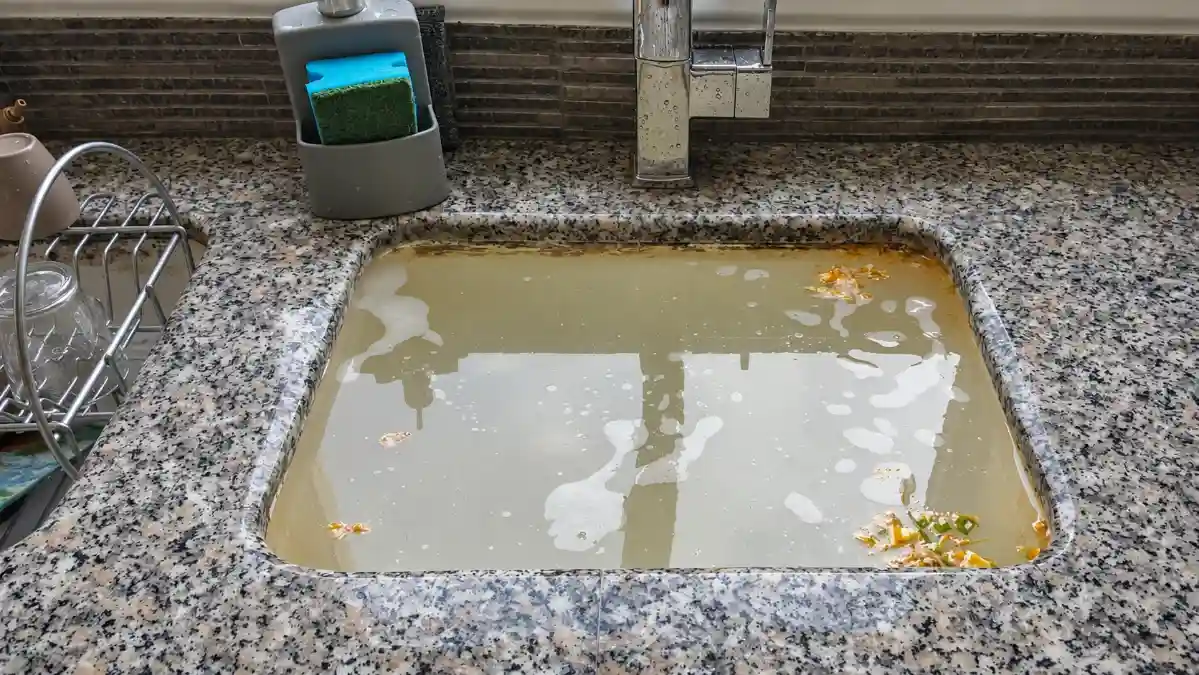
You start the dishwasher, walk back into the kitchen, and find cloudy water rising in the sink. The dishwasher might be working just fine. Its drain pump can send water into the same plumbing that carries water away from your sink, and a restriction in that shared route can push water back toward the basin.
The timing is your best clue. If the sink backs up while the dishwasher is pumping out, start by looking at the connection between the appliance and the kitchen drain. That does not automatically mean you need a new dishwasher—or that the whole sewer line is blocked.
Why the dishwasher and sink can affect each other
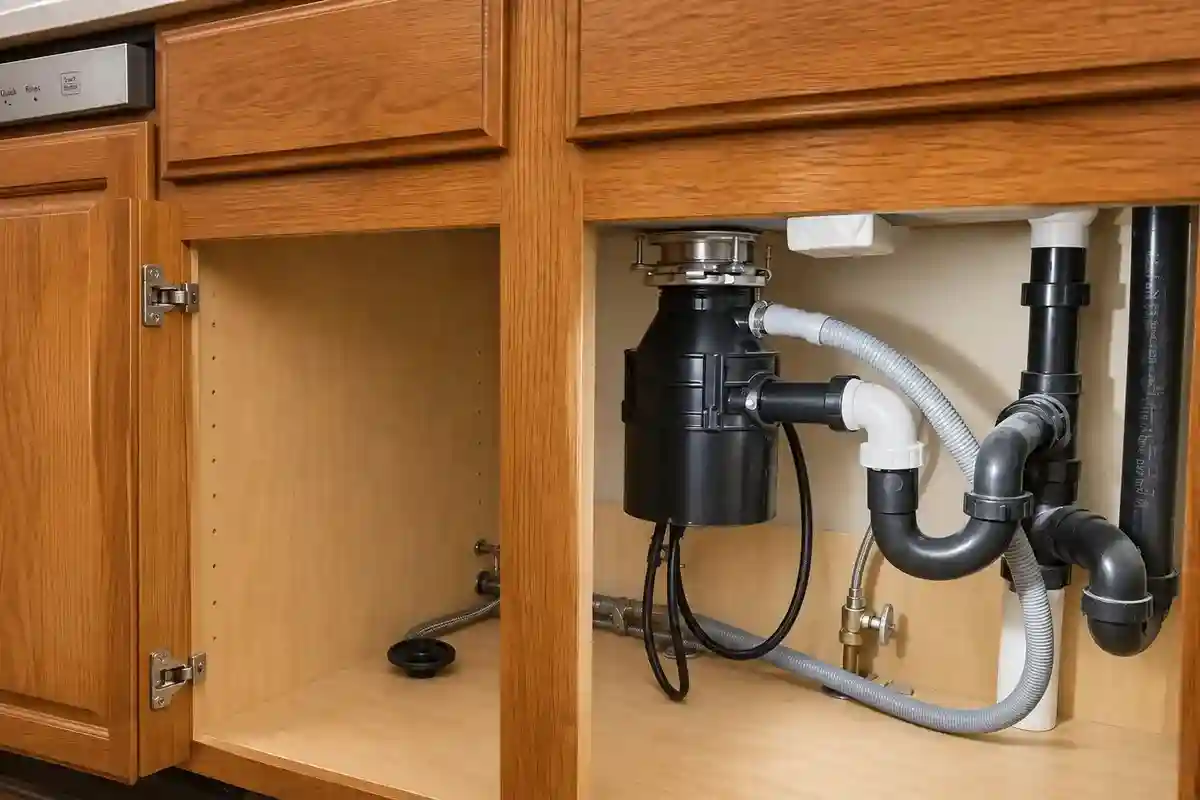
In many kitchens, the dishwasher has a drain hose that connects to the garbage disposal or to a fitting on the sink drain. From there, the water passes through the sink’s drain assembly and into the household branch drain. The P-trap—the curved section under the sink—holds a water seal that helps keep sewer gases out of the room. It isn’t supposed to hold back a full dishwasher discharge.
When that downstream drain is partly clogged, a sink may still empty after you wash a few dishes. But a dishwasher can discharge water faster than the restricted pipe can carry it away. The extra water has to go somewhere, and the sink basin may be the first place you notice it.
Watch the pattern. Does the sink drain normally until the dishwasher runs? Do both bowls fill if you have a double sink? Is water coming from the small air-gap fitting beside the faucet? Those details help separate a kitchen-drain restriction from a dishwasher-only problem.
Five clues that tell you where to look
The sink rises only during the dishwasher’s drain cycle
This points toward a restricted shared drain, disposal connection, or dishwasher discharge route. If the sink also drains slowly when the dishwasher is off, the sink-side piping deserves particular attention.
Water backs up into both sides of a double sink
Depending on how the drains join beneath the counter, a blockage after that junction can affect both bowls. That is a useful clue about location, not a diagnosis of a particular fitting.
The dishwasher leaves dirty water in its tub
This can happen when the sink drain is restricted, but it can also result from a clogged dishwasher filter, a kinked drain hose, or an appliance component problem. GE Appliances’ dishwasher-draining guidance recommends checking the sink drain, hose connection, filter and air gap, where installed.
Water spills from the air gap near the faucet
Some installations have a small capped air-gap fitting above the sink. It helps prevent dirty drain water from flowing back into the dishwasher. If water escapes there while the machine drains, the air gap or the hose from it to the sink/disposal connection may be restricted. Not every dishwasher uses this configuration; some installations use a properly routed high drain loop instead. Follow the appliance’s instructions and applicable local requirements rather than changing that arrangement by guesswork.
The trouble started after replacing the garbage disposal
That detail matters. A new disposal may have a dishwasher inlet plug that must be removed when a dishwasher is connected. If that inlet was not prepared during installation, the dishwasher may struggle to drain. This is different from a blockage farther down the kitchen branch line.
What can you safely check before calling anyone?
- Pause the dishwasher. If the sink is filling or water is spilling onto the cabinet floor, stop the cycle and avoid sending more water into the drain.
- Check how the sink behaves by itself. Only if the basin is not already backed up, note whether a small amount of ordinary faucet use drains normally. Do not keep running water to “test” an overflowing sink.
- Look for visible leaks. A drip at a slip nut, hose connection or disposal body is a different problem from water rising in the sink. Keep electrical connections and outlets dry.
- Review the dishwasher manual. Accessible filter checks vary by model. If the machine itself is holding water, use the manufacturer’s instructions for routine filter care.
- Remember recent work. A disposal replacement, new dishwasher, drain repair or recurring clog can narrow the next inspection.
Keep your hands out of the garbage disposal, even when it is not running. Don’t disconnect energized equipment or loosen a trap full of backed-up water if you aren’t prepared to contain it safely. Chemical drain cleaners are especially unhelpful in this situation: they can leave caustic liquid sitting in a blocked line and create a hazard for anyone who opens the plumbing afterward.
Is it the dishwasher, garbage disposal, or kitchen drain?
| What you notice | What it may suggest | Useful next step |
|---|---|---|
| Sink slow even without the dishwasher | A restriction in the sink trap, disposal outlet or branch drain | Have the kitchen drainage path assessed |
| Sink drains well; dishwasher holds water | Dishwasher filter, hose, air gap, drain connection or appliance issue | Follow manufacturer guidance; identify whether the fault is plumbing-side or appliance-side |
| Air gap discharges onto the counter | A restriction around the air gap or its outlet hose | Check the manufacturer-approved air-gap maintenance procedure |
| Problem began after a new disposal | Incorrect dishwasher inlet connection is possible | Ask the installer to verify the setup |
| Several fixtures elsewhere also back up | A shared drain or farther-downstream restriction may exist | Avoid further wastewater use and seek broader drain evaluation |
These are clues, not a replacement for seeing how the piping is actually connected. Two kitchens can show the same symptom for different reasons.
Why does this happen repeatedly in the same kitchen?
A kitchen drain handles food residue, soap and the fats and oils left on cookware. A garbage disposal breaks up certain food scraps, but it does not remove grease from wastewater. The Town of Queen Creek’s wastewater guidance explains that grease can coat pipe walls and eventually contribute to blockages. Pouring hot water after grease does not make the habit safe for downstream pipes.
If the drain works for a while after clearing and then starts backing up again, ask whether the obstruction was fully removed and whether the same deposit could be rebuilding. The time between blockages and any material found during cleaning can help determine what deserves investigation next. A repeat blockage does not, by itself, prove a broken pipe.
When should a plumber check the drain?
If the sink repeatedly fills during the dishwasher’s drain cycle, both sink bowls are affected, water is escaping beneath the cabinet, or the problem returns after a temporary fix, the kitchen drainage path may need professional assessment. A plumber can examine accessible connections and decide whether the branch drain needs clearing. If the dishwasher is the only thing failing and the sink drains normally, appliance service may be the more appropriate starting point.
Getting the kitchen drain flowing again
For a suspected kitchen sink or branch-drain blockage, see Creekline Plumbing’s drain cleaning service in Queen Creek. Describe when the sink backs up, whether the dishwasher leaves water behind, and any recent plumbing work so the next step fits the symptoms.
Frequently asked questions
Can the dishwasher cause a kitchen sink to overflow?
Yes. In a setup where the dishwasher discharges into the sink’s drain plumbing, a restriction downstream can cause water to rise in the basin while the dishwasher pumps out. The dishwasher itself is not necessarily defective.
Does a slow kitchen sink mean I need a sewer line replacement?
No. A slow sink can result from a localized trap, disposal or branch-drain restriction. Main sewer damage cannot be diagnosed from a single slow sink alone.
Should I pour boiling water or chemical drain cleaner into the sink?
Don’t rely on either as a fix for an active backup. Hot water does not remove all underlying grease deposits, and chemical cleaners can create a safety problem if the line must be opened or mechanically cleaned.
Why does the dishwasher smell bad when the kitchen drain is slow?
Trapped debris, standing water or dirty-water backflow can contribute to odor, but the appliance filter and installation may also be involved. Check the manufacturer’s maintenance instructions before assuming the household drain is the only cause.
Official references: GE Appliances — Dishwasher Not Draining; GE Appliances — Cleaning the Air Gap; Town of Queen Creek — What to Flush.