
Gas Line Services
Queen Creek, AZ
Found damaged gas piping during a remodel? Planning a new connection for a range, dryer, or backyard grill? From gas line repair and replacement to new installations, extensions, and appliance connections, call Creekline Plumbing to discuss your project and confirm service availability.
A damaged gas pipe or missing connection can hold up your plans
Your new range has arrived, but the gas outlet is behind the wrong cabinet. The backyard grill is ready, but there is no supply line to the patio. Or a contractor opens a wall and finds damaged piping before the remodel is finished.
Not every gas line problem calls for a major replacement. Sometimes a damaged connection can be repaired, while a new appliance or a change in your home’s layout may require additional piping. Gas line services in Queen Creek, AZ cover these different needs, with the right approach depending on the existing pipe, appliance requirements, and access.
Repair an affected section
Damaged piping and fittings need assessment so the repair covers the affected section and any adjoining connection that also needs attention.
Connect a new appliance
Adding a range, dryer, fireplace, or outdoor grill can require a new branch or extension. An existing outlet may be usable if its location and capacity are suitable.
Move or replace a line
Moving cabinets, appliances, or patio equipment can put an existing line in the wrong place. Deteriorated piping may need replacement rather than a localized repair.
Gas line repair in Queen Creek, AZ for damaged pipes and fittings
Cabinet removal can expose bent piping or a deteriorated fitting. A utility notice may identify a separate issue. Gas line repair starts by establishing what is affected, who owns the piping, and how far the corrective work should extend.
Exposed or concealed piping
Access to a pipe behind drywall can add opening and finish-repair work. For exposed piping, the assessment still needs to include adjoining connections and protection for the repaired section.
Connections near appliances
Problems near a range or water heater can involve the supply pipe, shutoff valve, appliance connector, or equipment itself. Knowing which component is affected separates gas-piping work from appliance servicing.
Customer-owned outdoor lines
Buried branches to patio equipment can require private locating and excavation before repair. Include backfill and yard or patio restoration in the scope discussion.
Did the utility shut off your gas or leave a correction notice? Keep the paperwork for the contractor. It can identify the required correction and any inspection or utility release needed before service is restored. Do not restart the supply yourself. An active or suspected leak still requires evacuation and an emergency call first.
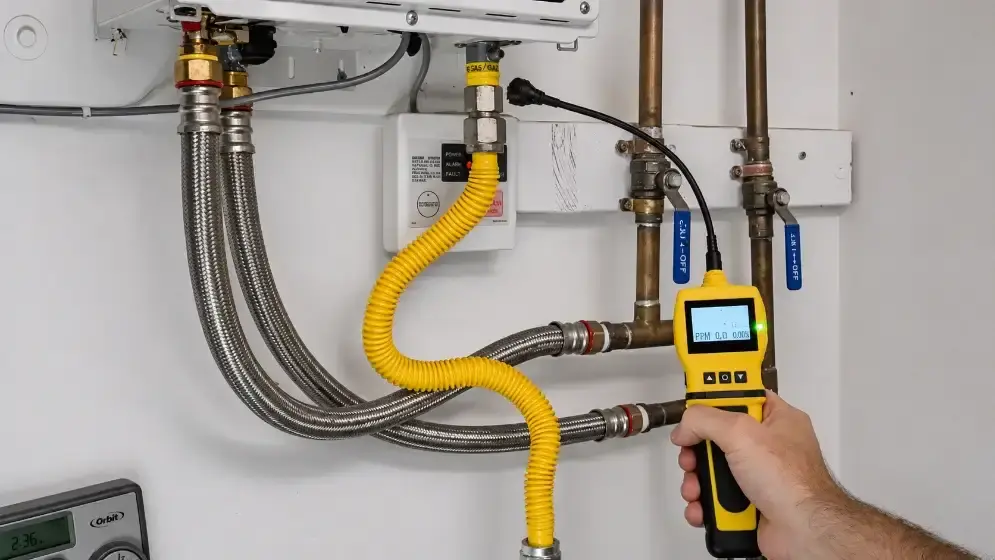
Gas pipe replacement in Queen Creek, AZ
One damaged fitting does not automatically mean the whole home needs new gas piping. A localized repair may be suitable when the affected section is identifiable and the remaining system is appropriate for continued use. Deterioration across a longer run, several defects, or an unsuitable previous installation can point toward partial or more extensive replacement.
Rerouting may be needed when a range moves to an island, a wall changes, or an outdoor kitchen needs a connection. Existing piping can still be in acceptable condition while its route no longer fits the layout. The contractor plans the new run around appliance location, access, protection, and shutoff requirements.
Rigid steel pipe, corrugated stainless steel tubing (CSST), and approved underground piping have different uses and installation requirements. The installer needs to account for product-specific fittings, supports, protection, and any applicable bonding requirements.
Before accepting a larger replacement, ask which sections are affected, why a limited repair would not address them, and what walls or surfaces need opening.
Gas line installation in Queen Creek, AZ for new appliances
Installing a gas line for a kitchen conversion, laundry-room move, or backyard extension starts with the selected appliance and its location. Those choices affect both the route and the demand on the existing system.
Ranges and cooktops
Switching from electric cooking or moving a range can require a new branch, extension, or termination point. The supply, outlet location, and shutoff arrangement need to suit the selected appliance and kitchen layout.
Gas dryers
Relocating a gas dryer means planning a suitable fuel connection at the new laundry location. Confirm whether the proposal covers piping and the appliance connector; exhaust venting is a separate part of the installation.
Water heater supply changes
Moving a gas water heater or upgrading to a gas-fired tankless model can require a review of the supply branch. For equipment selection and installation, see the tankless water heater service or water heater replacement service.
Grills and fire features
Built-in grills, gas fireplaces, and fire pits need piping sized and routed for their rated demand and location. The proposal should distinguish the gas supply work from installing the appliance or outdoor structure.
Supply-line installation and appliance hookups
Does a new gas stove always need a new supply line? No. An existing outlet may be suitable if its location, condition, and capacity meet the appliance’s requirements. A hookup connects the appliance to a suitable outlet; line installation adds or changes the supply piping. Some projects need both, and the responsible installer should confirm each part of the work.
Ask whether the quote includes the appliance connector, accessible shutoff, and final connection, or stops at the new outlet. Delivery, electrical changes, venting, and cabinet modifications may involve separate arrangements.
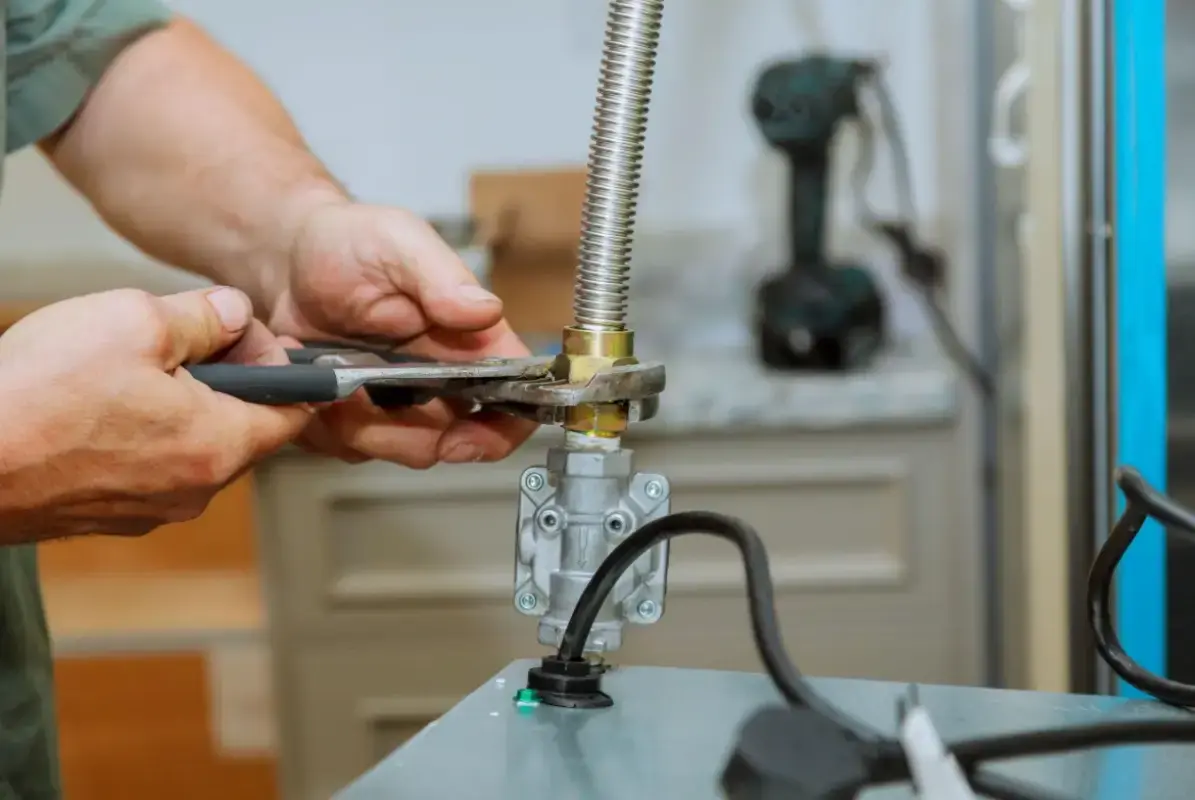
Before switching from electric to gas
For a home without an existing natural gas supply, contact the gas utility about service availability and any meter or service-connection work before ordering appliances or arranging a private piping run. A quote for piping inside the property does not establish that utility service is available or include every part of bringing it to the home.
Once the supply arrangements are known, the contractor can assess the branch needed for the appliance and its planned location. Identify the fuel at this stage: natural gas and propane have different supply and equipment requirements. Confirm the appliance’s specified fuel and the provider’s scope rather than assuming a natural-gas installation includes propane work.
Can your existing gas supply support the new appliance?
Having gas nearby does not establish whether the existing branch can serve another appliance. The appliance’s rated gas input (BTU/h), other connected equipment, pipe size, run length, fittings, and available pressure all matter. A contractor checks these together before recommending a new branch or changes to the existing one.
Switching from a storage water heater to a gas-fired tankless model can change fuel demand. Whether that requires a larger branch or utility review depends on the selected model and existing supply. An outdoor kitchen with several gas appliances also needs a check of the combined demand.
Bring the appliance model, planned location, and a list of existing gas appliances to the assessment. The contractor can evaluate the branch; questions about utility-owned meters or regulators need to go through the gas provider.
Underground gas line repair and outdoor extensions
Running a line across a finished patio can involve pavers, irrigation piping, and other buried services. For a repair, the affected customer-owned branch needs to be located before digging. Those conditions affect excavation, access, and restoration.
Will Arizona 811 mark the gas line feeding your backyard grill? Not necessarily. Arizona 811 coordinates markings for participating facility owners; a privately owned branch beyond the meter may need a separate private-line locator. An unmarked area is not proof that it is clear to dig. Contact Arizona 811 before excavation.
Before excavation, agree on who arranges utility markings, private locating, trenching, backfill, inspections, and surface restoration. The plan should identify the approved piping, transitions, and protection along the route. Settle those details before a patio base or new landscaping closes off access.
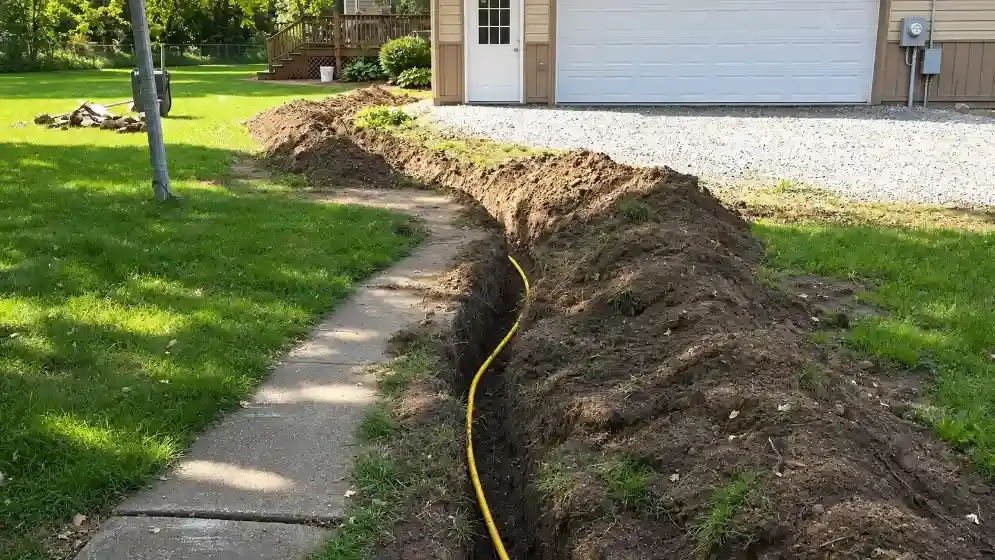
Gas leak detection, pressure testing and service restoration
Suspected escaping gas needs an immediate emergency response. After responders or the utility have addressed the hazard, the remaining work may involve locating a defect in customer-owned piping, repairing it, and meeting the conditions for service restoration. Those are separate stages, and the responsible contractor and utility need to coordinate them.
Identify the affected pipe or connection
Gas leak detection on customer-owned piping should establish which component needs corrective work. Depending on access and the problem reported, professional assessment may involve accessible pipes, threaded joints, shutoffs, appliance connections, or a buried branch. A concern near an appliance does not by itself identify the failed part. Keep any utility findings or correction notice available for the contractor.
Match the testing to the proposed work
The contractor should explain whether the job calls for pressure testing, approved connection leak checks, inspection, or other verification under the applicable requirements. An appliance hookup, a repaired segment, and a new piping system do not necessarily follow an identical testing process. The proposal should identify what will be checked and who is responsible for completing it.
Establish the steps before gas service returns
If the utility shut off the supply, confirm what corrective work, inspection approval, or utility release it requires. Completion of the pipe repair and authorization to restore gas are different milestones. Have the responsible parties explain the remaining steps and any separate appliance reconnection or startup work. Leave testing, purging, and restarting a restricted supply to the qualified professionals and utility.
Know what your gas line project includes
Get the proposed repair or installation in writing before arranging the work. It should identify the piping involved, the access needed, and the testing or approvals required before use.
Explain the job
Share the property address, the pipe or appliance involved, its fuel type, and any utility notice. Mention whether the work is part of a remodel and whether walls or the yard are already open.
Review the existing system
During the assessment, the contractor checks appliance demand, piping access, and shutoff locations, and establishes which lines belong to the homeowner.
Agree on the scope
Clarify piping work, access openings, excavation, permits, inspections, and exclusions. Appliance installation and wall or patio restoration may involve separate arrangements.
Complete testing and approvals
After piping work, required professional tests and inspections come before the affected system returns to use. If the utility restricted service, its release and restoration requirements also apply.
Details to have ready for the first call
- Property and fuel: The address, whether gas already serves the home, and whether the equipment uses natural gas or propane.
- Appliance information: The model, manufacturer specifications if available, and the intended installation location.
- What changed: Damage found during a remodel, a relocated appliance, a new outdoor connection, or a utility correction notice.
- Access and coordination: Whether walls or the yard are open, which finished surfaces are involved, and when other renovation work is scheduled.
These details help distinguish a possible hookup from a new supply-line project before an assessment is arranged. Share information you already have. Do not open walls, investigate piping, or enter an unsafe area to gather photos or measurements for a call.
Gas line repair and installation costs in Queen Creek
What changes the cost of gas line repair or installation? Access, supply requirements, and the extent of the work matter alongside pipe length. Replacing an exposed fitting involves different labor from locating a private line and opening a finished patio.
- Repair, replacement, or new installation: Correcting one identified defect is a different scope from replacing a deteriorated run or adding a new appliance branch.
- Supply and appliance requirements: Rated input, existing connected load, line length, and available pressure affect the piping plan.
- Access and excavation: Opening a wall, crossing concrete, locating private lines, or working beneath landscaping can add work beyond the pipe itself.
- Testing, permits, and utility coordination: Confirm which checks and approvals are included and who arranges them.
- Finish repairs and appliance work: Drywall, cabinets, pavers, landscaping, and separate appliance installation should be identified as included or excluded.
Request a quote that separates piping, access, testing and approvals, and any finish repairs. If the route or existing capacity is still unknown, the estimate should identify what needs assessment before a firm price can be offered.
Compare the same work across quotes
A price that includes private locating, excavation, and surface restoration is not directly comparable with one covering piping alone. Check the inclusions before comparing totals. For concealed or buried work, ask how new findings after access would affect the scope and how any additional work would be authorized. Inspection timing and separate trades can also affect the project schedule, even after the piping work is finished.
Permits, inspections and customer-owned gas piping
Check the authority for the property
The Town of Queen Creek lists the 2021 International Fuel Gas Code among its adopted building codes. Permit and inspection requirements depend on the proposed work and the property’s jurisdiction. A Queen Creek mailing address alone does not establish which authority handles the project; confirm the address and requirements before construction. Review Queen Creek’s adopted building codes.
Separate private piping from utility equipment
Southwest Gas describes its responsibility as extending up to and including its meter, with piping beyond the meter maintained by the customer or property owner. Confirm the boundary with the actual provider, particularly for buried lines or work close to the meter. Changes to utility-owned equipment require utility coordination.
Verify the contractor’s gas-piping scope
Arizona’s R-37 plumbing classification includes installation and repair of water and gas piping systems. The contractor undertaking your project needs an active classification covering the actual work. Check the Arizona Registrar of Contractors license classifications and verify the contractor’s current license before authorizing the job.
Gas line services in Queen Creek, AZ: questions before you book
Who should I call if I smell gas at home?
Leave immediately and call 911 and your gas utility from a safe location. Southwest Gas lists 877-860-6020 for gas emergencies. Avoid switches, flames, appliance controls, and using a phone near the suspected leak. Do not investigate it or wait for a routine repair appointment.
Can a plumber repair a residential gas line?
An appropriately licensed gas-piping contractor can assess and repair customer-owned piping within the contractor’s authorized scope. Arizona’s R-37 plumbing classification includes gas piping, but the individual business’s current license, fuel-gas capability, and available services still need verification.
Do I need a complete gas line replacement or a smaller repair?
An isolated defect may be repairable when the surrounding piping is suitable and the completed work meets applicable checks. Several damaged sections, broader deterioration, or an unsuitable route can call for partial or more extensive replacement. The recommendation should identify the actual condition behind that choice.
What is the difference between installing a gas line and an appliance hookup?
Line installation adds or changes the supply piping. A hookup connects an appliance to a suitable existing outlet using the appropriate connection arrangement. A new range or dryer may need one or both, so confirm whether the proposal includes piping, the appliance connection, and any separate installation work.
Can a gas line be extended to an outdoor grill or fire pit?
An extension may be feasible when the fuel supply, appliance demand, and proposed route are suitable. Buried runs also bring locating, excavation, approved materials, protection, and inspections into the project. Confirm that the provider handles the specific outdoor gas-piping work you need.
Does a tankless water heater always need a bigger gas line?
No. The selected model, available gas pressure, pipe size and length, and other connected appliances determine whether the existing supply is suitable. A tankless upgrade can change fuel demand, but a larger line should follow an assessment rather than an assumption.
Will Arizona 811 mark a private gas line in my backyard?
Arizona 811 coordinates markings for participating underground facility owners. Customer-owned branches, such as a line to a backyard grill, may not be included and can require private locating. Arrange the necessary locating before excavation; an unmarked area is not confirmation that it is clear.
Does gas line work require a permit in Queen Creek?
The answer depends on the proposed work and the property’s jurisdiction. Queen Creek regulates fuel-gas work through its adopted codes and permitting process. The contractor should verify the required permits and inspections with the responsible authority before construction begins.
How long does a residential gas line repair take?
Timing depends on the defect, access, materials, and any excavation or replacement involved. Permits, inspections, and utility coordination can also affect when the system is ready for use. Establish those steps before relying on a completion date.
Is a gas water heater that has stopped heating always a gas line problem?
No. Equipment and heating-control problems can occur without a damaged gas supply line. When no leak is suspected, the appliance may need water heater repair. If water is actively leaking or spreading from the heater, the emergency plumber page explains safe first steps for a water-related emergency. Gas odor or another suspected leak requires evacuation and a call to emergency services and the gas utility first.
Discuss your gas line repair or installation
Tell us about the damaged pipe, appliance connection, or route that needs changing. Have the property address, appliance model if selected, and any utility notice ready. We’ll confirm service availability and the next step.
Call (480) 741-9220