Water Line & Pipe Repair
Queen Creek, AZ
Sudden drop in water pressure, a damp spot that returns, or a leaking supply connection can signal damage somewhere in your home’s water lines.
Water line and pipe repair targets affected supply piping, whether the problem is visible or hidden behind a surface. Pipe condition, location, and available access help determine how much needs to be repaired.
A leaking water supply pipe needs the right repair
Water dripping from a visible joint, damp drywall along a supply run, or a wet patch in the yard after irrigation is off can point to a damaged water line. The important decision is how to reach and repair the failed connection or pipe section—not whether to tear out every line. First, make sure the water is actually coming from the supply piping; moisture can travel before it becomes visible.
Start by identifying the affected hot- or cold-water supply line. For water line repair in Queen Creek, AZ, the work might involve a fitting near a fixture, a concealed section behind drywall, or the buried service pipe in the yard. This page also covers residential pipe repair for cracked, split, or burst water-supply piping—not clogged drains, damaged sewer lines, or gas piping.
Moisture near a wall or cabinet
A wet baseboard or swelling cabinet can come from a concealed supply line, an exposed connector, or a nearby appliance. Trace the source before opening finished surfaces.
Water outside when irrigation is off
A persistent wet area may involve the buried service line, but sprinkler valves, drip tubing, pool equipment, or recent watering should be ruled out first.
Water use when nothing is running
A moving meter with all intentional water use stopped is evidence to investigate. It does not reveal which pipe, fixture, or automatic system is using water.
Less pressure at one or several fixtures
Low pressure can accompany a leak, but closed valves, restrictions, and utility supply conditions are other possibilities. Pressure change alone is not a diagnosis.
Water actively spreading indoors? A familiar shutoff may help limit damage if it is safe to operate. Keep away from wet outlets, appliances, and electrical panels. For uncontrolled water loss, see emergency plumbing assistance rather than waiting for routine repair planning.
Water line repair from the meter to the fixtures
Not all supply-line leaks are in the same part of the system. The repair depends on where the failure is, what material is installed, and whether a sound connection can be made on either side of the damaged area.
Water service lines in the yard
The buried line carrying water from the meter area toward the home may develop a leak at a fitting or along the pipe. Before excavation, identify the route, provider and responsibility for that section.
Hot- and cold-water lines inside walls
Concealed copper, PEX, CPVC, or other supply piping may require controlled access when a leak has been narrowed to a wall or ceiling. Moisture on the surface can travel away from the actual failure.
Exposed pipes and supply connections
Accessible shutoffs, elbows, couplings and supply risers may be repaired with less disruption when the surrounding material is in good condition. A leaking faucet hose or toilet connector should be distinguished from a damaged branch pipe.
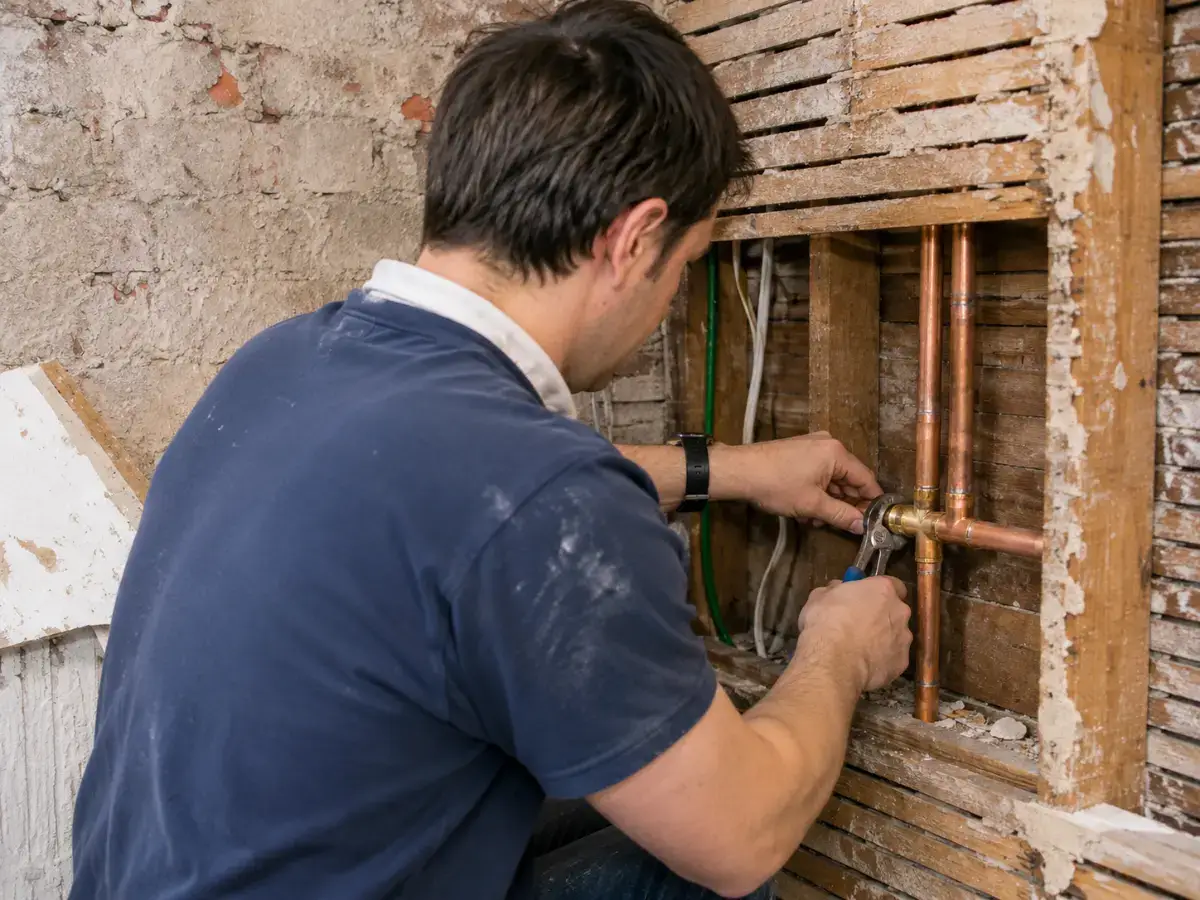
Pipe repair in Queen Creek, AZ: leaks, splits, and failed connections
A pinhole in a copper pipe, a leaking PEX connection, and a split supply line behind drywall can all leave water where it does not belong. They do not call for the same repair. The plumber needs to identify the failed part, assess the nearby pipe, and choose compatible connections before deciding how much piping to replace.
Leaking joints, valves, and fittings
A drip around a coupling, elbow, shutoff, or supply connection may be corrected at that fitting when the adjoining pipe is sound. The repair should address the failed connection itself, not simply conceal the leak.
Cracked pipes and pinhole leaks
A pinhole in copper or a crack in another supply-pipe material can require removing the weakened section and joining new pipe at sound connection points. If nearby piping shows additional deterioration, the repair length needs another look.
Split or burst water-supply pipes
A ruptured pressurized line can release water quickly. Once the supply is safely isolated, the affected pipe and connections can be assessed for a targeted replacement, followed by appropriate leak and operation checks. Active flooding belongs with emergency plumbing.
Recurring failures along one pipe run
When leaks keep appearing along the same run, another short repair may not be the best use of access and labor. Replacing or rerouting that section may be appropriate; replacing every line in the house is a separate decision supported by broader evidence.
The pipe material matters. Copper, PEX, and CPVC require different compatible fittings and joining methods. A workable pipe repair accounts for the material, the location of the failure, reliable connection points, and testing before an opened wall or other access is closed.
A wet yard in Queen Creek does not always mean a broken water main
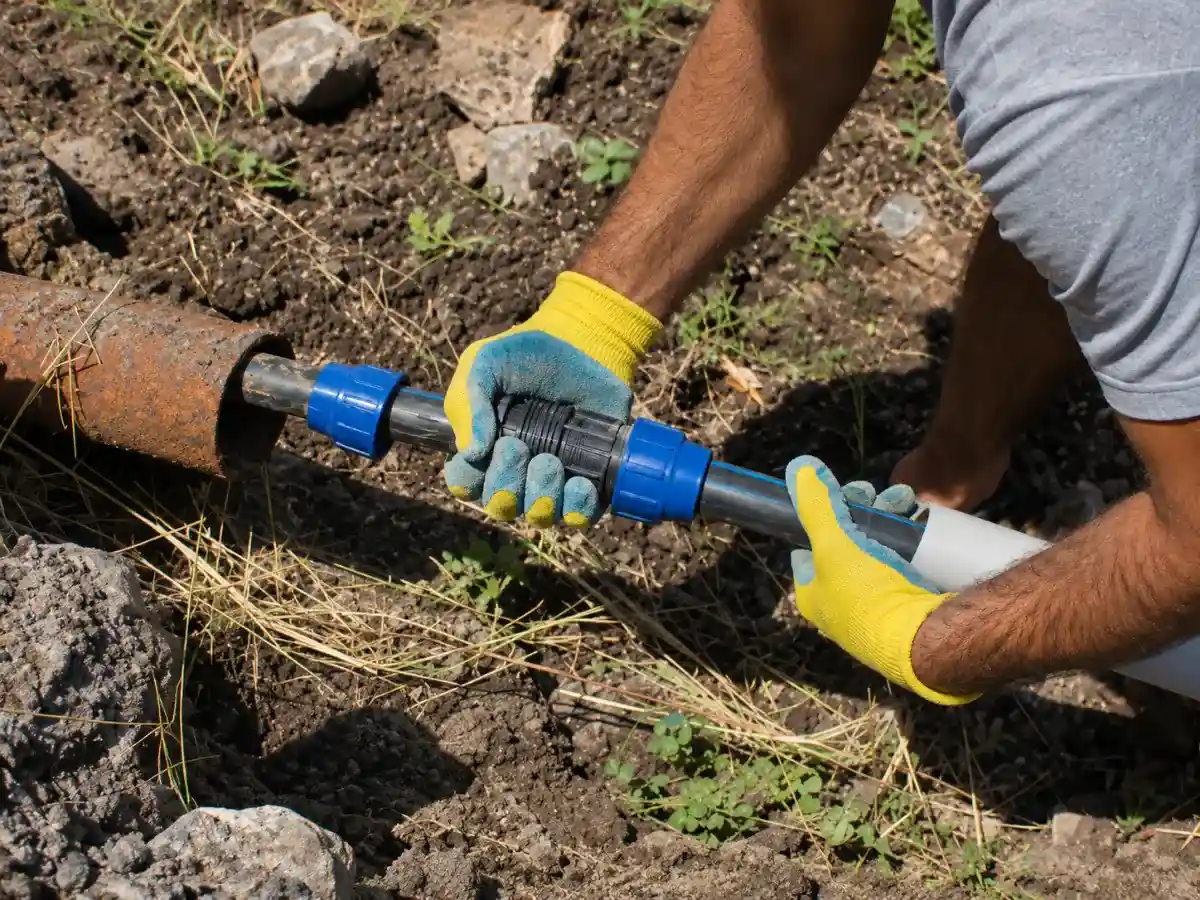
Water surfacing outdoors can be especially confusing when drip irrigation, pool autofill, or a buried home service line runs through the same area. Some Queen Creek properties also receive scheduled flood irrigation. The Town publishes subdivision irrigation schedules, but this does not apply to every home in ZIP 85142.
For customers of the Town of Queen Creek water utility, its Home Water Leak Check explains the Sensus iPERL meter’s + flow indicator and comparing readings after at least an hour with no intentional water use. These readings help establish unexplained water use—not the exact repair location.
The Town also explains how isolating the house and irrigation systems can help distinguish possible indoor loss from outdoor use and a possible meter-to-home water service line leak. Do not force a stuck valve or disturb utility-owned equipment. A different water provider may use different meters and guidance.
A Queen Creek address can have a different water provider. Confirm which utility serves the property and where its responsibility ends before calling a private service line a utility water-main problem.
Repair the failed section—or replace more of the line?
A lasting decision depends on evidence from the pipe, not the size of the puddle. A single leaking coupling in otherwise sound piping is a different problem from multiple failures across an aging supply network.
A focused repair is reasonable when…
The failed joint or pipe section is identified, sound connection points are available, and the surrounding pipe does not show a broader problem. The scope should describe what will actually be repaired and checked.
Consider replacing more pipe when…
Leaks recur at separate locations, adjacent material is unsuitable for another connection, or repeated access and repairs would be disruptive. Compare a longer replacement with a localized repair before committing.
Choose a different service when…
The source remains unknown, the confirmed leak is beneath the slab, or the home has widespread supply-piping failures. Those situations belong with leak detection, slab leak repair, or repiping.
What will need to be opened to reach the leaking pipe?
An accessible shutoff or exposed line
A fitting that can be reached under a sink or in a utility area may require limited access. The source still needs to be confirmed: water under a sink may also come from a drain trap, faucet connection, or appliance.
A pipe behind drywall or cabinetry
Targeted wall or ceiling openings may be necessary. Water often follows framing or other surfaces before appearing, so the stain is not always where the line should be opened.
A buried water line
Digging requires a reliable plan for the pipe route, underground utilities, safe access, backfill, and landscape repairs. Contact Arizona 811 before excavation; markings for public facilities do not necessarily identify privately owned water or irrigation lines.
Closing and restoring the area
Pipe repair, pressure/leak checks, drywall, flooring, concrete, paint, and landscape restoration are not one interchangeable scope. Ask who is handling each task and what the written proposal includes.
Planning buried-line work? Arizona 811 advises contacting the service at least two full working days before digging and waiting for utility responses. Confirm private-line locating separately where applicable. Homeowners can also use the Arizona Registrar of Contractors’ hiring checklist to verify the contractor’s license/classification and written scope.
What the repair visit should establish
A useful repair plan explains the failed part, the repair approach, and what happens before water service is restored. Here is the sequence to discuss with the plumber.
Identify the active problem
Describe where water appears, whether flow is continuous, what has already been isolated, and whether immediate containment is necessary.
Confirm the pipe and material
Review available leak findings, inspect accessible fittings, locate the affected run and identify suitable repair materials and connection points.
Agree on the repair scope
Compare a fitting repair with section replacement or rerouting where justified. Clarify access openings, water shutoff, permits when applicable, pricing, and restoration exclusions.
Repair, test, and restore supply
Check the repaired or rerouted line with methods appropriate to the work before concealed access is closed. Confirm normal operation and document any remaining finish work.
What changes the cost of a water line or pipe repair?
A leaking connector beside a water heater is not the same project as an underground service-line failure near a driveway. Repair costs depend on the confirmed damage and the work required to reach and correct it; one flat price cannot describe every situation.
Pipe location and access
Open utility areas, hidden walls, finished tile and buried lines require different access plans. Excavation and controlled demolition change the scope.
Material and condition
Pipe type, usable connection points, fitting compatibility, nearby damage and a history of separate leaks all matter when selecting a repair.
Repair length and interruption
Replacing a coupling, a short pipe section or a longer run requires different materials, testing and water-shutoff planning.
Locating, permits and restoration
Private-line locating, applicable permits, wall or slab access, backfill, drywall and landscape restoration may be included or separately priced.
Ask for a written scope. It should identify the affected pipe, proposed work, what testing is included, responsibility for required permits and the finish work covered. If conditions behind a wall or underground change the plan, new work and charges should be discussed before approval.
When a water line leak cannot wait
Water spraying from a supply connection, rapidly soaking drywall, reaching electrical equipment, or escaping beyond a safe shutoff is an urgent plumbing problem. Do not open a wall, dig near buried utilities or force a corroded valve to hunt for the leak yourself. Creekline Plumbing accepts emergency calls 24/7; current response availability is confirmed when you call.
A damp spot with no active flooding or a bill increase discovered after the fact may allow a scheduled investigation. Either way, describe the symptoms and what is known so the correct service can be arranged.
Questions about water supply pipe repairs
Is water line repair different from drain pipe repair?
Yes. A water line carries pressurized clean water toward fixtures; a drain pipe carries wastewater away by gravity. Leaks from a P-trap or branch waste pipe need a different repair approach from a failed hot- or cold-water supply line.
Can a plumber repair a leaking pipe without replacing the whole line?
Often, if the failed joint or short section is accessible and adjoining piping is in suitable condition. Repeated failures, damaged surrounding pipe or poor connection points may support replacing a longer section instead.
What should I do if a water pipe splits or bursts?
If it is safe to reach, shut off the affected water supply to limit damage. Keep clear of water near outlets or electrical equipment, and call for urgent plumbing assistance when the flow cannot be contained. After the failure is located, the damaged section and its connections should be assessed for repair and checked before the water supply is restored.
Can copper, PEX, and CPVC supply pipes all be repaired?
Each material has repair and joining options, but they are not interchangeable. Compatibility, pipe condition, location, temperature and applicable installation requirements determine which fittings or replacement materials make sense.
Why is the yard wet when the sprinklers are off?
A buried service-line leak is one possibility, but a failed irrigation valve, underground drip tubing, pool equipment or recent flood irrigation can leave similar signs. Meter observations and system isolation help distinguish the source before excavation.
Who is responsible for a pipe leaking between the water meter and the house?
Responsibility depends on the water provider’s rules, the meter and service arrangement, and the location of the damaged line. Queen Creek addresses are served by different providers, so confirm ownership and repair responsibility with the applicable utility.
Does a high water bill prove I need water pipe repair?
No. A running toilet, irrigation cycles, pool autofill and other household uses can raise consumption. A water-meter comparison with all intended uses off can help establish unexplained usage, but further checks are needed to find its source.
Can low water pressure mean a water line is broken?
It can be one clue, especially alongside unexplained water loss, but valves, restrictions and water-provider supply conditions can also affect pressure. Identify the cause before selecting a pipe repair.
Will a water line repair require digging or opening drywall?
Only when the damaged part cannot be reached through existing access. Concealed piping may require targeted wall or ceiling access; a buried service line may require utility locating and excavation. Ask who handles the subsequent surface restoration.
What should be checked before the wall is closed?
The repaired piping should be checked for leaks and proper operation using methods appropriate to the system and repair. Confirm any remaining drying or finish restoration needs before closing the access.
When does a pipe leak suggest whole-house repiping?
One isolated leak is not enough to justify replacing every line. Multiple failures at separate locations, deterioration or recurring problems can make a broader assessment worthwhile. Compare a focused repair with the evidence for wider replacement.
The right next step if the problem is elsewhere
Water line repair is for identified supply-pipe defects. These pages cover closely related but different decisions:
Repair the damaged water line—not more pipe than necessary
A leaking joint, split supply pipe, concealed water line, or wet yard calls for a repair plan based on the actual source. For residential water line and pipe repair in Queen Creek, AZ 85142, describe where the water appears and whether the line has already been located.
Creekline Plumbing can discuss the affected area, the next inspection or repair step, and current service availability when you call.
Call (480) 741-9220