Plumbing Maintenance & Inspection
Queen Creek, AZ
A slow drip, a stiff shutoff valve, or a small stain under the sink may not feel urgent today. Left unnoticed, plumbing wear can become harder to manage.
Plumbing maintenance and inspection focus on accessible fixtures, connections, and visible wear. A routine check can identify concerns worth addressing and help homeowners plan repairs without treating routine wear as an emergency.
A dripping faucet, a running toilet, and no idea where to start?
The toilet runs for a few seconds after everyone has left the bathroom. There is a faint damp mark under the kitchen sink. A shutoff valve hasn’t been touched in years. None of these necessarily calls for a major repair, but each is worth understanding before it becomes a bigger interruption.
Plumbing maintenance in Queen Creek, AZ should answer practical questions about the home’s accessible fixtures, water connections, valves and equipment. Creekline Plumbing’s residential maintenance and inspection service centers on reviewing concerns, discussing appropriate checks and identifying which work—if any—needs a separate repair or diagnostic visit.
A useful checkup does not mean replacing everything that looks older. It means distinguishing normal wear, visible defects, measured problems and symptoms that require further diagnosis.
When a plumbing maintenance visit makes sense
A preventive visit is most helpful when you can identify a concern or an area of the home that needs attention, rather than expecting a single appointment to test every hidden pipe.
Moving in or preparing to remodel
Locate accessible shutoffs, review visible supply connections and understand the equipment already serving the home before changing cabinetry or fixtures.
Several small issues at once
One dripping faucet may be simple; combine it with a running toilet, staining beneath a sink or inconsistent flow and a prioritized review becomes more useful.
Unknown upkeep history
If you don’t know when a water heater, softener or accessible valve was last serviced, review its visible condition and the manufacturer’s maintenance guidance before scheduling internal work.
Don’t book a routine checkup for an active emergency. Uncontrolled water, sewage backing into the home or water near electrical equipment needs an urgent response. See Emergency Plumber for that situation.
What a residential plumbing inspection can examine
Think of this as a practical map of common inspection areas, not a promise that every test below is included automatically. The final scope should match your home, access and the appointment you approve.
Faucets, toilets and exposed supply lines
Look for dripping spouts, water at the base of a faucet, dampness around supply hoses, a toilet that refills unexpectedly and visible damage to accessible connections. A quiet toilet can still waste water through a failing flapper or fill valve.
Main and fixture shutoff valves
Identify the house shutoff and the valves serving sinks, toilets and equipment. Check visible corrosion or moisture; a seized valve may need planned replacement rather than being forced open or closed during a routine visit.
Drainage and wastewater clues
Discuss slow sinks, recurring tub clogs, gurgling and several fixtures backing up together. A basic inspection can identify a reason to investigate further, but cabling, hydro jetting and sewer-camera work are separate scopes.
Water heater and visible connections
Review signs of moisture, corrosion, relief-discharge concerns, the heater’s fuel type and any reported change in hot-water performance. A visual inspection is different from opening gas or electrical controls, draining a tank or descaling a heat exchanger.
Water softener and filtration connections
Note leaks at bypass valves, visible tubing or housings and changes in hardness, taste or flow. Resin, filters, salt level, regeneration settings and model-specific servicing should be discussed according to the actual equipment.
Accessible exterior fixtures
Check hose bibbs and exposed pipes when included in the scope. Wet soil, irrigation valves, pool autofill and backflow assemblies can complicate the source of outdoor water use; buried-line diagnosis requires a different service.
That little bathtub drip is worth a closer look
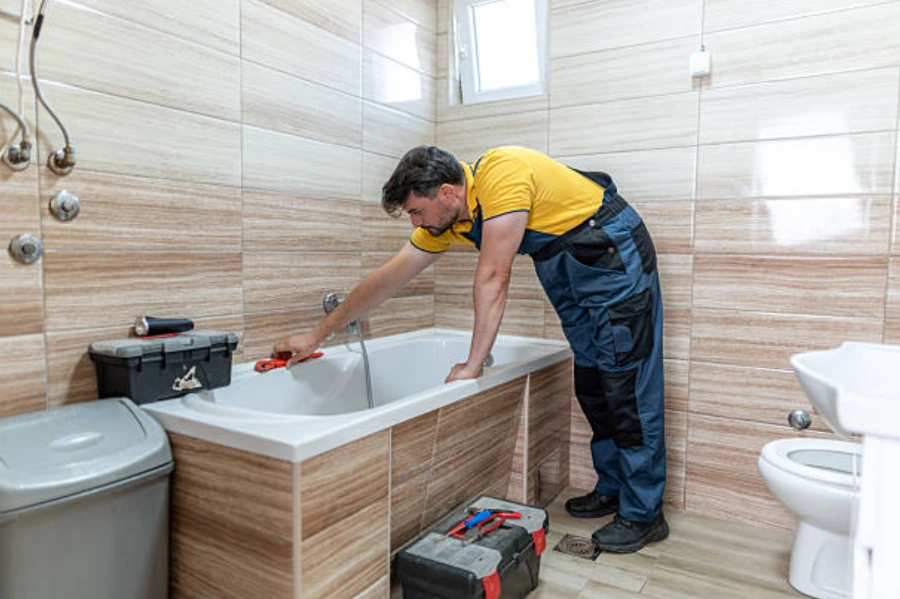
The tub faucet keeps dripping after you turn it off. The showerhead sprays unevenly, or you notice dampness along the tub surround. These may be small fixture problems, but they are worth checking before deciding what needs repair. A focused bathroom plumbing inspection can review the bathtub faucet and spout, shower trim and controls, and visible signs of wear or water around accessible connections, the overflow and the drain.
The bathroom vanity can tell a different part of the story. Moisture inside a cabinet might come from a faucet base, supply hose, angle-stop valve or drain joint. Pay attention to when it happens: while the shower runs, as the sink empties or even when the fixtures are off. Those details help distinguish a dripping fixture, a drainage concern and water that may be coming from somewhere concealed.
Maintenance is about identifying the next sensible step, not automatically replacing a tub, shower valve or cabinet. An accessible inspection can identify visible concerns, while a confirmed failed waste-pipe section may call for Drain Line Repair. If the source is behind tile or otherwise hidden, Leak Detection may be the better next step.
Low flow, pressure changes and what should actually be measured
One slow bathroom faucet can point to a clogged aerator or fixture component. Weak flow at several fixtures may raise questions about valves, pressure regulation, service conditions or restrictions in the supply piping. The symptoms alone do not identify a failed pipe or justify repiping.
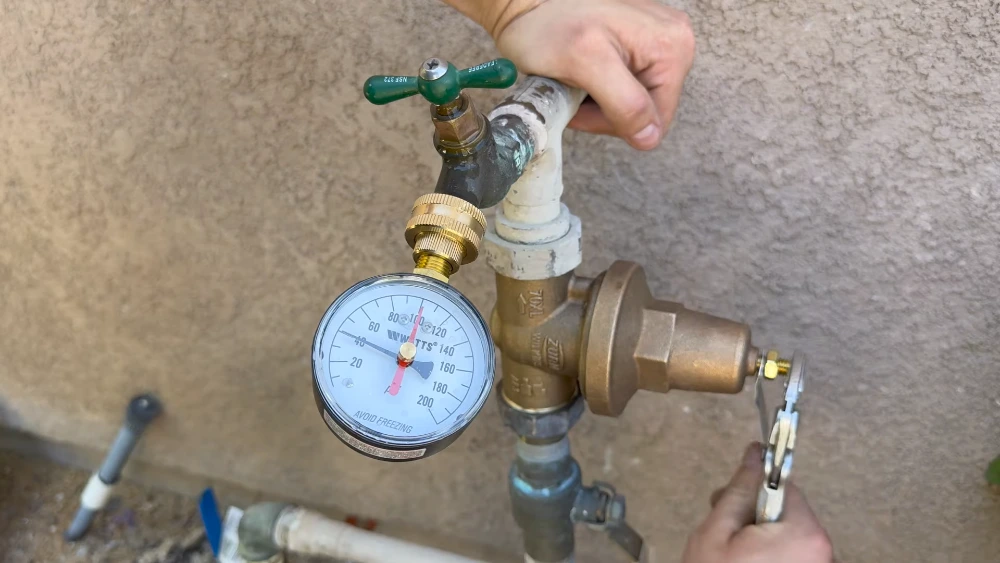
If pressure testing is included in the agreed visit, a gauge at an appropriate accessible point can provide a starting reading. Pressure and flow are not identical: a fixture may have poor flow even when the static pressure appears normal.
The Town of Queen Creek reports a 50–100 psi range in its distribution system, depending on area and time of day. That is not a target pressure for an individual home or a substitute for testing the property’s plumbing. Source: Town water FAQs.
Before approving a pressure-regulator replacement: ask what was measured, where the test was performed and whether the problem affects the whole house or only particular fixtures.
The best inspection result is a clear priority—not an automatic replacement list
A plumbing maintenance service in Queen Creek should help you understand which findings deserve attention now, which can be scheduled and which simply need monitoring. The distinction should be tied to observed conditions, not age alone.
Address promptly
Active water loss, uncontrolled wastewater, a dangerous equipment condition or a leak spreading toward electrical components. Address the safety issue before treating it as routine maintenance.
Plan a specific repair
A dripping fixture, deteriorated supply connection, unreliable shutoff or other identified fault that can be scoped without recommending an unrelated whole-home upgrade.
Monitor or maintain
Minor observations without demonstrated failure and upkeep that should follow the manufacturer’s instructions. Not every older valve, heater or pipe needs immediate replacement.
Queen Creek maintenance checks that make sense for local homes
Homes in ZIP 85142 can have different water providers, fixtures and outdoor-water arrangements. Local utility guidance is valuable context—not a substitute for examining the actual property.
Water meter readings and unexplained usage
For Town-served properties, the Town recommends checking meter readings before and after about an hour with all water-using appliances and irrigation off. A changed reading during a genuine no-use period calls for further investigation; it does not identify which pipe or fixture is responsible. Town leak-check guide.
Irrigation, pool autofill and outdoor moisture
Sprinkler schedules, an irrigation valve that does not shut off, a pool autofill or landscape watering can explain unexpected use. Wet ground is not, by itself, proof of a broken domestic water line. Compare the water-use pattern before requesting excavation or underground repairs.
Hard water and equipment upkeep
The Town reports 6–17 grains per gallon hardness for its own system. That can matter when reviewing water-heater maintenance or an ion-exchange softener’s settings, but it is not a measured hardness result for every Queen Creek home. Follow the actual water provider and equipment instructions. Check local water providers.
Accessible pipes when temperatures dip
Before cold weather, pay attention to exposed hose bibbs, pool or irrigation connections and vulnerable outdoor supply lines. Insulation and other precautions should suit the equipment and weather conditions; a routine interior inspection does not automatically include winterizing every outdoor system. Town cold-weather pipe guidance.
Equipment maintenance: what a general inspection should and shouldn’t imply
The water heater, filtration system and softener may warrant attention during a checkup, but they have their own maintenance procedures. A technician looking at accessible connections has not necessarily performed a tank flush, a tankless heat-exchanger descale or a complete softener service.
- Conventional storage-tank water heaters Review visible connections and report changes such as water near the heater, short hot-water supply or unusual sounds. Internal controls, flushing and relief-valve work require the right separate procedure and model-specific safety precautions.
- Tankless water heaters A fault code, falling hot-water flow or delayed heating may justify model-specific troubleshooting. Filter cleaning, descaling, ignition and venting checks should be based on the installed unit rather than assumed part of a basic inspection.
- Water softeners and whole-house filtration Ask about visible leaks, bypass position and changes in water quality or flow. Regeneration settings, resin and filter replacement require equipment-specific scope and, where appropriate, measured inlet-water conditions.
Maintenance is not the same as a repair. An existing water-heater failure belongs on the Water Heater Repair page. A softener that is not working belongs to Water Softener Service.
How a focused residential plumbing inspection should work
- Describe the home’s actual concerns Mention running toilets, small leaks, flow changes, past repairs, accessible equipment and what you most want checked.
- Agree on scope before the visit Confirm whether the appointment covers visible fixtures, shutoffs, pressure measurements, equipment observations or a particular follow-up test.
- Review findings without overdiagnosing Separate confirmed observations from suspected concealed problems, and record measurements only when testing was actually performed.
- Discuss a prioritized next step Decide what needs prompt attention, a scheduled repair, maintenance according to the manual or simply monitoring. Any expanded work should be agreed separately.
What affects plumbing maintenance and inspection cost in Queen Creek?
Price depends on what is being inspected. A visual walk-through of accessible fixtures is different from measuring pressure at multiple points, tracing a concealed leak, opening a wall or inspecting an underground sewer lateral.
Before scheduling, ask which rooms and equipment are included, whether diagnostic tests carry separate charges, and how the findings will be presented. Confirm charges and approval before additional work begins.
Estimate versus inspection: An estimate for proposed plumbing work may not include a diagnostic inspection. Confirm which service or test is included before booking.
How often should homeowners check their plumbing?
There is no universal professional inspection schedule that suits every home. If fixtures are working and nothing has changed, simple owner checks can still be useful between professional visits.
The EPA WaterSense home-maintenance guidance recommends regular leak checks, including a toilet leak check at least once a year. It also encourages reviewing faucets, pressure and water-using equipment. Manufacturer instructions determine specific service requirements for heaters, softeners and filters.
A professional maintenance visit can be useful after moving in, before a remodel, when service history is unknown or when several small issues appear. A returning backup or suspected concealed leak deserves the focused diagnostic service rather than waiting for the next routine checkup.
Plumbing maintenance and inspection questions
What is included in a home plumbing maintenance visit?
Is a plumbing inspection the same as leak detection?
Will you measure the water pressure?
Can routine maintenance identify a running toilet?
Should a plumber operate an old shutoff valve during inspection?
Is water-heater flushing part of the visit?
Does maintenance include clearing a slow drain?
Can one inspection prevent every plumbing emergency?
What should I prepare before the appointment?
Is an estimate the same thing as a diagnostic inspection?
When should a homeowner choose specialist service instead?
When an inspection points to a specific repair
A maintenance visit helps clarify what needs attention. These separate services cover repairs or tests that go beyond a general checkup.
Schedule a plumbing checkup with a clear scope
Have a running toilet, a small recurring drip, questions about water pressure or older equipment? Describe what you’d like checked at your Queen Creek, AZ 85142 home. Ask which inspections and measurements are included before setting up the visit.
Call (480) 741-9220