
Slab Leak Repair
Queen Creek, AZ
Warm flooring, unexplained water use, or moisture appearing along a wall can raise concerns about a water line leaking beneath your home’s concrete slab.
Slab leak repair addresses damaged water supply pipes beneath or within the foundation. Repair options include opening part of the concrete slab or rerouting the leaking water line.
Warm floors, damp spots, or water use you cannot explain
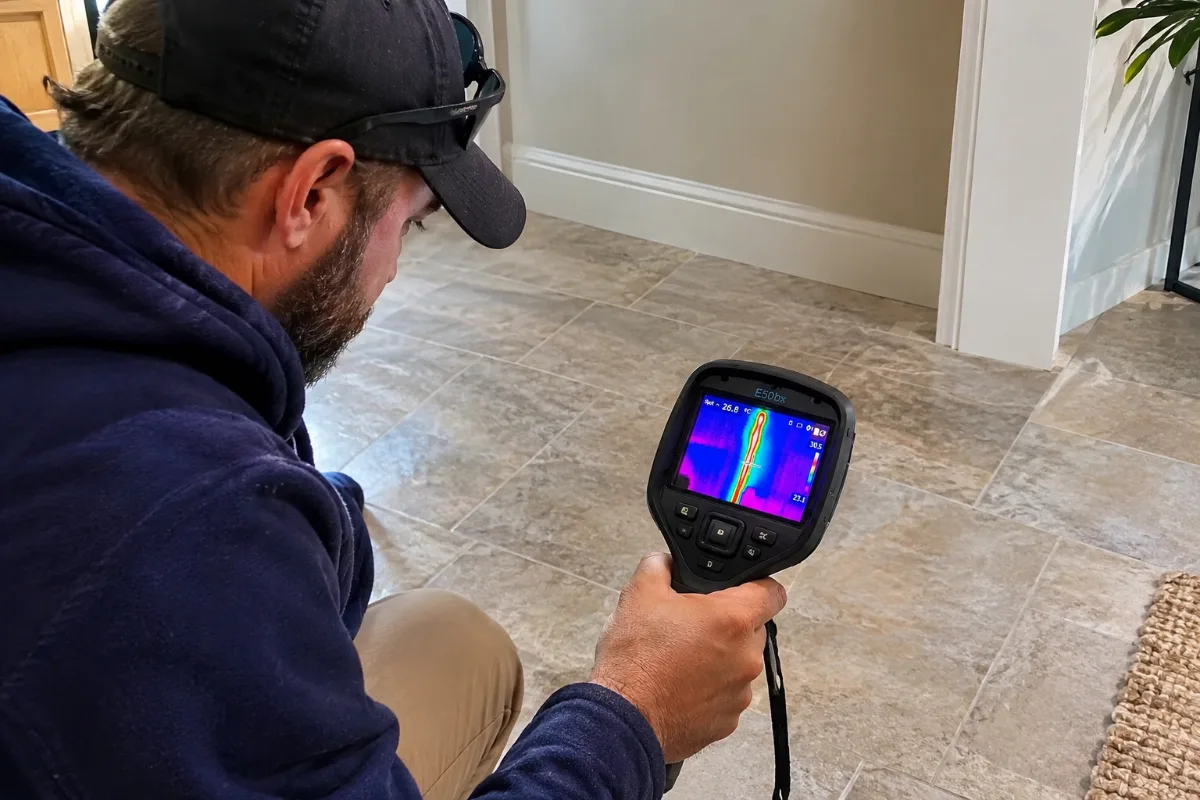
The tile feels warm in one spot. A baseboard stays damp, or the water bill climbs even though nothing at home has changed. Those signs deserve attention, especially when they appear together. They can suggest a leaking hot- or cold-water supply line, but they do not tell you that the failure is under the concrete slab. First, look at the pattern—and rule out more accessible sources.
Warm flooring with no obvious explanation
A hot-water line beneath or near the floor is one possibility. Sun exposure, appliances, and other temperature differences must also be considered before anyone recommends breaking concrete.
Moisture returning near floors or baseboards
Water can travel along seams and beneath flooring before it becomes visible. A nearby supply connection, appliance, exterior source, or under-slab line may be responsible.
Running-water sounds with fixtures off
A continuous hiss or flow sound can point to water moving through pressurized piping. The sound can travel through walls and floors, so it is not a reliable location by itself.
Meter readings that rise with no water in use
With faucets, irrigation, pool equipment, and appliances accounted for, continued meter movement can help flag water loss. Isolation testing is needed to determine which part of the system is involved.
Water spreading through the home? If you can safely reach a known shutoff valve, turning off the affected supply may help limit damage. Stay clear of water near electrical equipment. For an active leak that cannot safely wait, see emergency plumbing service.
Find the affected line before opening the concrete
Before discussing saw cuts or a reroute, establish whether a pressurized supply pipe is actually losing water beneath the slab. An apparent slab leak may begin at a toilet, an appliance connection, an exterior service line, or another hidden location. Mistaking the source can lead to unnecessary work.
A proper investigation considers the pattern: hot water running out unusually fast, water-heater activity with no fixture use, meter movement, wet surfaces, and accessible connections. A plumber can then isolate hot and cold supply lines and use pressure observations, acoustic listening, moisture readings, or other appropriate tests to narrow the affected section. Not every property needs every test.
Queen Creek water-meter clue: The Town’s Home Water Leak Check explains that its Sensus iPERL meter displays a + beside “Gal” when water is moving through the meter. With all intended water uses off, it also recommends comparing readings at least one hour apart to catch slower use. A moving indicator suggests water flow, not proof that the break is beneath the foundation.
If no one has established which line is leaking, leak detection comes first. This slab leak repair page focuses on the next decision: how to reach or bypass a confirmed problem without creating unnecessary damage.
Spot repair or reroute: what makes sense for this pipe?
When the leaking section is identified, there are usually two decisions to compare: reach the damaged pipe for a focused repair, or install a new route that bypasses it. Pipe condition, available access, past failures, and the home’s floor plan matter more than a one-size-fits-all recommendation.
Repair the confirmed pipe section
If the leak is isolated and the pipe around it is in serviceable condition, opening a controlled section of flooring and concrete may allow a localized repair or short pipe-section replacement. The route through the floor should be justified by the location findings.
Before approving work, ask how the pipe will be exposed, what fittings or pipe sections will be replaced, how the repair will be tested, and who is responsible for concrete and floor finishes.
Reroute the affected supply line
A new hot- or cold-water line may be routed through accessible walls or ceilings, bypassing the failed buried section. That can avoid cutting the slab at the leak location, but it still requires new connections and planned access points.
The layout should show where the new line travels, how the old line is isolated, and what wall, ceiling, insulation, or finish work remains. A reroute is not automatically less disruptive or less expensive in every home.
One leak does not automatically mean a repipe. Repeated failures in different supply lines may justify a wider piping assessment. For the separate whole-home decision, see whole-house repiping.
Where the repair goes changes what gets opened
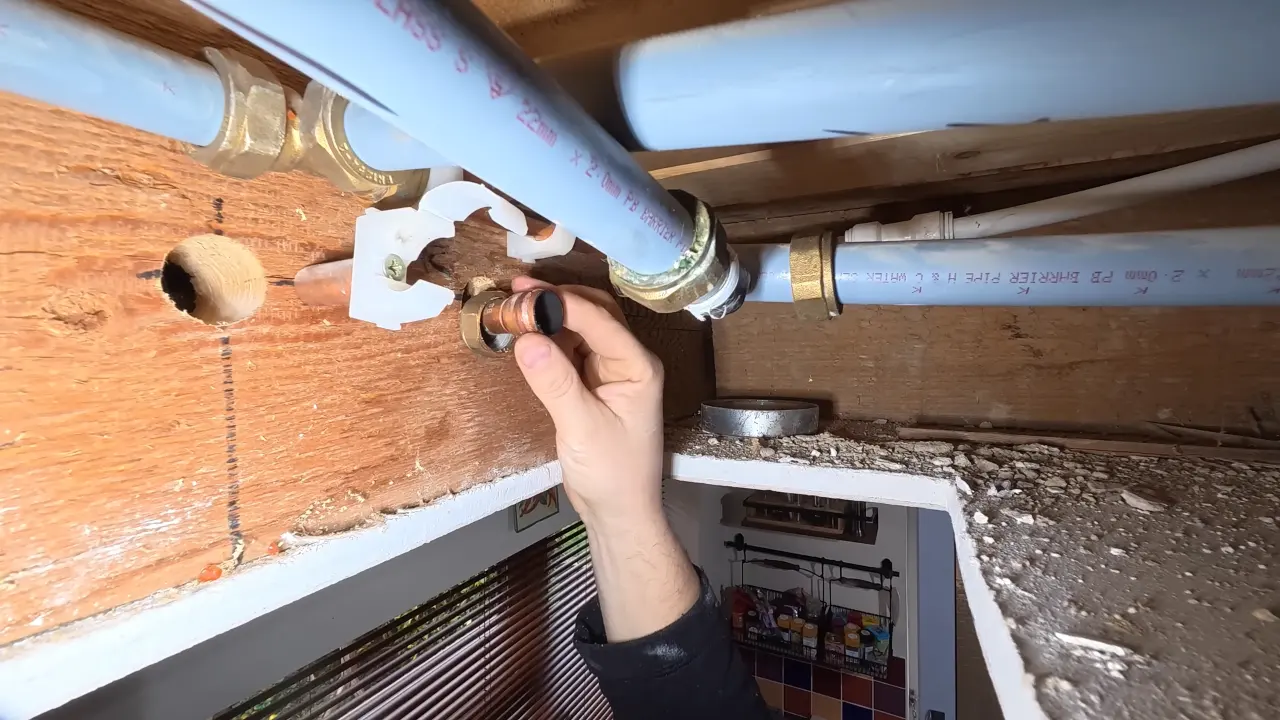
The leak’s position is only one part of the work. Tile, glued-down flooring, cabinets, built-ins, wall framing, and the available pipe route all affect access. A small pipe repair can still leave finish work behind.
Direct access: Ask which portion of the floor will be cut, how the confirmed damaged section will be reached, and whether concrete patching and matching floor finishes are included.
New route: Ask which wall or ceiling areas will be opened, where new connections will be made, whether the old line is being abandoned correctly, and what it takes to restore the finishes.
Neither approach should be sold as damage-free. The written scope should separate the plumbing repair from drywall, flooring, drying, painting, and other restoration work.
One slab leak is not a reason to replace every pipe
A single failed hot- or cold-water line does not establish the condition of every pipe in the home. When the problem is isolated and the surrounding system checks out, a focused repair or reroute may be the most reasonable response.
A broader piping discussion makes sense if different supply lines have failed repeatedly, repairs are becoming frequent, or testing reveals additional deterioration. Compare the disruption and expected scope of repeated spot repairs with a partial or whole-house repiping plan. The decision needs evidence—not a sales pitch based on one leak.
How a slab leak repair is planned, completed, and checked
The details change with the pipe and access route, but homeowners should be able to follow the work from the confirmed finding through pressure checks and restoring water service.
Review what the tests established
Confirm whether the affected line carries hot or cold water, where the loss was narrowed, and what remains uncertain before access begins.
Agree on access and the water shutoff
Compare opening the floor with a feasible reroute. Identify the expected service interruption, pipe materials, connections, and finish work in writing.
Repair or bypass the failed line
Expose and replace the localized section, or run the approved replacement supply path with the necessary fittings and connections.
Test before closing access
Check the new or repaired piping for leaks with methods appropriate to the installation, restore water service, and compare the original symptoms.
Document the work and remaining repairs
Record the pipe location or new route, tests performed, and any open concrete, flooring, drywall, or drying and finish-restoration tasks.
What to ask slab leak plumbers in Queen Creek, AZ
Two repair proposals can look similar on paper but involve different work. One may call for opening the concrete to replace a short section of a damaged supply pipe; another may bypass the failed line with a new route through a wall or ceiling. A useful recommendation explains which line is leaking, why that approach fits the home, and what happens after the water is turned back on.
- Who will perform the pipe repair? Verify the contractor’s current license status and appropriate work classification through the Arizona Registrar of Contractors’ search. Check the company that will actually perform the work, not just the name on an advertisement.
- Does the scope distinguish a spot repair from a reroute? Ask about the affected hot- or cold-water line, pipe materials, access locations, planned shutoff, new connections, and how the completed work will be tested. A reroute is an alternative to opening concrete at the leak—not a guarantee of no wall or ceiling openings.
- What is included beyond the pipe? Confirm permit responsibility where applicable, plus any concrete patching, tile, drywall, drying, or other restoration. The written scope should state what the plumbing work covers and what requires another trade.
What affects slab leak repair costs in Queen Creek?
Slab leak repair in Queen Creek, AZ can be a small, well-located pipe repair or a larger reroute around finished rooms. The scope should explain why that repair is needed and what is included—not assign one flat price to every house.
- Leak location and confirmation Whether the damaged section has been located well enough to plan access, and whether more diagnostic work is needed.
- Direct repair or reroute The amount of pipe work, fittings, new routing, and connections required.
- Access through finished areas Flooring, concrete, cabinetry, walls, and ceilings that could need controlled openings.
- Condition of nearby piping Whether evidence supports one isolated repair or a wider discussion about repeated failures.
- Water-service interruption The planned shutdown and steps required to bring the affected supply back into service.
- Restoration and separate trades What is included for concrete, flooring, drywall, painting, drying, or other work.
Estimates are available. Ask whether leak-location work, pressure testing, access openings, concrete patching, wall repair, flooring, and water-damage cleanup are included or billed separately.
Local permitting question: For work within the Town of Queen Creek’s jurisdiction, the Town lists the 2021 International Plumbing Code among its adopted codes. Whether a particular reroute or alteration needs a permit depends on the work; the Town’s Building Safety Division advises checking with its office. An 85142 mailing address alone does not establish permit jurisdiction.
Fixing the pipe and restoring the room are different jobs
A successful pipe repair stops water loss. It may not restore tile, a concrete opening, a drywall cutout, or damp materials left by the leak. Those tasks can involve different trades and timelines, so confirm the boundaries before approving the plumbing work.
Plumbing scope
Confirm the pipe work, new connections, testing, and which access openings the plumbing work includes closing.
Finish and water-damage work
Ask who handles flooring, drywall finishing, paint, cabinetry, drying, and any separate damage restoration. Do not assume those services are included.
Ask for the scope in writing: who patches access openings, who replaces finishes, and whether wet materials need separate drying or assessment. If you plan to contact an insurer, keep photos and the plumber’s findings; coverage depends on your policy.
When the leak is doing damage, the response changes
Water actively spreading across floors, soaking walls, or reaching electrical equipment is urgent—even if nobody has confirmed a slab leak yet. Stay away from wet outlets or electrical panels. If a known water shutoff is safe to reach and use, shutting it off can help limit damage. Do not cut into flooring or walls to search for a pipe.
A higher bill or an occasional warm spot without visible damage often calls for a scheduled investigation first. Creekline Plumbing accepts emergency plumbing calls 24/7; current dispatch availability and timing are confirmed when you call. For uncontrolled leaks, see emergency plumbing.
Before the floor closes, verify the repair
Before the access area is closed, the repaired or rerouted line should be checked for leaks with an appropriate test. Restore the water supply, inspect the new connections, and review whether the original unexplained meter movement or moisture symptoms have stopped where they can be evaluated.
Keep the repair location or reroute diagram, relevant photos, test results, and any warranty or scope documents. They can save time if future plumbing work requires locating the new line.
Slab leak repair: answers to the decisions homeowners face
Does a warm floor prove there’s a slab leak?
No. A warm area can be a clue to a hot-water supply leak, but it does not identify the source on its own. The line and location still need to be checked.
Can a slab leak be repaired without breaking the concrete?
Sometimes. A new line may bypass the failed under-slab supply pipe through walls or ceilings, so the leak location itself does not have to be opened. Feasibility depends on the routing and the connections available, and other areas may still need access.
Is rerouting always better than a spot repair?
No. A direct repair may be sensible for a clearly located, isolated failure. Rerouting may avoid a floor opening but can require new wall or ceiling access. Both options have tradeoffs.
Can cold-water pipes leak beneath the slab?
Yes. A cold-water leak may cause unexplained meter movement or moisture without creating a warm floor. Repair planning should follow the line actually identified as leaking.
Does one slab leak mean the whole home needs repiping?
No. One leak does not establish the condition of every supply pipe. Repeated failures in different lines or evidence of widespread pipe problems may justify a separate repiping assessment.
Will the water need to be shut off during repair?
Often, the affected supply must be isolated for part of the work. The expected shutoff and any impact on household water use should be discussed as part of the repair plan.
Is flooring and drywall restoration included in the quote?
Do not assume it is. Ask which access openings, concrete work, drywall repairs, finishes, and any separate water-damage services are included in the estimate.
How long does slab leak repair take?
The plumbing portion depends on pipe access, the length of the repair or reroute, testing, and water shutoff needs. Drywall, flooring, and water-damage restoration may follow a separate schedule. Ask for both timelines after diagnosis.
Can a newer Queen Creek home have a slab leak?
Yes. A newer home can still have a concealed supply-line leak. The home’s age alone does not confirm or rule out a slab leak; testing and the actual plumbing layout matter more.
Does homeowners insurance pay for slab leak repair?
It depends on the policy and cause of the loss. The damaged pipe, access work, and resulting water damage can be treated differently. Keep the findings and photos, and confirm coverage with your insurer before assuming any part is paid for.
Related services when the problem extends beyond one slab line
Repair the failed line with a plan you understand
A confirmed under-slab leak calls for a practical decision: repair the affected section or reroute the supply line around it. Share what the tests found, where water is appearing, and whether damage is ongoing. Creekline Plumbing handles residential slab leak repair requests in Queen Creek, AZ 85142 and can discuss the next steps for your home’s plumbing.