Sewer Line Repair & Replacement
Queen Creek, AZ
Sewage backing up through a floor drain, gurgling toilets, or repeated clogs across multiple fixtures can signal a blockage or damage in a home’s sewer line. These symptoms do not confirm a broken pipe.
Sewer line repair addresses cracked pipes, separated joints, and collapsed sections. Checking the sewer line helps determine if the problem needs drain cleaning or if a damaged pipe needs repair or replacement.
Sewage backing up again, even after the drains were cleared?
The toilet gurgles when the washer drains. Dirty water appears in the shower. Or the same main-line clog returns weeks after it was cleared. Those symptoms deserve a closer look, but they don’t automatically mean the entire sewer pipe needs replacing.
Recurring backups can start with roots, heavy buildup, a separated pipe joint, a cracked sewer lateral, or a low section holding wastewater. The right repair starts with finding the restriction or defect—not guessing at the pipe underground.
Was the line recently cleaned? Keep the service notes or camera footage if you have them. What the technician found—and whether the blockage returned at the same fixtures—helps narrow down the next step.
Check whether the restriction was fully removed or an underlying defect remains.
Use the location and extent of the defect to choose a focused repair or replacement.
Stop using connected fixtures, avoid contaminated water, and request urgent plumbing help.
Why main-line backups keep returning
The pattern matters. These signs help distinguish a blockage from damage to a shared sewer line, but no single symptom proves the pipe is broken.
Not sure whether the wet spot outside is sewage? A wet patch or odor could come from wastewater, a water-supply leak, irrigation, or surface runoff. Locating the source is the first step—not excavating on suspicion.
Backups that return after cleaning
If the same main-line restriction returns, the line may need further inspection. The cause could still be buildup, roots, or a physical defect.
Multiple fixtures affected at once
A toilet, shower, or floor drain reacting when another fixture runs can suggest trouble in a shared drain or main line.
Roots found in the sewer line
Roots can enter through an opening or poorly sealed joint. Removing roots may restore flow, but a damaged entry point can remain.
Inspection shows a specific defect
A visible crack, separated joint, displaced section, or pipe collapse provides stronger evidence for a structural repair decision.
Find the damaged section with a sewer camera inspection
When backups return or structural damage is suspected, a camera inspection through an accessible cleanout can help identify tree-root entry, cracked pipe walls, offset or separated joints, standing water, and collapsed sections. The camera cannot reveal every external defect, and a blocked or submerged section may limit visibility.
The useful questions are where the defect sits, how far it runs, and whether the surrounding pipe is sound. A camera locator may help mark the affected area above ground so the repair does not begin with an unnecessary wide excavation.
Already have inspection footage? Share it when you call. Past cleaning notes, the pipe material, and the location of an existing cleanout can also guide the discussion.
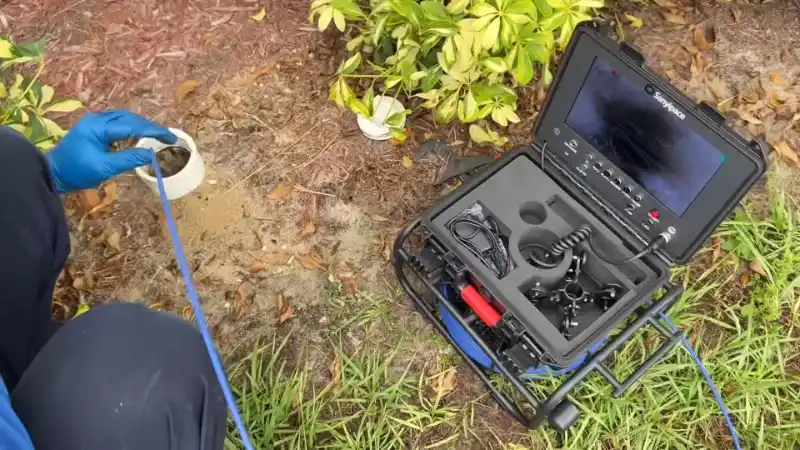
A camera image is evidence, not a complete repair plan. Pipe depth, access, the condition of neighboring sections, and any limits of the inspection still matter.
Choosing between a spot repair and sewer line replacement
A short section with a cracked joint is a different job from a sewer lateral with several failing spots. The camera findings, neighboring pipe condition, and length of damaged piping should define the repair scope.
Spot sewer line repair
When the damage is confined to a cracked pipe, separated joint, or short collapsed section and the neighboring pipe is sound, excavation and a targeted section repair may be practical. The plan should define access, materials, reconnection, and how flow will be checked.
When sewer line replacement is justified
If several sections are cracked, joints keep separating, or a longer run has lost structural integrity, replacing the damaged pipe can address more than the next isolated break. The proposed length should follow camera findings and pipe condition—not automatically extend from the house all the way to the street. Access and nearby utilities affect the replacement method.
A recurring clog alone does not justify replacing the entire sewer line. If flow can be restored but the pipe itself is damaged, clearing the obstruction and repairing the defect are different scopes of work.
What a sewer line replacement includes
Repeated patches may stop making sense when damage runs through more than one part of a sewer lateral. For a Queen Creek home, a replacement plan should identify which length of pipe has failed, not assume that every backup calls for a brand-new line.
A replacement scope should also account for the pipe’s route and slope, connections to existing building drainage, access at cleanouts, and how the new section ties into sound pipe. The proposal should identify whether the damaged portion is a short segment or most of the private lateral; “full replacement” is not a substitute for defining the actual limits of work.
Partial sewer line replacement
If a longer section is damaged but the pipe on either side is still serviceable, that run may be replaced and reconnected to the existing lateral. The work needs sound transition fittings, proper alignment, suitable pipe material, and a way to check the finished connection.
Replacing most or all of the private lateral
Widespread cracking, repeated joint separation, severe deformation, or multiple collapsed areas may point toward a larger replacement. Before digging, the plan should establish the route, pipe depth, cleanouts, branch connections, and how the new pipe will connect to the existing system.
What should the replacement proposal show? The start and end points, pipe size and material, the required slope for gravity drainage, how existing connections will be handled, whether utilities and access affect the route, and which testing, inspections, backfill, and surface restoration are included.
Open excavation may be the practical choice where the line has collapsed or must change route. Where the alignment and site conditions permit, trenchless pipe bursting may replace the old line with a new pipe through access pits. Pipe lining is different: it rehabilitates a suitable existing pipe rather than removing and replacing it. The choice depends on the evidence and the property.
Excavation, pipe lining, and pipe bursting explained
Once the location and condition are understood, the method can be matched to the damage. A single broken joint, a deteriorated pipe run, and a collapsed lateral do not call for the same work.
Excavation and spot sewer pipe repair
A localized crack, broken fitting, offset joint, or collapsed piece can sometimes be exposed and replaced without rebuilding the whole lateral. Utility locations, trench safety, access, and surface restoration matter.
Open-trench sewer line replacement
When a long run is badly deteriorated, collapsed, or must be rerouted, open excavation allows the damaged pipe to be removed and a new sewer pipe installed. Pipe slope, bedding, fittings, cleanouts, inspections, and restoration all affect the work. The excavation should match the agreed replacement boundaries.
Trenchless sewer pipe lining
Cured-in-place pipe (CIPP) lining can rehabilitate some cracked or deteriorating pipes by forming a structural liner inside the existing line. It is not the same as removing the pipe and installing a new one. Access, cleaning, internal diameter, pipe shape, and the extent of collapse all matter to suitability.
Pipe bursting for sewer replacement
Pipe bursting fractures or displaces the old pipe while pulling a new replacement pipe into its path. It can reduce continuous trenching on a suitable route, but it still needs entry and exit access. Close utilities, unusual bends, branch connections, or site restrictions can make excavation the safer option.
Where does drain cleaning fit? Mechanical cleaning and hydro jetting can clear roots or buildup, but they cannot reseal a separated joint or repair a cracked sewer pipe. A drain-cleaning service may be appropriate before a structural decision, depending on the findings.
Trenchless does not mean no digging. Some methods require access pits, pipe cleaning, or restoration. The inspection should determine which techniques are suitable, not the other way around.
Planning sewer access and surface restoration
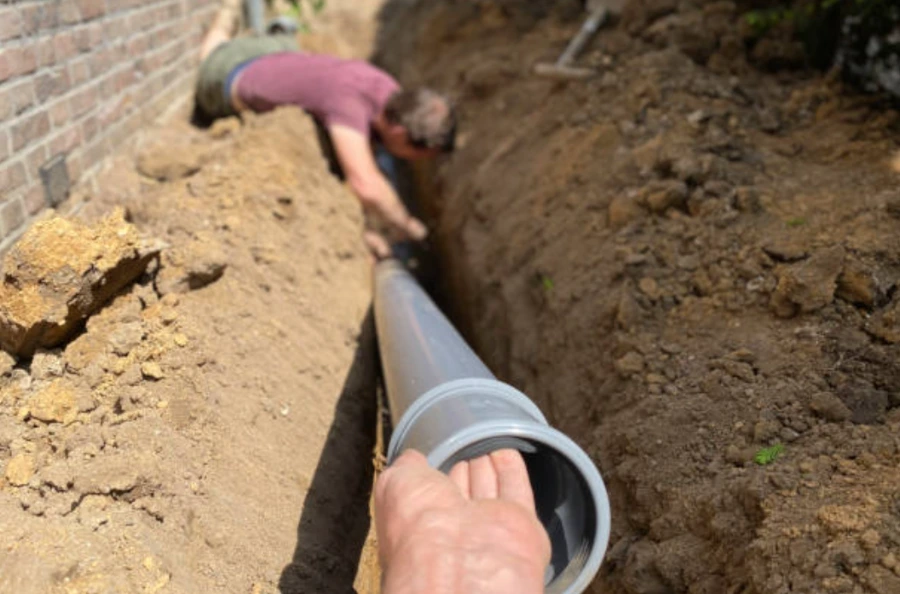
Not every repair requires opening the same amount of ground. A damaged section may run through a yard, side passage, landscaped area, under a driveway, or beneath another finished surface.
Before work begins, the scope should identify where access is needed and who handles the work that follows the plumbing repair.
- Excavation and backfill
- Concrete or paving removal
- Landscaping and irrigation disturbance
- Cleanup and material disposal
- Surface restoration included or separate
- Permits and inspections, where required
For excavation, underground utilities must be located first. Arizona 811 requires advance notice before digging; the normal notice window is at least two full working days.
From the camera findings to a completed repair or replacement
Whether the job involves one damaged joint or a longer replacement, the sequence should be clear: confirm the defect, agree on the exact pipe work and access, complete the repair or installation, then check the line.
Review the problem
Discuss the backup history, affected fixtures, earlier cleaning, and any camera footage or repair records.
Identify the damaged section
Review the findings, locate the affected area where possible, and assess access and nearby conditions.
Agree on the scope
Identify the exact segment to repair or replace, access points, material and connection details, estimated cost, and any limits or separate restoration work.
Complete the approved pipe work
Repair the damaged joint or install the agreed replacement pipe, with suitable connections, access, safety measures, and applicable inspections.
Check the result and review records
Confirm which pipe was repaired or replaced, what drainage or inspection checks were completed, and what documents or restoration details to keep.
Understanding sewer repair and replacement costs
Fixing one accessible joint and replacing a long underground sewer line are different jobs. Camera findings, pipe material, depth, replacement length, excavation or trenchless access, connections, and restoration can all affect the quoted scope.
A useful scope and estimate explain:
- The defect and pipe section covered by the work
- Repair or replacement method being proposed
- Pipe depth, length, route, and access assumptions
- Camera inspection or locating included or separate
- Excavation, cleanup, and surface restoration scope
- Permit or inspection requirements for the address
- What could require a revised scope or price
- How the completed repair will be checked
Estimates are available for sewer line repair in Queen Creek, AZ. The scope should still clarify whether camera work, locating, permits, digging, or restoration are included, and when additional work would require approval.
Private sewer lateral and public main responsibilities
For customers connected to the Town of Queen Creek sewer system, the Town says property owners are responsible for cleaning and maintaining the sewer line between the home and its connection to the Town’s sewer main. The Town also describes a separate repair responsibility for service lines within the public right-of-way. Read the Town’s published sewer-backup and responsibility guidance.
The Town’s guidance covers maintenance along the private connection and separate repair responsibility in the public right-of-way. Confirm the actual wastewater provider and defect location before assigning responsibility or approving excavation; a Queen Creek mailing address alone does not establish the utility jurisdiction.
Not every Queen Creek 85142 home has the same wastewater provider. Some homes may use another provider or an onsite septic system. Confirm the actual system and jurisdiction before assuming the Town’s boundaries apply to your property.
If sewage is overflowing from a public manhole or a public sewer failure is suspected, contact the applicable wastewater provider. For an indoor backup, stop using affected fixtures and avoid contact with sewage until the situation is assessed.
What if the home has septic? A drainfield or septic tank problem is not the same as repairing a private sewer lateral connected to a public main. Describe the wastewater setup when you call so the right service can be identified.
Checking drainage after the pipe work
After repair or replacement, the completed section should be checked in a way that matches the work. Depending on the job, this may include inspecting connections, confirming drainage and slope where accessible, reviewing camera footage, or completing required inspections.
Keep a record of the pipe segment repaired or replaced, materials used, any photos or footage supplied, inspections completed, and what restoration remains. These details are useful if another drainage problem develops later.
A completed structural repair does not guarantee that a different section can never clog. Keeping grease and wipes out of drains, and addressing new symptoms early, still matters.
Keep the location, material, and scope of the pipe work for your records.
Ask what flow, connection, or camera checks were appropriate for this specific repair.
Know whether concrete, paving, irrigation, or landscape repairs are completed or still pending.
Sewer repair and replacement questions answered
Does a recurring sewer backup mean the pipe is broken?
No. Repeat backups can come from buildup, roots, or a damaged section. Recurrence is a reason to inspect the line; a structural repair should follow evidence of a defect.
Is sewer line repair the same as drain cleaning?
No. Drain cleaning removes an obstruction so wastewater can flow. Sewer line repair fixes physical pipe damage. Some problems start with cleaning and lead to repair only after damage is found.
Can only the broken section of sewer pipe be repaired?
Sometimes. A defined damaged section may be repaired without replacing the entire line if surrounding pipe is in suitable condition. The repair scope depends on inspection findings and access.
Is trenchless sewer repair always an option?
No. Trenchless methods depend on the pipe’s condition, route, connections, available access, and the defect. Some methods still require excavation. The available approach must be confirmed for the property and service provider.
How long does sewer line repair take?
It depends on the damaged section, depth, access, required permits, and repair method. A straightforward repair in open ground is different from work beneath a driveway. Ask for scheduling expectations once the scope is known.
Does a sewer camera inspection prove replacement is needed?
Not by itself. The footage should show the relevant condition, where it is, and whether the findings support a limited repair or a longer replacement. A blocked or water-filled section can also limit visibility.
Who repairs the line between the house and the street?
Responsibility depends on the wastewater provider and where the defect is located. The Town of Queen Creek publishes separate private-line maintenance and public-right-of-way repair responsibilities for its customers. Check the actual property’s provider and boundaries before work is approved.
What should I do if sewage is backing up right now?
Stop using drains and appliances connected to the affected line. Keep people and pets away from contaminated water, and call for urgent help. If the issue appears to involve a public sewer or manhole, report it to the wastewater provider as well.
Can pipe lining fix a collapsed sewer line?
Not every collapse is suitable for lining. If the original pipe has lost its shape or access is blocked, the line may need excavation or replacement. The camera findings and method requirements determine the option.
When is replacing the sewer line better than another spot repair?
Replacement may be worth discussing when a camera inspection and repair history show several damaged sections, repeated structural failures, or a longer run of deteriorated pipe. A single clog or isolated crack does not automatically call for replacement of the full line.
Does sewer line replacement always mean digging a full trench?
No. Some suitable sewer laterals can be replaced with pipe bursting, which uses access pits rather than a continuous trench. Severe collapse, utilities, changes in direction, and existing connections can limit that approach. Pipe lining rehabilitates an existing pipe and is a different technique.
When another plumbing service is the better next step
The service should match the problem that has actually been identified.
Discuss the right sewer repair or replacement
A recurring main-line backup, cracked pipe, or failing sewer lateral calls for a clear decision—not repeated guesswork. Share the address, affected fixtures, and any inspection footage. Creekline Plumbing handles residential sewer line repair and replacement requests in Queen Creek, AZ 85142. Inspection findings, damage length, pipe condition, and access guide the proposed work.
Call with the symptoms and any previous inspection findings. Emergency plumbing calls are accepted 24/7; service scheduling and availability are confirmed on the call.