
Leak Detection
Queen Creek, AZ
A higher water bill, damp drywall, water sounds when fixtures are off, or an unusual warm spot on the floor can point to a possible plumbing leak.
Leak detection focuses on locating the source before deciding what needs repair. The affected area, changes in water pressure, and whether the water meter moves when fixtures are off can provide useful clues.
Water bill climbing, but no leak in sight?
The water bill jumps, a cabinet stays damp, or you hear water running when every faucet is off. None of those clues points to one specific pipe. Water can travel through framing or beneath flooring before it becomes visible, so the source may be nowhere near the stain.
Before anyone opens drywall or concrete, the first job is to separate actual plumbing loss from normal or automatic water use. A running toilet, refrigerator ice-maker line, underground supply pipe, and stuck irrigation valve leave different patterns. Following those clues makes the investigation more focused.
Where did you notice the change first? Note the water-bill increase, the first damp area, and whether the problem appears all day or only when an appliance runs. Those details are useful when arranging a leak detection inspection.
Unexplained water use
Consumption rises despite similar household habits—or a meter records water movement while every fixture is supposed to be off.
Damp walls or cabinets
Swollen baseboards, stains, musty cabinets, or a soft patch of drywall may indicate trapped moisture. Water can travel before it becomes visible.
Water sounds or reduced pressure
Persistent flow sounds, a hiss near piping, or an unusual pressure change are clues worth checking alongside other symptoms.
Warm flooring or wet ground
These signs can have several explanations, including plumbing, heating, irrigation, or drainage—not automatically a slab leak.
Common places hidden water leaks begin
The wet spot isn’t always the source. Inspecting the plumbing connections associated with the affected room helps distinguish a visible fixture leak from a hidden supply-line problem.
Behind walls and ceilings
Concealed hot- or cold-water tubing, joints, and fittings can wet drywall or framing. Moisture readings show affected surfaces, not necessarily the exact failed connection.
Under sinks and near fixtures
Supply stops, braided faucet connectors, toilet fill valves, refrigerator ice-maker lines, and laundry hoses deserve a look before blaming a concealed pipe. A running toilet can also waste water without leaving a puddle.
Beneath the concrete slab
Warm flooring, unexplained water loss, or persistent dampness can raise suspicion about an under-slab supply line. A separate slab leak repair decision follows the findings.
Between the meter and the house
Buried service piping can lose water without a visible puddle. Irrigation, pool equipment, and surface drainage must also be considered when the yard stays wet.
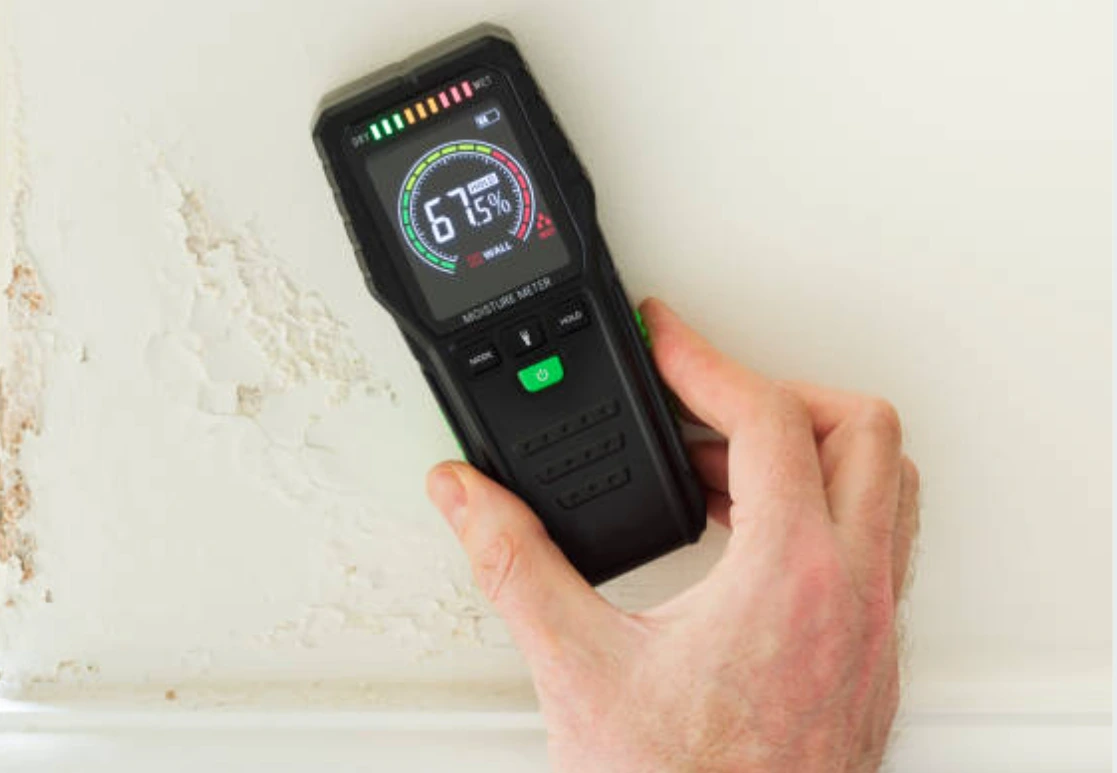
Tracing a hidden leak without guessing
A focused inspection moves from the clues to the plumbing system involved. Is water still passing through the meter when fixtures are off? Does the evidence point to hot water, a fixture connection, or an exterior supply line? The answers help select appropriate tests and avoid opening the wrong surface.
- 01
Review water use and visible connections
Compare the symptoms with recent usage. Examine accessible faucet supplies, toilets, water-heater connections, laundry hoses, and shutoff valves.
- 02
Isolate the suspected water line
Meter observations, available shutoffs, and pressure checks can help distinguish an indoor fixture, an exterior line, or a hot-water supply problem where the system permits meaningful testing.
- 03
Match the diagnostic method to the pipe
Electronic acoustic listening, moisture measurement, thermal imaging, and pressure-based testing answer different questions. No single tool detects every leak or guarantees an exact location.
- 04
Review the findings before opening a surface
The suspected source, uncertainty, pipe access, and the recommended repair scope should be clear before demolition or excavation begins.
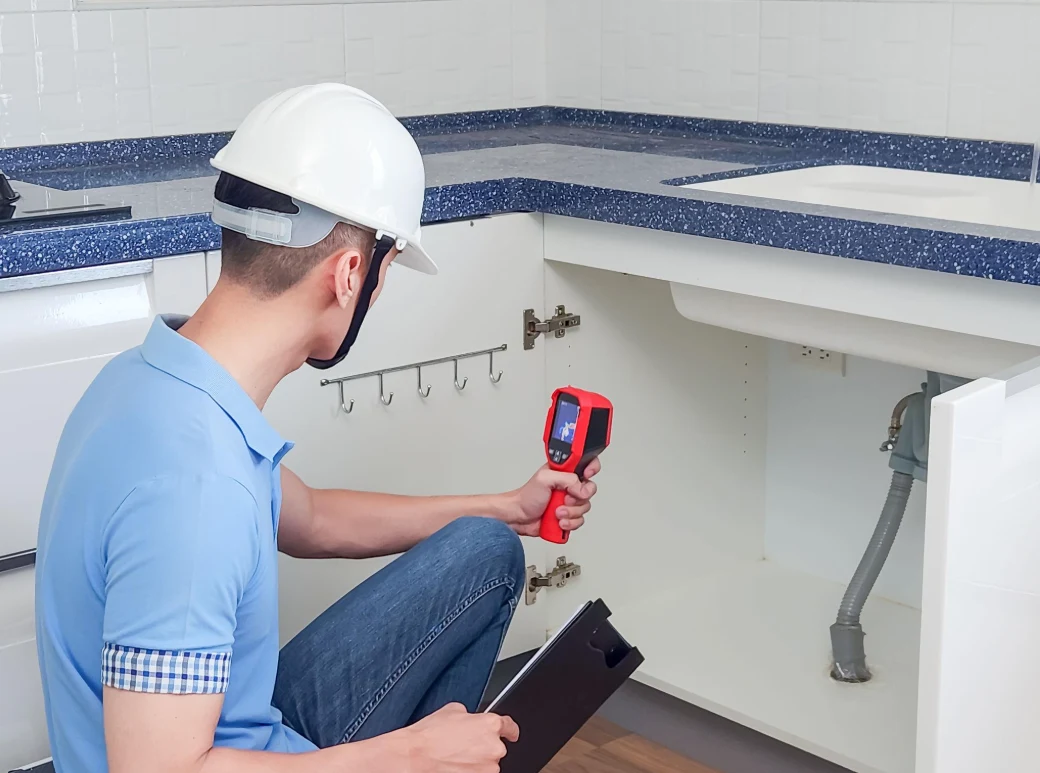
How acoustic, thermal, and pressure tests narrow the source
Electronic leak detection combines the right instruments with what the plumbing system is doing. An acoustic sensor, moisture meter, infrared camera, and pressure test each answer a different question. Together with meter readings and pipe-access observations, these findings help determine which area should be investigated or repaired.
For a concealed pressurized line, acoustic listening may help narrow the area of escaping water; pressure or isolation observations help distinguish one supply section from another. Moisture meters document affected materials, while infrared imaging maps surface-temperature differences—not the exact path of a hidden pipe. Together, these tools support a more focused inspection rather than a promise of locating every leak without opening finishes.
Acoustic listening
On suitable pressurized piping, escaping water can create detectable sound. Pipe depth, materials, background noise, and leak size influence how useful the readings may be.
Moisture and thermal checks
Moisture meters help map damp surfaces. Infrared cameras display temperature differences, which can guide investigation but cannot independently prove that a pipe is leaking.
Pressure and isolation tests
Testing selected sections may help narrow water loss. Results must be interpreted alongside fixture behavior, water-meter activity, and the plumbing configuration.
Reading the water meter for signs of unexplained use
In Queen Creek, the water meter can help separate a hidden leak from automatic water use. For homes served by the Town of Queen Creek Water Division, the Town’s Home Water Leak Check explains how its Sensus iPERL meter displays water movement. Not every Queen Creek address uses the Town as its water provider; check the water provider for your property before following meter-specific instructions.
The Town’s meter check is particularly useful when an increased bill could also come from a running toilet, an irrigation valve stuck open, a pool autofill, or other automatic consumption. The iPERL + indicator means water is moving through that meter; it does not identify where the water is going. A second reading after at least one hour without intentional use can help reveal intermittent or slow consumption.
Stop intentional water use
Make sure no one is showering, washing dishes, doing laundry, filling a pool, or running irrigation. Include appliances and automatic systems that may cycle on without anyone noticing.
Look for the iPERL plus sign
On the Town’s Sensus iPERL example, the small circular indicator beside “Gal” displays a plus sign (+) when water is passing through the meter. Flow with all intentional use off is a reason to investigate, not proof of where the leak is.
Wait at least one hour
Write down the complete meter reading, keep all intentional water use off for at least one hour, and read it again. The difference shows water used during that period. A matching reading does not rule out an intermittent pool-fill, irrigation, softener, or reverse-osmosis cycle.
Meter movement, but no damp surfaces? The source may be a running toilet, a stuck irrigation valve, a pool autofill, an exterior supply line, or an automatic softener or reverse-osmosis cycle. Meter activity confirms water is moving, not which fixture or pipe is responsible.
Still seeing water use? How the Town narrows the source
The Town’s leak-check guide explains a sequence using the home’s accessible shutoffs. If water use stops after the home’s supply is isolated, the cause may be inside the home or on a system supplied from it. If use continues, an outdoor connection or irrigation branch may be involved. Continued use after the relevant lines are safely isolated can point toward the service line between the meter and the property.
Do not force valves or operate unfamiliar utility equipment. Older fittings can be brittle. If a shutoff is difficult to reach or the source is unclear, leave the testing to a plumber. Restore any valves you safely operated after the check.
Read the Town’s complete isolation procedure.
Wet yards, irrigation, and underground supply lines
A persistently wet patch beside a foundation, driveway, or planting bed may raise concern about a buried water line. But a stuck sprinkler valve, cracked drip tubing, broken sprinkler head, pool autofill, or surface drainage can create similar symptoms. The timing of the moisture is often as useful as its location.
There is another distinctly local factor: scheduled flood irrigation. The Town lists participating subdivisions including Creekview, Circle G, QC Ranchettes, Pegasus, and Orchard on its irrigation schedule page. The Town also warns that a weakened berm or a gopher hole can carry irrigation water into an unintended area. That wet ground can resemble an underground pipe leak even when the water did not come from the home’s pressurized supply. This irrigation service is not available at every Queen Creek property.
If one spot stays wet long after irrigation or rainfall, especially alongside unexplained household meter use, the source deserves closer examination. A plumber should distinguish a leaking residential service line from landscape piping, flood-irrigation runoff, and other drainage before suggesting excavation. See the Town’s irrigation guidance for berm and delivery information.
From leak location to the right repair
Leak detection and leak repair are connected—but they’re not the same service. Findings may point to a fixture connection, a damaged supply pipe, or a line beneath the slab. The next decision depends on the affected component and access.
Fixture or appliance connection
A supply stop, faucet hose, toilet fill assembly, or appliance connection may call for a focused repair instead of concealed-pipe work.
Damaged supply piping
A cracked joint or leaking water line may require a targeted section repair. For a confirmed supply-pipe defect, see water line and pipe repair.
Possible under-slab leak
Suspected under-slab water loss calls for appropriate testing. Once confirmed, access, spot repair, and rerouting are considered under slab leak repair.
A single isolated problem does not automatically justify whole-house repiping. Repeated failures in different sections may warrant a separate evaluation of the overall supply system.
What affects leak-detection pricing
An accessible connector dripping beneath a sink can be evaluated differently from intermittent water loss under concrete or behind a finished wall. The amount of investigation, specialized testing, and access involved changes the scope.
For residential leak detection in Queen Creek, AZ, share the affected room or yard area, the first sign of trouble, and any meter readings or previous plumbing work. A clear service request makes it easier to discuss the diagnostic scope and what may be included before the visit.
Details that influence the investigation
- Visible fixture leak versus concealed water loss
- Hot-water, cold-water, or underground line
- Accessible shutoffs, fittings, and meter readings
- Constant versus intermittent symptoms
- Previous repairs and the condition of adjacent pipes
- Whether targeted access or separate repair work is required
When is a water leak an emergency?
An unexplained bill increase without active damage can be scheduled for investigation. Water spreading across a floor, soaking a ceiling, or approaching outlets and electrical equipment calls for immediate precautions and an urgent plumbing call.
Stay away from water near outlets, breakers, or appliances. Operate a familiar shutoff only if it is safe. Creekline Plumbing accepts emergency plumbing calls 24/7; current dispatch availability is confirmed when you call. For immediate response information, see the emergency plumber page.
Answers to hidden-leak questions
Can a high water bill come from something other than a pipe leak?
Yes. Irrigation, pool filling, a running toilet, and changes in household usage can raise consumption. Compare actual gallons used and investigate meter movement while intentional water use is off.
Does a moving water meter prove there’s a hidden leak?
No. It shows water passing through the meter. Account for automatic systems and fixture consumption before narrowing the suspected water line.
What does the plus sign on a Queen Creek water meter mean?
On the Town of Queen Creek’s published Sensus iPERL meter example, a plus sign in the small circle beside “Gal” means water is flowing through the meter. With no intentional water use, compare readings at least an hour apart. A different provider’s meter may work differently.
Can electronic leak detection locate a pipe through concrete?
Acoustic or pressure-based testing may help narrow a pressurized supply leak beneath a slab, depending on construction and pipe conditions. The results do not guarantee a precise location without further confirmation.
Does thermal imaging show the broken pipe itself?
Not normally. Infrared equipment shows surface temperature patterns. Those patterns may support a leak investigation but are not direct images of a hidden pipe or proof of a failure.
What if there’s a damp wall but the water meter isn’t moving?
The moisture could be residual from an earlier leak, intermittent water use, a drain connection, condensation, or another water source. The timing and affected materials help determine the next check.
Is slab leak detection separate from slab leak repair?
Yes. Detection narrows or confirms the source. Repair addresses the damaged pipe after scope and access have been assessed. The slab leak repair page covers the repair decisions.
Can an underground irrigation leak increase my water bill?
Yes, if the irrigation line draws water through your metered supply. A leaking valve, broken drip line, or automatic system can use water without indoor symptoms. Scheduled flood irrigation is a separate local consideration on participating Queen Creek properties.
Will a plumber have to open my wall or floor?
Not necessarily for the initial investigation. Meter observations, accessible fittings, moisture readings, and appropriate testing may narrow the source. Exposing the pipe can still be necessary to confirm and repair a concealed failure.
What information helps when arranging leak detection?
The location and timing of dampness, current water use, utility readings, recent plumbing work, and whether the problem is active all help focus the assessment. Photos of visible changes may also be useful.
Repair services after the leak is located
A confirmed finding may lead to a different repair service. These pages cover the next step without turning this detection page into a general repair catalog.
Find the water loss before opening finished surfaces
Unexplained water bills, damp drywall, a warm floor, or water collecting in the yard can all point to different plumbing problems. Creekline Plumbing provides residential leak detection in Queen Creek, AZ 85142, with the investigation focused on the affected water system and the evidence available.
Describe the affected area, when moisture appears, and any meter observations when you call. The next step is to establish the inspection scope, explain the findings, and discuss repair options separately when a defect is identified.
Call (480) 741-9220